
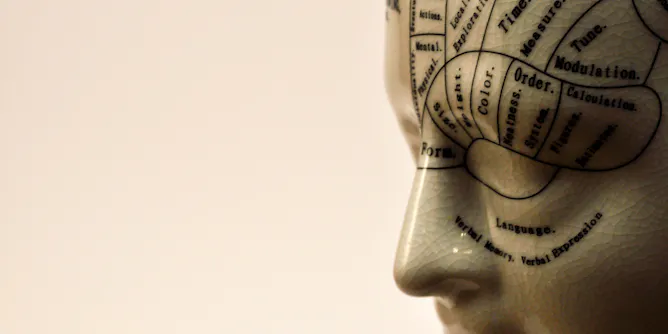
Phrenologists provided middle-class people with an early kind of self-help guidance.
Articles on History of science
Displaying 21 - 40 of 157 articles

An executive order critiques the idea that race is a human invention. But that’s exactly what modern science supports.
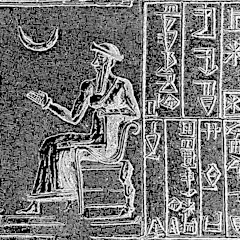
Science uses careful, organized observations and tests to construct theories that are recorded, passed on to others and built on.

A French science historian dug deep into the true story of the Stanford prison experiment – revealing ‘guards’ were actually coached to be brutal. His findings are now available in English.

Ferdinand von Sommer was Western Australia’s first government geologist – but until now his life and career have been shrouded in mystery.
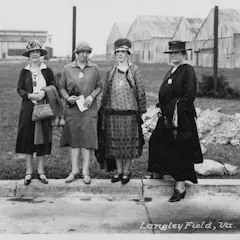
Many of her male colleagues believed Pearl Young had an attitude problem based on her efforts to advocate for herself and her team.

Republicans are seeking to define ‘sex’ in federal law. But after centuries of debate, doctors, scientists and judges haven’t come to a clear consensus on what the definition of sex should be.
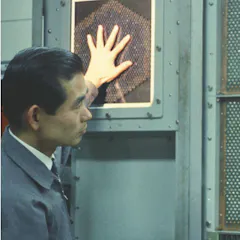
How can including them change our understanding of AI?

As roads have evolved, so too have bikes and bike helmets.

All the oxygen in your body is thanks to magic numbers of protons and neutrons in the nucleus.
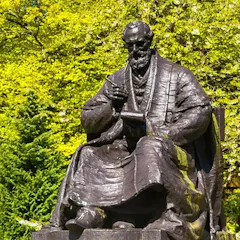
2024 marks the bicentenary of William Thomson, aka Lord Kelvin, arguably the most influential scientist of the 19th century and perhaps beyond.

An epidemiologist makes the case that a rush of research to stop a swine flu outbreak led to an accidental lab release of an extinct virus. Preparing for one pandemic triggered a different one.
Tyndall was an early supporter of the idea that matter can be conscious.

Reduced to its essence, the process of natural selection would look a lot like play.
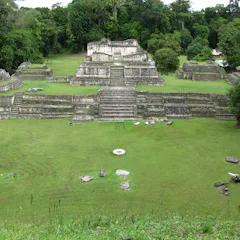
Structures aligned with solar events served various purposes: science, farming, religion and even politics.
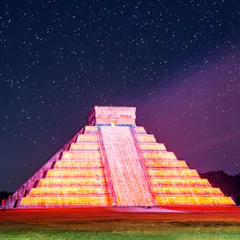
The skies and the gods were inseparable in Maya culture. Astronomers kept careful track of events like eclipses in order to perform the renewal ceremonies to continue the world’s cycles of rebirth.

For as long as trans medicine has been around, so has its opposition. The tactics of prior waves of anti-trans policies are still in play today.

A team of archaeologists discovered the remains of the 16th-century father of modern astronomy, who demonstrated that the Earth orbits the Sun.
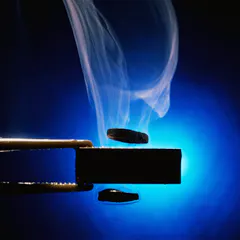
Claims about the discovery of a coveted room-temperature superconductor peppered the news in 2023. We pulled three stories from our archives on what superconductivity is and why scientists study it.
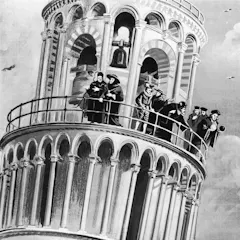
A centuries-old experiment shows the differences between classical and modern physics. Physicists use thought experiments like this to think about how objects move both on Earth and in the stars.
Top contributors
-

Chancellor's Professor of Medicine, Liberal Arts, and Philanthropy, Indiana University
-
Professor of Nuclear Physics, Michigan State University
-
Professor of Natural Philosophy in the Department of Physics, University of York
-
Associate Professor of Science, Technology and Society, Rochester Institute of Technology
-
Professeur émérite, chercheur en physique des particules, spécialiste des neutrinos, Université Paris Cité
-
Assistant Professor of Physics, Rutgers University - Newark
-
Associate Professor in Experimental Psychology (Perception), University of Oxford
-
Professor in Philosophy of Science, Durham University
-
Lecturer in South Asian History, University of Reading
-
Professor in High Medieval History, Durham University
-
Visiting Lecturer of History, Georgia State University
-
Distinguished Professor of Physics and Astronomy, Purdue University
-
Professor of Advanced Technology Transitions, Arizona State University
-
Professor of Science Communication and Chemistry, University of Hull
-
Timothy J. Jorgensen is a Friend of The Conversation.
Director of the Health Physics and Radiation Protection Graduate Program and Professor of Radiation Medicine, Georgetown University