
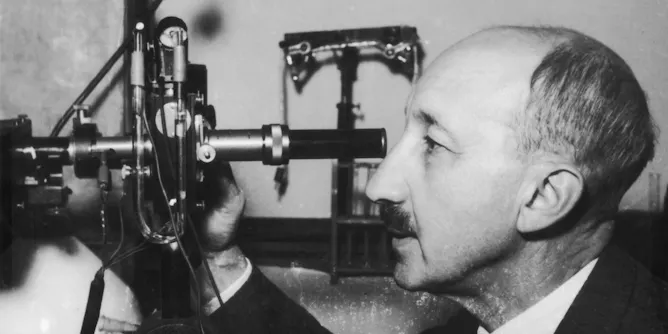
Some Nobel Prize-winning ideas originate in strange places, but still go on to revolutionize the scientific field. George de Hevesy’s research on radioactive tracers is one such example.
Articles on History of science
Displaying 41 - 60 of 157 articles
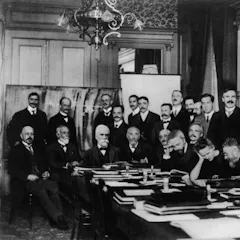
Superconductivity may sound like science fiction, but the first experiments to achieve it were conducted over a century ago. Heike Kamerlingh Onnes, credited with the discovery, won a Nobel Prize in 1913.
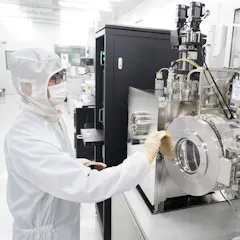
Two decades ago, the nanotechnology revolution avoided stumbling by bringing a wide range of people to the table to chart its development. The window is closing fast on AI following suit.
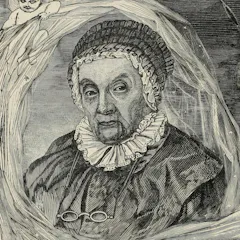
Astronomer Caroline Herschel’s work discovering and cataloging astronomical objects in the 18th century is still used in the field today, but she didn’t always get her due credit.
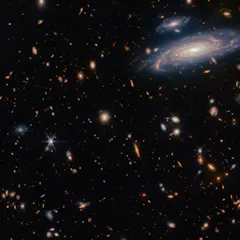
The darkness of the night sky seems so obvious as to need no explanation – yet it has intrigued and baffled scientists for centuries.
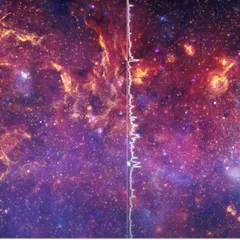
Since ancient times, the stars have been set to music. Modern technology now enables scientists to convert images of space into real compositions.

Astrology and astronomy were once practiced side by side by scientists like Galileo and Kepler. And they’re more similar than you might think.
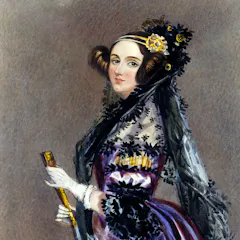
Lovelace was a prodigious math talent who learned from the giants of her time, but her linguistic and creative abilities were also important in her invention of computer programming.

Often thought of as eternal, mountains are vulnerable to climate change and tourism. To protect them, they should be recognised for their cultural values, not just their natural characteristics.

Crises are no longer something to fix but situations to manage.

From electricity to X-rays, the Doppler Effect and even quantum theory, Proust’s writing is littered with physics references.
Two simple rules can help us identify future-proof science.
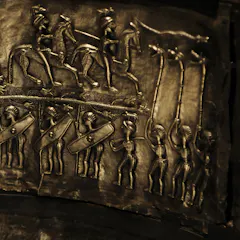
Since antiquity people have harnessed sound as a weapon, and the practice continues – in new high-tech ways – today.
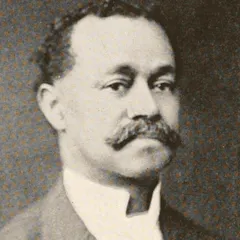
The son of a formerly enslaved mother, Charles Henry Turner was the first to discover that bees and other insects have the ability to modify their behavior based on experience.

As genetic engineering and DNA manipulation tools like CRISPR continue to advance, the distinction between what science ‘could’ and ‘should’ do becomes murkier.
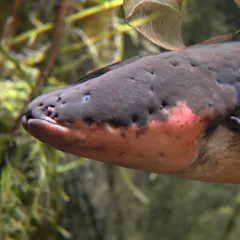
One species of eel can discharge 860 volts of electricity – that’s 200-fold higher than the top voltage of a single lithium-ion battery.
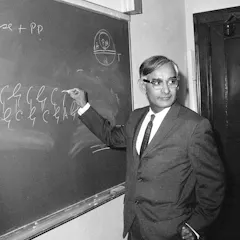
Khorana rose from humble beginnings in India to decipher the genetic code. But his enormous contribution to science has been largely overlooked.
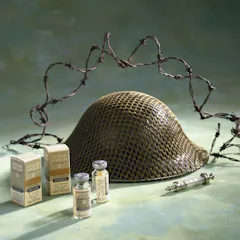
Albert Alexander was the first known person treated with penicillin. While his ultimately fatal case is well known in medical histories, the cause of his illness has been misattributed for decades.
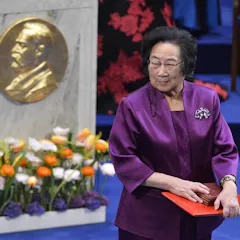
Discover the stories of five trailblazing women – Tharp, Nice, Tu, Noether and Wu – who worked in STEM during the 20th century.

None of our authors can see the future, but many do have expertise that offers insights about what’s reasonable to expect.
Top contributors
-

Chancellor's Professor of Medicine, Liberal Arts, and Philanthropy, Indiana University
-
Professor of Nuclear Physics, Michigan State University
-
Professor of Natural Philosophy in the Department of Physics, University of York
-
Associate Professor of Science, Technology and Society, Rochester Institute of Technology
-
Professeur émérite, chercheur en physique des particules, spécialiste des neutrinos, Université Paris Cité
-
Assistant Professor of Physics, Rutgers University - Newark
-
Associate Professor in Experimental Psychology (Perception), University of Oxford
-
Professor in Philosophy of Science, Durham University
-
Lecturer in South Asian History, University of Reading
-
Professor in High Medieval History, Durham University
-
Visiting Lecturer of History, Georgia State University
-
Distinguished Professor of Physics and Astronomy, Purdue University
-
Professor of Advanced Technology Transitions, Arizona State University
-
Professor of Science Communication and Chemistry, University of Hull
-
Timothy J. Jorgensen is a Friend of The Conversation.
Director of the Health Physics and Radiation Protection Graduate Program and Professor of Radiation Medicine, Georgetown University