
A five-year study of Australian media found three quarters of science stories quoted men.
Articles on Women in STEM
Displaying 1 - 20 of 139 articles
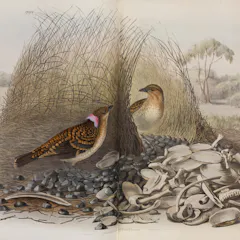
An expert taxidermist, she was the first professional female employee at any Australian museum – and was paid as much as the men.
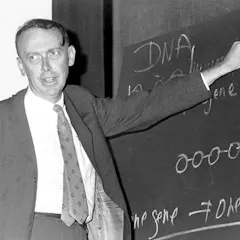
James Dewey Watson is best known for his Nobel Prize-winning discovery of the structure of DNA. Controversy around who should be credited highlights the challenges of scientific collaboration.
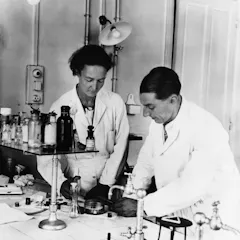
Marie Curie’s daughter Irene continued her family’s Nobel legacy by discovering artificial radioactivity.

STEM jobs – ranging from software engineer to physicist, to plumber – tend to be well paid. And women tend to be underrepresented in these fields. New research suggests one reason starts in kids’ homes.
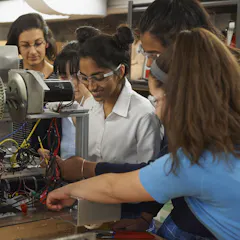
Women still face discrimination and underrepresentation in STEM fields; receiving mentoring and tools to navigate male-dominated fields can help them succeed.
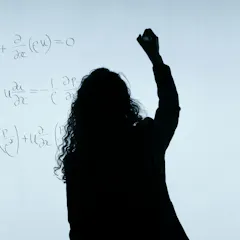
Science, technology, engineering and maths are still not an equal playing field for all. Here’s what needs to change.

Women’s presence in ‘the wild’ has always been contested, in myth, storytelling and sexist attitudes in the media that persist to this day.

Women in these fields are almost at parity with men at the most selective schools, but the gender gap doubled at many of the least selective universities.
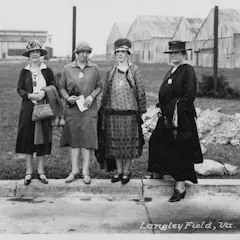
Many of her male colleagues believed Pearl Young had an attitude problem based on her efforts to advocate for herself and her team.

Only 5 women have ever won a Nobel Prize in physics. The field as a whole has issues with gender diversity, but as a woman physicist explains, success is possible for women in the field.

The trailblazing engineer was co-inventor of a technique for designing computer chips that laid the groundwork for the computing revolution.

Women play a critical role in fieldwork in the Arctic and Antarctica, but the vast majority of them report negative experiences while undertaking this research. Here’s how we can fix the problem.

Australia’s Women in STEM ambassador initiative has been discontinued. Is this a setback for diversity?

For decades, woman ‘computers’ worked behind the scenes while their male counterparts received recognition. The AI industry must not be an example of history repeating itself.
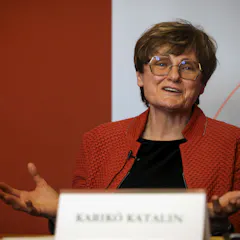
Studies reveal women’s research receives tougher assessment, less funding, fewer prizes and less citation than men’s.
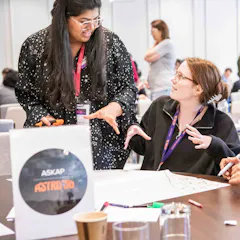
With an evidence-based strategy and careful evaluation, gender parity in science is achievable.
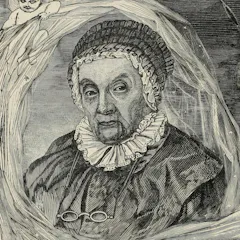
Astronomer Caroline Herschel’s work discovering and cataloging astronomical objects in the 18th century is still used in the field today, but she didn’t always get her due credit.

Diverse teams can not only solve engineering problems more effectively, but the outcomes tend to be more inclusive, as a geographer and feminist scholar explains.
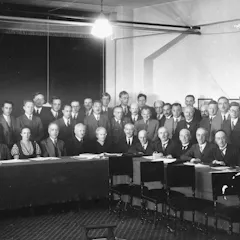
The trailer for ‘Oppenheimer’ fails to include female physicists, which is indicative of a broader media trend that, if reversed, could lead to greater gender diversity in science.
Top contributors
-

Australian Government Women in STEM Ambassador, Professor of Practice, UNSW
-
Professor and Associate Dean - Diversity, Belonging, Inclusion, and Equity, Australian National University
-
Professor and Lincoln Professor of Ethics in Public Affairs, Arizona State University
-
Associate Professor, Interim Pro Vice Chancellor Learning and Teaching, Australian National University
-
Lecturer in Cultural Studies in Health
-
Senior Research Fellow in Antarctic and island conservation science, Queensland University of Technology
-
Professor and Deputy Vice-Chancellor (Research), University of Sydney
-
Australia's Chief Scientist, Office of the Chief Scientist
-
Pro Vice-Chancellor (Academic Innovation & Change), Professor of Astrophysics, Swinburne University of Technology
-
Harold T. Stearns Professor of Earth Science, Wesleyan University
-
Lecturer, Education Futures, Adelaide University
-
Associate Professor of Critical Media Practices and Digital Humanities, University of Colorado Boulder
-
Professor of Mathematics, University of Sydney
-
Professor in Economics, Monash University
-
Research Manager at E61 Institute, Bocconi University