

A series of experiments explored the seemingly radical idea that opening up to strangers can be deeply satisfying.
Articles on Friendship
Displaying 101 - 120 of 189 articles

Friendship networks shrank during lockdowns. As we re-engage, how do we get our old friends back? And which do we want back?
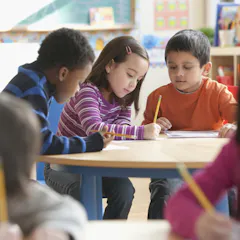
Small-group learning activities can help students build social skills while enhancing academic achievement. This is particularly important for kids who face bullying or discrimination.

The novelist and philosopher’s views on love and relationships can help us be better friends.

In a new survey, Australians report a reduction in the quality and size of their friendships, not just during lockdowns, but months after they end.

Facebook users no longer see the site as a confidant. They’re struggling with how to deal with a messy codependence – and whether to just break up and move on with healthier friends.

Going vegan has been found to bring health benefits, but it can also impact your friendships.

Teenagers develop empathy over time, but those who feel safe and connected with their families may have a head start.

Maasai in Tanzania use their mobile phones all the time – usually to communicate with people they already know. But dialing errors can also breed friendships and business opportunities.

Because any two consenting adults can get married in the US, a platonic marriage could pretty easily be pulled off. Legally speaking, though, it’s a sham.
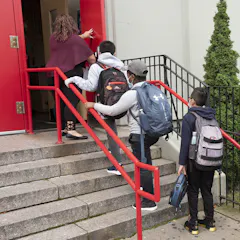
Researchers consider how friendships that bridge across social class – “cross-class friendships” – contribute to middle school academic achievement differences based on level of parents’ education.

The social restrictions of the COVID-19 pandemic have illustrated how important human connections are to health.

Red squirrels are solitary by nature, but research has found that they benefit from familiarity with other squirrels.

Research shows multiple social and cognitive benefits of playing video games.

Robots and humans can be friends – but not in a way that would win Aristotle’s approval.

Checking in and keeping up with our friends is an important part of maintaining relationships. During the pandemic, technology stepped in where face-to-face interactions weren’t possible.

Social relationships are generally good for mental health, but too much social activity can backfire, leading to fatigue and feelings of guilt when there isn’t enough time to nurture relationships.

In the age of masks, improve your interactions by using all aspects of human communication.

A recent Pew survey showed just how deep the divide has become, with about 40% of registered voters saying that they didn’t have a single close friend supporting a different presidential candidate.
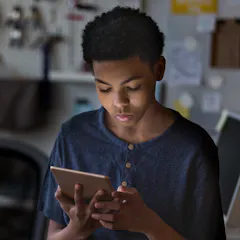
It’s worth going out of your way to ensure that kids practice interacting with others and maintain their friendships.
Top contributors
-

Assistant Professor of Psychology, Pomona College
-
Professor of Psychology, San Diego State University
-
Assistant Professor of Psychological Science, Boise State University
-
Professor, Academy of Geography, Sociology and International Studies, Hong Kong Baptist University
-
Assistant Professor of Psychology, Wayne State University
-
Professor of Health Studies, University of Westminster
-
Associate Professor of Communication, Wayne State University
-
Professor of Communication, University at Buffalo
-
Social Psychologist, University of Texas at Arlington
-
Assistant Professor of Philosophy, University of Minnesota Duluth
-
Lecturer, Australian Catholic University
-
Associate Professor and Clinical Psychologist, Swinburne University of Technology
-
Professor of Psychology, Australian Catholic University
-
Lecturer, School of Education (Qld), Australian Catholic University
-
Associate Professor, School of Psychology, UNSW