
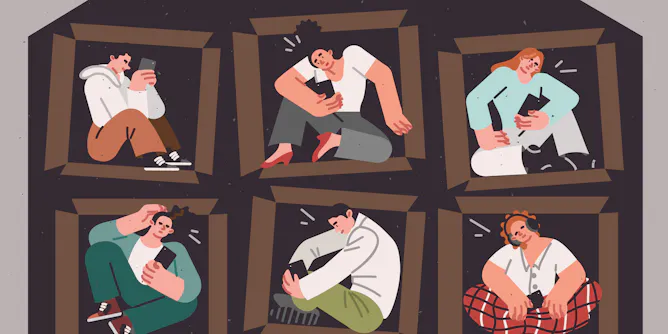
Students in this course learn about the biology and sociology of friendship, but also put their studies to the test by going to eat a meal with a peer, and tracking their experience.
Articles on Loneliness
Displaying 1 - 20 of 246 articles

After graduating, young people enter an often enjoyable, but also challenging, period of new experiences.

The effects on parents as they adjust can be hugely under-estimated.

R U OK? Day is Australia’s most recognisable mental health campaign. A study using nine years of data looked at how it affected wellbeing and access to care.

The people who stretch a person’s sense of humanity may be the ones no algorithm currently selects.

Loneliness and isolation may shape a young person’s life chances.

Across the world, science museums are beginning to join conversations and develop work about mental health.

Research suggests loneliness and depression can reinforce each other, while social isolation has a more limited effect.

Paid social clubs promise connection with new people, with a lot of the complicated legwork handled. But here’s why they’re unlikely to fix our loneliness epidemic.
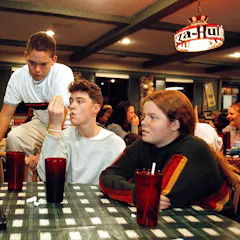
A Carnegie Mellon University marketing researcher explains why the love of a retro Pizza Hut has more to do with the relationships attached to it than pizza.

Chatbots that relieve loneliness have a major downside, and we must safeguard against it.

The one-sidedness of human-AI relationships is a problem. There’s a lot we can receive from an AI companion; there is less we can give.

Loneliness affects one in five people worldwide. But a new global study also finds it varies between countries, reflecting more than individual circumstances.

Young poets wrestled with loneliness, fractured families, violence and other challenges – but also showed an unwillingness to surrender to despair.

Loneliness is common – and so is our alienation from nature. New research shows we can tackle both at the same time

‘It dawned on me that I felt lonely’: how my research into friendship gave me a new perspective on my social life.

The concept of a ‘discount rate’ helps to explain why humans prioritize what feels good or easy now even when it leads to worse outcomes over time.

Technology is intensifying isolation, and recognizing our shared human struggles — or common humanity — is a practical, evidence-based way to reconnect.

A major new study offers a complicated, but hopeful, answer this question.

Loneliness in women is on the rise in Japan, and friendship can help. But in this novel, connection quickly becomes obsession.
Top contributors
-

Associate Professor, Sydney School of Public Health, University of Sydney
-
Assistant Professor in Health Sciences, Simon Fraser University
-
Senior Research Fellow, Matilda Centre for Research in Mental Health and Substance Use, University of Sydney
-
Professor Applied Social and Policy Research; Director, Centre for Loneliness Studies, Sheffield Hallam University
-
Professor, Academy of Geography, Sociology and International Studies, Hong Kong Baptist University
-
Professor of English, University of Connecticut
-
Professor of Gerontology and Public Health, Brunel University of London
-
Professor & Director, Hub for Apple Platform Innovation (HAPI), School of Computing Technologies, RMIT University
-
Reader in Education with Psychology and Centre for Death and Society, University of Bath
-
Associate Professor, Social & Behavioural Health Sciences, Dalla Lana School of Public Health, University of Toronto
-
Professor of Urban Health and Environment, UNSW
-
Professor in Modern History and UKRI Future Leaders Fellow, King's College London
-
Lecturer in Sociology, Deputy Director of the Centre for Ageing and the Life Course, University of Liverpool
-
Professor of Cities and Planetary Health, ARC Future Fellow in nature-based solutions for loneliness, University of Sydney
-
Associate Professor of Psychology and Inclusion, University of Bristol