

Baptisms, schools, church services – how ordinary families navigated love and marriage across taboo lines.
Articles on Love
Displaying 1 - 20 of 231 articles

Most young people aren’t religious – but marriage is still a place where secular culture has quietly absorbed many of the values we associate with religion.

Bringing employees back to work in person and smart office-based people management drives companies forward and is conducive to engineering change. Here’s how.

What determines the success or failure of these relationships is not so much the age difference but the imbalance in resources.

Niall and Leah’s long distance relationship will test what love and career mean on a planet in crisis.

The speed and structure of AI relationship advice often consolidates one narrative and trains us for unrealistic expectations, shaping how we interpret conflict and intimacy.

New research explores the psychology behind work-related love and its implications for modern organizations.

Emily Brontë’s novel celebrates the head-spinning, hair-raising, all-consuming experience of falling in love.
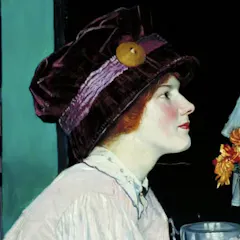
From first dates to sleeping lovers, these are the paintings that have touched the hearts of our experts.

Ovid thought that a bit of healthy competition could foster romance.

Love and hate seem like obvious opposites – but for philosophers of virtue, it’s not so simple.
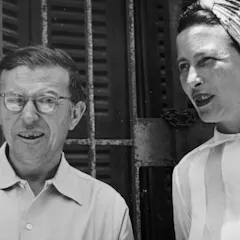
Love can be exposing but is it worth it to find someone? Sartre thought so.
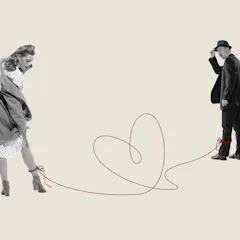
From clingy to distant, attachment theory explains how childhood bonds shape adult love.
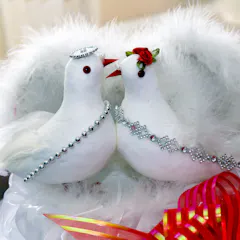
Our romances tell us a lot about how we live our lives and vice versa. They can help us make informed choices about changing and breaking habits or developing new ones.

Many couples were forced to undertake dangerous, daring escape attempts to overcome their separation.

For Aristotle, the true form of love wasn’t about intense passion or grand gestures on one day of the year.

What psychology says about whether these questions could make you fall in love.

Here are five short game poems, all playable in a web browser, that explore themes of love, intimacy, longing and separation.

‘Love languages’ are a popular but misleading framework that oversimplify how relationships work and can even obscure the real conditions that sustain intimacy.

Victorians found a way to anonymously tell people they didn’t like exactly how they felt.
Top contributors
-

Professor of Psychology, Monmouth University
-
Professor of Social Psychology, Anglia Ruskin University
-
Professor in Social Psychology / Relationship Science, Deakin University
-
Teaching Associate in Philosophy, School of History, Philosophy and Digital Humanities, University of Sheffield
-
Relationships Expert & Psychology Educator at the Queensland Centre for Domestic and Family Violence Research, CQUniversity Australia
-
Senior Lecturer in Psychology of Relationships, University of South Wales
-
Senior Lecturer School of Arts and Humanities, Edith Cowan University
-
Liberal Arts Endowed Professor of Communication, Penn State
-
Associate Professor, School of Humanities and Social Sciences, Deakin University
-
Professor of Religion and Asian Studies, Elizabethtown College
-
Associate Professor, School of Psychology, UNSW
-
Associate Professor, Anthropology, Macquarie University
-
Professor of Psychology, University of Stirling
-
British Academy postdoctoral fellow, University of Warwick
-
Senior Lecturer in Psychology, University of Tasmania