

Fran (Daisy Ridley) has a complex and creative inner world that she escapes into in order to feel real.
Articles on Friendship
Displaying 61 - 80 of 189 articles

Relationship anarchists argue that we should relate to one another as equals and accept that intimacy can take many forms.

These moving poems are a reminder that on Valentine’s Day, it’s OK to celebrate a broader definition of love.

Heartstopper is a celebration of ‘queer joy’ that uses the imaginative intimacy of graphic novels to invite the reader into its tight-knit world.

New research looking at data from 200,000 children in Wales has found a substantial increase in mental health issues.

Children’s friendships are a vital part of their learning and development.

Autistic people are not only more likely to feel lonely but are also more likely to experience it more acutely than non-autistic people according to new research.

Psychology researchers have focused on the idea that people form friendships with those who are similar, familiar and nearby. But how do individual people pick those who will become their friends?
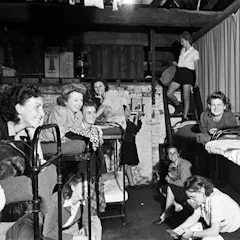
Youth hostels can play a key role in blurring class lines and connecting travellers to both each other and the places they visit.

Parents often have nothing left in the tank to give after a day of parenting. So friends without kids can feel neglected without fully understanding it is not about them.

New research shows kangaroos may form long-term friendships.

The support of friends and family can be crucial for domestic abuse victims.

While a friends with benefits arrangement has its risks, research has shown it can empower young people to express their sexuality.

For young men who struggle with mental health or lack connections in real life, chat and community features of online games can be a source of support.

Alva Gotby’s book encourages women to refuse the labour of care – and even suggests abolishing the nuclear family.

For any kind of human relationship to work, it must have great friendship at its core.

Too few friends or too many friends can hamper children’s learning and cognition.

Being friendly at work can increase your happiness, productivity and help you make better use of your time. On the other hand, being unfriendly can make work less enjoyable and engaging.

Early life environments and adult social bonds both have strong effects on survival.

A scholar of ancient Greek philosophy writes about Aristotle’s timeless advice on how to nurture and keep friendships.
Top contributors
-

Assistant Professor of Psychology, Pomona College
-
Professor of Psychology, San Diego State University
-
Assistant Professor of Psychological Science, Boise State University
-
Professor, Academy of Geography, Sociology and International Studies, Hong Kong Baptist University
-
Assistant Professor of Psychology, Wayne State University
-
Professor of Health Studies, University of Westminster
-
Associate Professor of Communication, Wayne State University
-
Professor of Communication, University at Buffalo
-
Social Psychologist, University of Texas at Arlington
-
Assistant Professor of Philosophy, University of Minnesota Duluth
-
Lecturer, Australian Catholic University
-
Associate Professor and Clinical Psychologist, Swinburne University of Technology
-
Professor of Psychology, Australian Catholic University
-
Lecturer, School of Education (Qld), Australian Catholic University
-
Associate Professor, School of Psychology, UNSW