
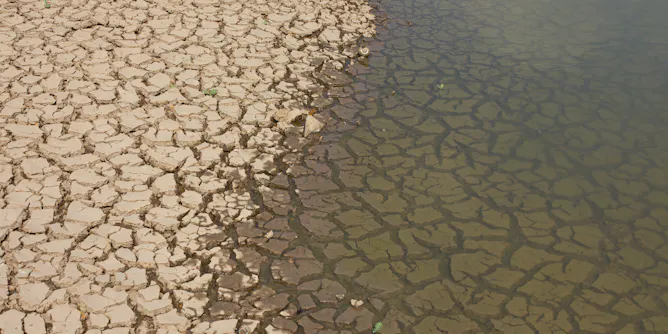
Dry regions will get drier and wet regions wetter as the climate changes. How quickly? Quicker than we thought, unfortunately.
Articles on Freshwater
Displaying 61 - 80 of 117 articles
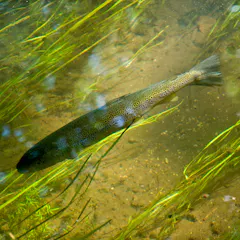
A staggering 85% of the world’s chalk streams are found in England.
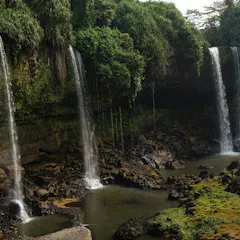
The presence of a vulnerable species in Ekor Waterfalls, Nigeria, is a signal that the area could support other rare or threatened species.
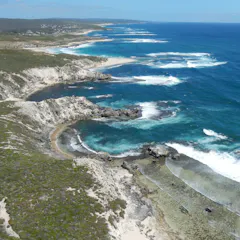
Australia’s southwest is a biodiversity hotspot - and it’s also a climate change hotspot. Something has to give.

Rivers are among the most embattled ecosystems on Earth. Researchers are testing a new, inexpensive way to study river health by using eDNA to count the species that rivers harbor.
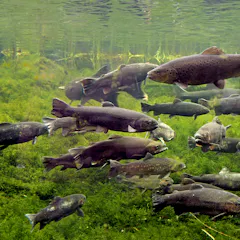
The growing frequency of climate extremes affected human health and caused wide-scale damages to the ecosystems that people depend upon, including agriculture, fisheries and freshwater.
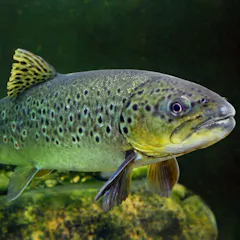
Chemicals in drugs can be excreted unchanged, infiltrating waterways via sewage and effluent.
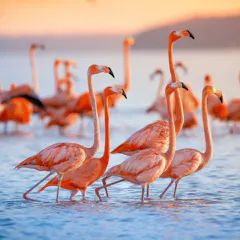
The lives of one in ten of Earth’s species are connected to lakes and their tributaries.
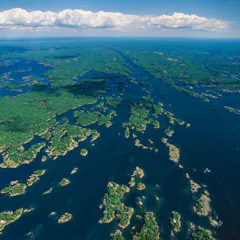
Canada has 20 per cent of the world’s freshwater reserves and nine per cent of the world’s renewable freshwater resources. However, there is an urgent need for better freshwater governance in Canada.
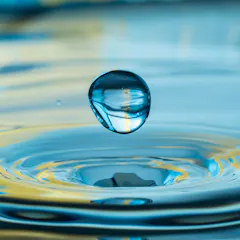
New Zealanders pay the costs of poor environmental and infrastructural governance, but have little opportunity to influence policy in the first place. Here’s how that could change.
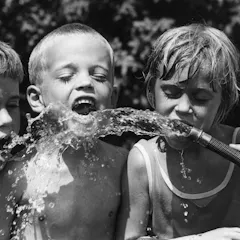
The world’s first futures market for water launched in California in December. Two commodities experts explain how it works, what the potential problems are and why there’s no reason to freak out.
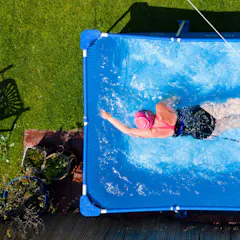
With fewer people commuting, home water use changed radically overnight in March 2020.
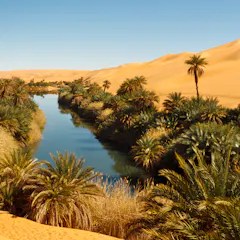
Wetlands in drylands seem impossible, but their benefits to people and wildlife are very real.
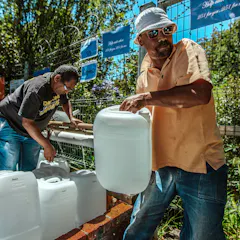
The projected loss of water storage on land as global temperatures rise is especially alarming in the Southern Hemisphere – and in parts of the US.
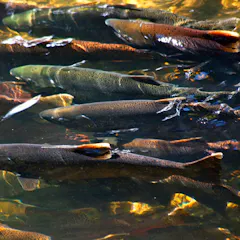
A recent US study found tyre chemicals were polluting rivers and poisoning migratory salmon.
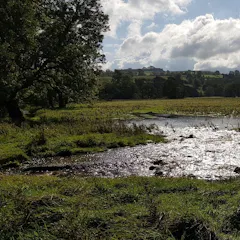
Flooding isn’t always destructive – it can be part of our toolkit for restoring ecosystems.

To continue to sustain or grow populations — and economies — more is going to have to be done with the same amount of water, or even less.
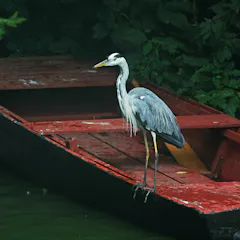
The ghosts of our industrial and agricultural past continue to haunt freshwater ecosystems today.
New regulations will allow oilsands companies to release 1.3 trillion litres of liquid waste into the Athabasca River in 2022. A new technology could clean the wastewater before it’s let go.

A long-awaited NZ$700 million package to clean up New Zealand’s rivers and lakes has disappointed some of the government’s expert advisers – especially a delay on setting clear pollution limits.
Top contributors
-

Professor, Obafemi Awolowo University
-
Canada Research Professor, Conservation Physiology, Carleton University
-
Beatrix Beisner is a Friend of The Conversation.
Professor, Aquatic ecology; Groupe de recherche interuniversitaire en limnologie (GRIL), Université du Québec à Montréal (UQAM)
-
Professor of Biology, McGill University
-
Morgan Foundation Senior Research Fellow in Freshwater Ecology and Environmental Science, Te Herenga Waka — Victoria University of Wellington
-
Professor of Hydrogeology, UCL
-
Professeur Écologie Aquatique, Université du Québec en Abitibi-Témiscamingue (UQAT)
-
Honorary Fellow in Environmental Sciences, Swansea University
-
Post-doctoral researcher, Charles Sturt University
-
Senior Lecturer and quantitative ecologist, The University of Melbourne
-
Distinguished Professor, Australian National University
-
Research fellow, Charles Sturt University
-
Conservation Planning Biologist, Wildlife Conservation Society Canada and Adjunct Professor of Conservation Biology, University of Saskatchewan
-
Deputy Director, Centre for Sustainable Aquatic Ecosystems, Harry Butler Institute, Murdoch University
-
Associate Professor in Ecology, Charles Sturt University