
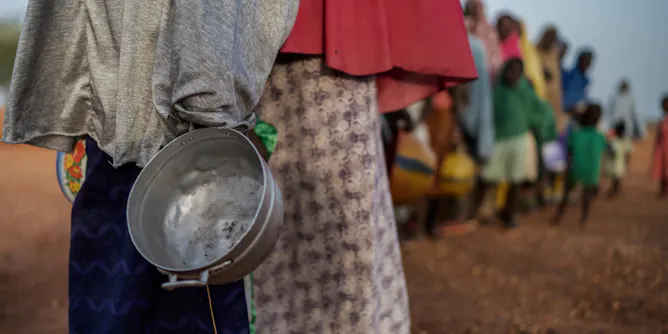
Since 2010 the number of Kenyans going hungry has been growing. The country now suffers from serious levels of hunger
Articles on Food insecurity
Displaying 221 - 240 of 267 articles
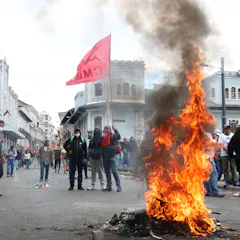
Climate change is already worsening the chaos attendant on resource shortage – and, therefore, death rates.

Food insecurity remains a serious challenge among university students in South Africa.
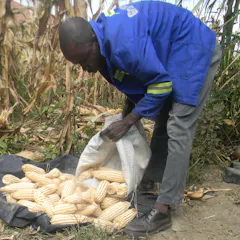
Zimbabwe’s food insecurity is not just about food production, but access too. It is affected by, among others, the value of assets when sold and social and cultural dimensions that go into exchange.
Canadian politicians on the campaign trail would do well to mention issues of food security. At least 55 per cent of Canadians are worried about how they will continue to pay grocery bills.

Students suffer the double burden of malnutrition - hunger and obesity. This results in stress, ill health, poor academic results and increased drop-out rates.

The Democratic candidates hoping to replace Trump in 2020 debated a host of critical issues but never brought up the equally important challenge of Americans’ food security.
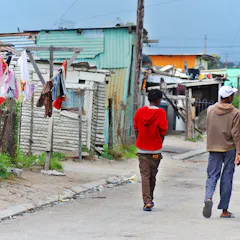
Government policies need to acknowledge individual agency as a mechanism for change, while reducing barriers to income-producing activities.

Prodded by Michelle Obama and other government leaders, Walmart and other major US retailers vowed to build hundreds of stores in food deserts. What happened?
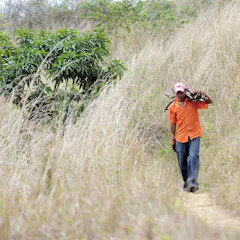
Poverty and violence are often cited as the reasons people emigrate from Central America, but factors such as drought, exacerbated by climate change, are driving people to leave too.

Rising sea levels and tectonic activity have eroded the coastlines of the low-lying Carteret Islands in the South Pacific.
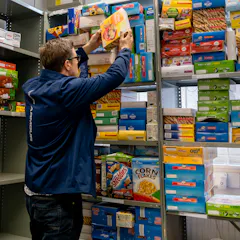
Reducing food waste by feeding hungry Canadians is a simplistic solution that is deeply problematic and morally distressing.
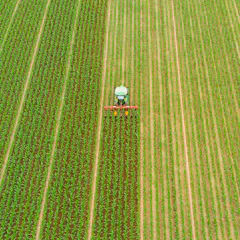
Governments need to think about global ways agricultural policies may affect the stability of the food system as a whole, beyond locally focused efforts to increase resilience in production.

The high costs of finding work make it difficult for young South Africans to get jobs.
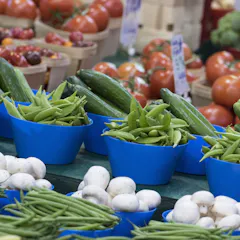
Canada’s Food Guide makes nutrition recommendations. But the revamped guide does much more. It directs us to consider the broader set of circumstances —the social determinants —of how we eat.
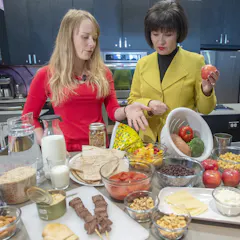
Canada’s Food Guide is a political document. It does not represent those who are poor, culturally marginalized and most at risk for food insecurity.

A new federal report on food insecurity on college campuses does a good job of laying out the scope of the problem but falls short when it comes to solutions.
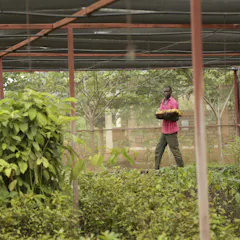
After declining for nearly a decade, the number of hungry people in the world is growing again. Climate change, which is disrupting weather patterns that farmers rely on, is a major cause.
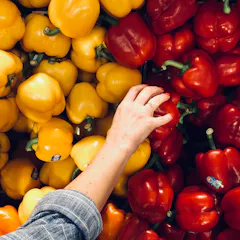
Although nutritious, inexpensive food options do exist for low-income Canadians, whether those foods are easily accessible or feasible has long evaded both nutrition researchers and politicians.

Governments in Canada are routinely enacting public policies that primarily benefit economic elites, raising questions about government legitimacy and competency. Who’s looking out for us?
Top contributors
-

Associate Professor of Political Science, University of Richmond
-
Professor of Economics, Baylor University
-
Professor of Social Development Studies, University of Johannesburg
-
Professor of Human Development and Family Sciences, University of Connecticut
-
Senior Lecturer in Nutrition and Dietetics, University of Wollongong
-
Professor of Health Studies, Queen's University, Ontario
-
Senior Researcher, Associate Professor: Economic Management Sciences, University of Pretoria
-
Assistant Professor of Nutrition, Texas State University
-
Associate Professor of Allied Health Sciences, University of Connecticut
-
Assistant Professor of Public Health, Indiana University
-
Assistant Professor of Dietetics and Nutrition, University of Dayton
-
Professor of Nutritional Sciences, University of Toronto
-
DSTI/NRF Research Chair in Welfare and Social Development, University of Johannesburg
-
Research Program Coordinator, Food Insecurity, University of Toronto
-
Associate Professor of Nutrition Science, Purdue University