

Baobab flowers have male and female parts but individual trees appear to be favouring one rather than the other. To keep tree populations healthy and fruitful, both types are needed.
Articles on Flowers
Displaying 61 - 80 of 95 articles

Many threatened plant species aren’t being targeted for conservation. Identifying which are closest to being lost forever is the first step to protect them.
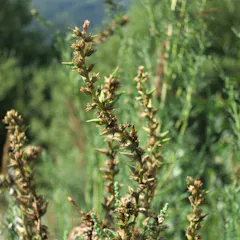
New research found colour played a major role skewing researcher bias — pretty, vibrant flowers get more scientific attention than dull plants, regardless of their ecological significance.

Planting a garden for winter-active insects is a wonderful way to support local biodiversity. Your garden will thrive with the free pollination and pest control services the insects provide.
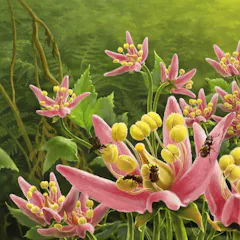
Preserved in amber, a tiny beetle has shed light on the moment the world first burst into bloom.
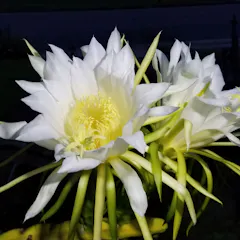
Not all flowers smell good, to people at least, but their scents are a way to attract pollinators.
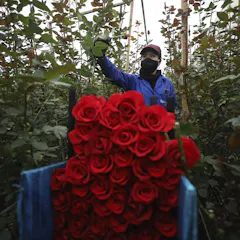
After a withered 2020 due to COVID-19, the flower industry is hoping to blossom. The industry, which remains far from sustainable, remains a multi-billion dollar operation.
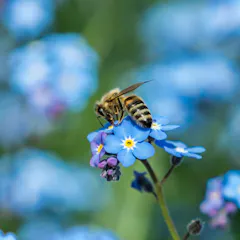
Through a bee’s eyes, blue flowers are more common than you’d think — and they could be used to monitor environmental health.
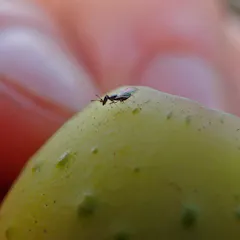
As invasive species transform the world, frontline agencies take solace that species needing unique partners can’t invade alone. A new study on figs shows they may find new partners to invade anyway.
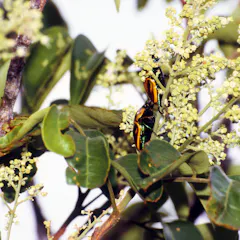
In the Amazon, beetles and flowering trees have developed a tight bond. Hundreds of beetle species thrive off of and pollinate blossoms, helping to maintain some of the highest biodiversity on Earth.
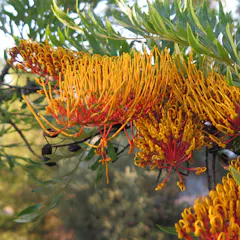
Silky oaks, or Grevillea robusta, are in bloom. These hardy, attractive trees light up the sky in late spring – but handle with care.
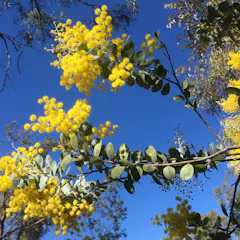
With their vibrant blooms and a lineage tracing back to the ancient supercontinent of Gondwana, wattles have a lot going for them.

A program intended to reduce coca production ended up giving two Latin American countries a big boost to their flower power.

Images of wildfires are powerful, but can make climate catastrophe seem like something spectacular and distant. So some artists are focusing on the plants and bugs in our immediate surroundings.

As climatic conditions change, plants’ odours are altered, with direct consequences for pollination, especially by bees.
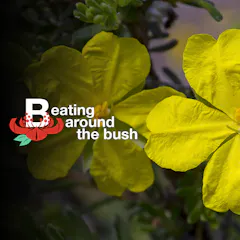
The guinea flower grows right across Australia.
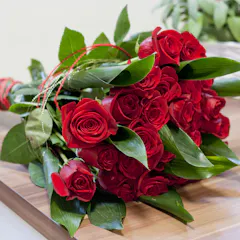
Many roses are grown in energy-intensive greenhouses, shipped long distances or treated with chemicals. Here’s what to ask your florist or supermarket.

Non-Timber Forest Products don’t often feature in discussions about poverty reduction and alleviation.
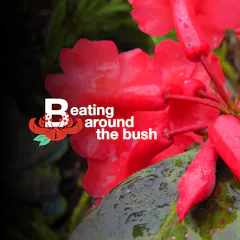
European settlers suspected Australia’s high tropical forests hid native rhododendrons.
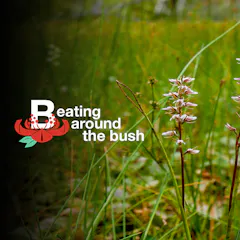
Scientists are racing against the clock to figure out how to propagate the rare leek orchid before it goes extinct.
Top contributors
-

Senior Research Associate, School of Agriculture, Food and Ecosystem Sciences, The University of Melbourne
-
Associate Professor, Department of Physiology, Monash University
-
Baobab Ecologist, University of the Witwatersrand
-
Associate Professor of Business, Boston University
-
Lecturer in Evolutionary Biology, University of Reading
-
Visiting Lecturer, BA Fine Art Mixed Media, University of Westminster
-
Extension Agent, University of Florida
-
Laboratory and Technical Support Officer, Australian Tropical Herbarium, James Cook University
-
Founder of Msit No’kmaq
-
Professor of Floriculture and Ornamental Horticulture, Mississippi State University
-
Assistant Professor in Sociology, University of Surrey
-
PhD Candidate, Social Justice Education, Ontario Institute for Studies in Education, University of Toronto
-
PhD Candidate, Australian National University
-
Research Fellow in viticulture and fermentation, University of Tasmania
-
Associate Professor in History of Modern Science and Technology, University of Cambridge