

To survive dry spells, trees stop the water-rich process of photosynthesis. When nature’s natural carbon capture machine grinds to a halt entire forests end up producing more CO₂ than they absorb.
Articles on Botany
Displaying 1 - 20 of 123 articles
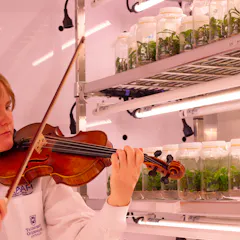
Some people may think it’s nice to listen to music with their plants. But is there any truth to the idea that certain music boosts plant growth?
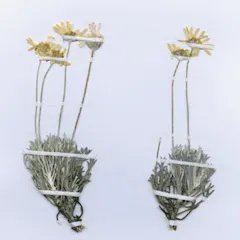
Herbarium cabinets lock away valuable plant data that needs to be mobilised through digitisation.
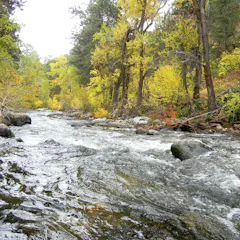
Understanding what happened in these forests 56 million years ago may help humanity recognize similar thresholds before we cross them again, the lead author of a new study writes.
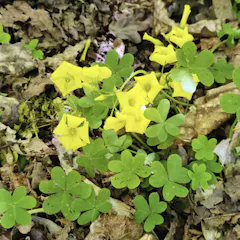
When it comes to a battle of persistence between a weed and a human, the weed will win most of the time. That is one of the things that makes a weed a weed.

Mulch glue allows water and air to penetrate the soil, but there are concerns it may limit birds turning over and foraging in mulch.

A distinctive local variety of grapevine from Ethiopia’s Tigray region could offer potential as a dryland crop.

Their story crosses continents, cultures, languages and time.
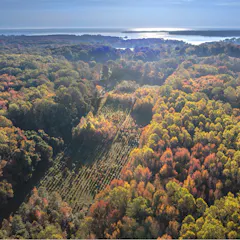
The tree mix matters. Near Chesapeake Bay, scientists have been experimenting with mini-forests for over a decade. The surprising results show how biodiversity pays off.
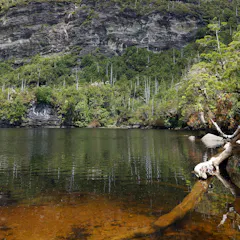
Tannin stains on concrete, cars and decks may be unsightly, but that doesn’t mean tannins are unimportant.
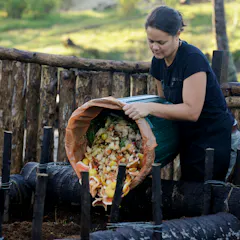
Is your compost a veritable Vesuvius of foul-smelling, putrescible plant waste? You might be doing everything wrong. Fear not; you can learn from your mistakes.

Evolution has created plants with the power to kill and heal.

New Zealand has 2,200 native flowering plants and 85% of them grow nowhere else, including some spectacular displays that open just in time for the festive season.
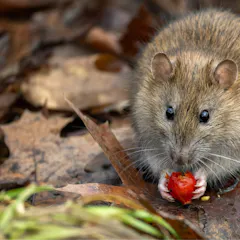
An archaeologist reveals what she learned from sifting through a 200-year-old rat nest recovered from a historic Philadelphia home.
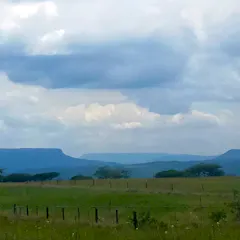
Decades of experimentation revealed slow ecological processes and long-term interactions that have international scientific value.

Is an organism a sum of its parts, or should they be considered as a whole? New research on ferns shows how the way scientists understand evolution affects how they study life.
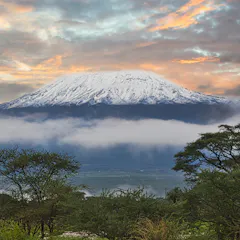
75% of Mount Kilimanjaro’s indigenous plants have been wiped out over the last century.
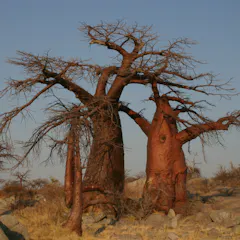
New research shows that baobab tree flowers have adapted to meet the needs of either bats or moths, and without these creatures, the trees will not survive.
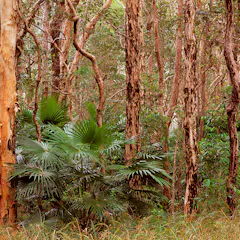
If you are keen to see your cabbage tree palm flower, be aware it may take 150-170 years. If you can wait that long, it usually happens between August and October.
It makes great sense many plants flower when the insects and birds so vital to their reproductive success are also getting busier (and getting busy).
Top contributors
-

Senior Research Associate, School of Agriculture, Food and Ecosystem Sciences, The University of Melbourne
-
Assistant Professor of Plant Evolutionary Biology, University of Tennessee
-
e-Flora Coordinator, South African National Biodiversity Institute
-
Vice President of Academic Affairs and Dean of the College, Grinnell College
-
Professeur, Biologie et Biochimie végétales, IUF, Université de Lorraine
-
Lecturer and Researcher in Plant Humanities, UNSW
-
Founder of Msit No’kmaq
-
PhD Candidate, Social Justice Education, Ontario Institute for Studies in Education, University of Toronto
-
Lecturer in Environment and Sustainability, Keele University
-
Chair of ARC Centre of Excellence for Quantum Biotechnology, The University of Queensland
-
Associate Professor in Environmental Science, Western Sydney University
-
Research Associate, North Carolina State University
-
Professor of Biological Sciences, University of Maryland, Baltimore County
-
Associate Professor of Biology, Columbus State University
-
Postdoctoral research fellow, Australian National University