
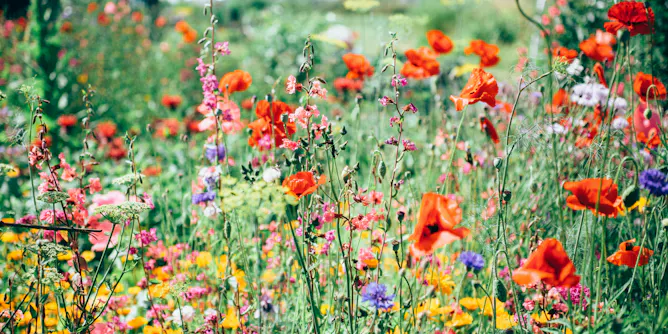
Flowers tend to stand out against a natural background. A new study shows this contrast evolved in a key relationship with their most famous pollinators – bees.
Articles on Flowers
Displaying 41 - 60 of 95 articles

The fossil record tells conflicting stories about what happened to flowering plants after the asteroid.

Humans have figured out how to season their food with virtually every part of plants.
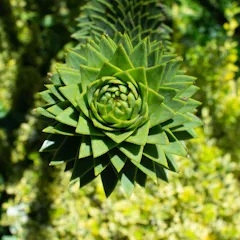
The arrangement of leaves on most plants follows a mathematical pattern – new research sheds light on how it evolved.
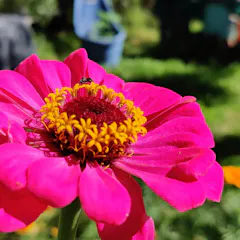
New research suggests insects have pollinated flowers since the pollen-bearing blooms first evolved more than 140 million years ago.
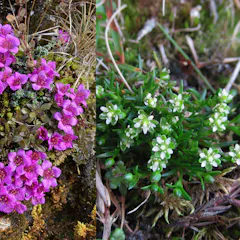
Why we need to pay more attention to these minute flowers and how they survive in some of the harshest places in the world.

As we approach the start of gardening season, it’s a good time to ask some questions about what to plant and who gets to plant.

Scientists are learning amazing things about bees’ sensory perception and mental capabilities.

Plath’s sublime nature poetry deserves widespread appreciation for its unfettered joy and deep attunement to the natural world.
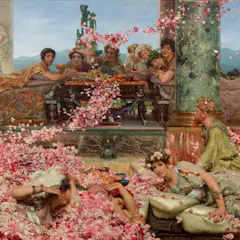
In the past, roses on Saint Valentine’s Day were something unexpected, and very expensive.
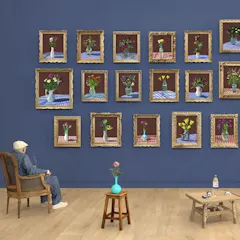
Hockney’s 20 Flowers and Some Bigger Pictures depict joy in the humdrum of domesticity.
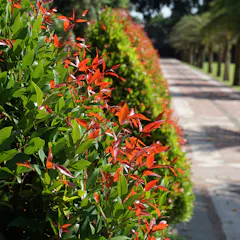
Lillipillies are one of Australia’s great gifts to the natural world. But the story of these homegrown heroes may be taking a grim turn.
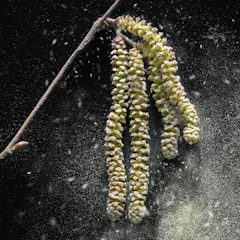
Pollen brings seasonal misery to millions of Americans, but it serves a critical purpose: fertilizing many kinds of plants, including food crops.
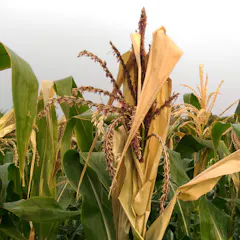
The climate crisis makes it important to investigate and understand the mechanisms of plant growth if we are to keep agricultural crops sustainable.
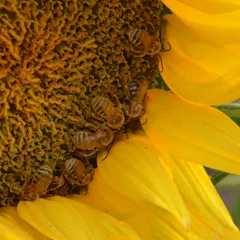
Huge single-crop fields attract bees in such numbers that they spread parasites to one another. Planting diverse mixes of flowers around fields helps spread out pollinators and keep them healthy.
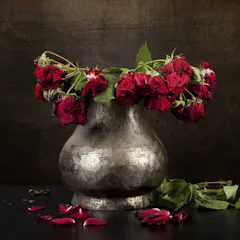
February 14 brings great expectations.
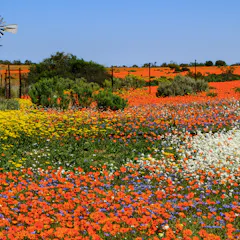
The progressively earlier flowering places the daisies at greater risk of failed flowering seasons. This would be a blow to biodiversity and tourism.
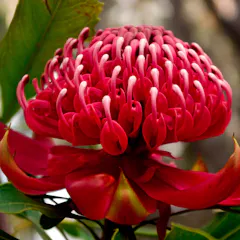
Researchers have sequenced the genome of the waratah, using a plant that was burned in the Black Summer fires but has since resprouted, offering an emblem of hope for future conservation.
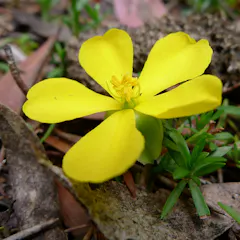
One of Australia’s largest groups of flower species is named after a wealthy British slave-trader. And Nazi memorabilia collectors have almost sent “Hitler’s beetle” extinct. It’s time for a change.
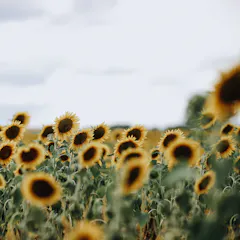
The phenomenon is called heliotropism, and sunflowers are most famous for it. But why do they track the sun? And how?
Top contributors
-

Senior Research Associate, School of Agriculture, Food and Ecosystem Sciences, The University of Melbourne
-
Associate Professor, Department of Physiology, Monash University
-
Baobab Ecologist, University of the Witwatersrand
-
Associate Professor of Business, Boston University
-
Lecturer in Evolutionary Biology, University of Reading
-
Visiting Lecturer, BA Fine Art Mixed Media, University of Westminster
-
Extension Agent, University of Florida
-
Laboratory and Technical Support Officer, Australian Tropical Herbarium, James Cook University
-
Founder of Msit No’kmaq
-
Professor of Floriculture and Ornamental Horticulture, Mississippi State University
-
Assistant Professor in Sociology, University of Surrey
-
PhD Candidate, Social Justice Education, Ontario Institute for Studies in Education, University of Toronto
-
PhD Candidate, Australian National University
-
Research Fellow in viticulture and fermentation, University of Tasmania
-
Associate Professor in History of Modern Science and Technology, University of Cambridge