
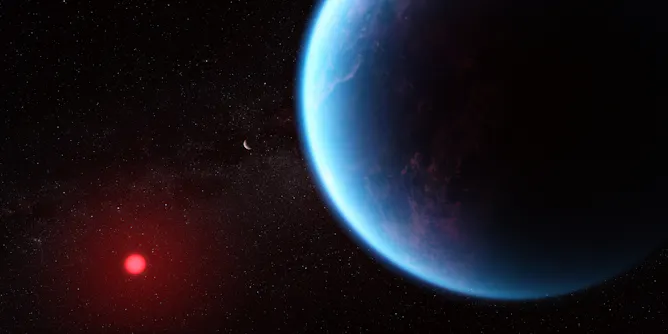
Only 6.6% of surveyed astrobiologists agreed that scientists had probably found extraterrestrial life on exoplanet K2-18b.
Articles on Astrobiology
Displaying 1 - 20 of 67 articles
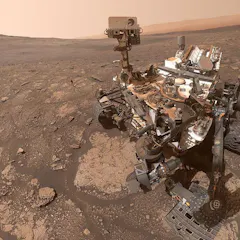
Study of extreme environments on Earth, along with exploration of the lifeless surface of the moon, can help us understand what life on Mars might look like.
The fictional biologist in ‘Project Hail Mary’ claims that potential alien organisms might not be made of carbon or require water, unlike life on Earth.
A new machine learning model explores the boundary between biological and nonbiological chemistry.

A failed star just taught us something new about the search for alien life.
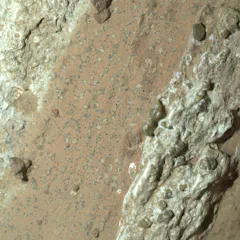
The rock is peppered with spots that could have been formed by microbes four billion years ago.
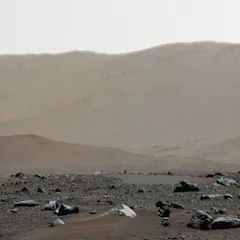
The Viking missions paved the way for future Mars missions and helped researchers understand the red planet’s climate and geology.
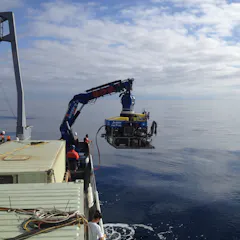
Microbes hidden deep in ocean volcanoes could resemble life on other planets or moons.
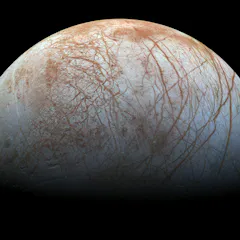
As NASA rolls out more powerful telescopes in the future, scientists will need a way to determine where to point them. A new approach could help.
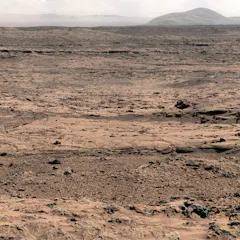
NASA’s Curiosity rover has spotted carbon-containing minerals that can tell scientists more about what ancient Mars’ atmosphere may have looked like.
Looking at the history of ‘biosignature’ discoveries shows why they can be problematic.
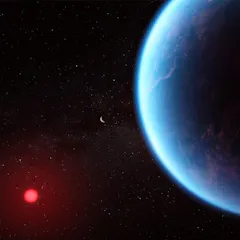
The exoplanet K2-18b could harbor a massive ocean, but scientists will need to study the planet more to see if it’s really likely to host life.
Only 10.2% of astrobiologists disagree with the claim that intelligent aliens likely exist.
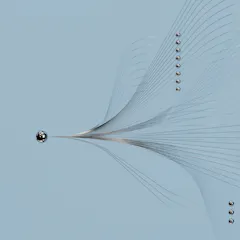
A specific set of chemical conditions led to the emergence of life on Earth. But can life emerge from other chemistries?
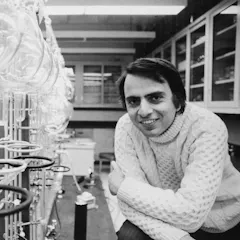
On what would’ve been the astronomer’s 90th trip around the Sun, here’s a look at his legacy as a scientist, advocate and communicator.
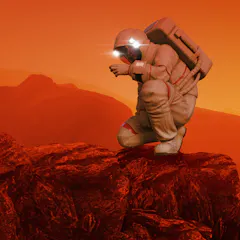
It’s hard to look for something you’ve never seen before – and that might not even exist. But you have to start somewhere.
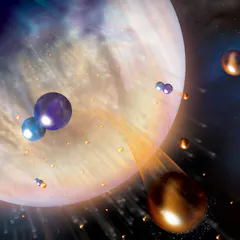
Studying Venus’ water loss can help scientists better understand how planets go from potentially habitable to incapable of supporting life.

It’s not easy to collect rocks on a budget when the rocks are 140 million miles away.

The Perseverance rover has arrived at what’s thought to be an ancient shoreline on Mars.

Saturn’s moon Enceladus has geysers shooting tiny grains of ice into space. These grains could hold traces of life − but researchers need the right tools to tell.
Top contributors
-

University Distinguished Professor of Astronomy, University of Arizona
-
Reader in Astrobiology, University of Edinburgh
-
Professor in Philosophy of Science, Durham University
-
Associate Dean for Research and Professor of Astronomy and Planetary Sciences, University of Arizona
-
Professor of Planetary Geosciences, The Open University
-
Professor of Astrobiology, UNSW
-
Senior Instrument Scientist, Australian Nuclear Science and Technology Organisation
-
Senior Lecturer, School of Chemistry, UNSW
-
Lecturer in Astrobiology and Principal Technical Officer at Bayfordbury Observatory, University of Hertfordshire
-
Assistant Professor of Complex Adaptive Systems, Arizona State University
-
Reader in chemistry, University of Leeds
-
Program Manager / Adjunct Research Fellow, Swinburne University of Technology
-
Professor, University of Alberta
-
Researcher at Research School of Astronomy and Astrophysics and the Research School of Earth Sciences, Australian National University
-
Associate Professor, School of Biotech & Biomolecular Science, UNSW