
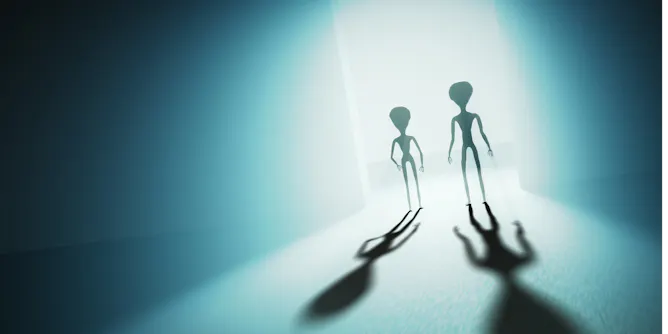
Even if aliens exist, are intelligent like humans and interested in making contact with us, what are the chances they’ll be close enough for us to hear them screaming their presence into the cosmos?
Articles on Extraterrestrial life
Displaying 61 - 80 of 159 articles
One in a million or one in ten? Mathematics can help us work out the odds of whether recent sightings of UFOs are really alien spaceships.
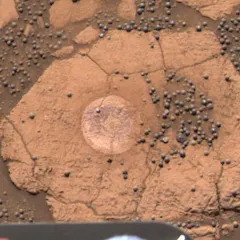
No conclusive evidence that extraterrestrial life exists has been found…yet.
A new study argues we should search for microbial life rather than human-like aliens.

A minuscule particle of asteroid dust has helped reveal how celestial rocks like Earth might have sprouted life.
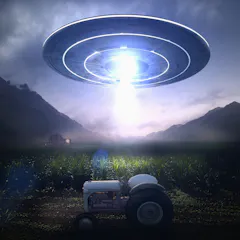
Americans who believe aliens have visited Earth are more likely than disbelievers to say that Joe Biden is not the legitimate winner of the 2020 presidential election.
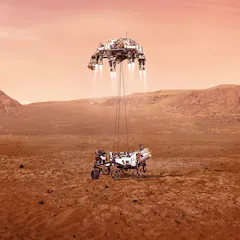
Scientists preparing to land the Rosalind Franklin rover in a few years are nervously awaiting the landing of Nasa’s Perseverance rover.
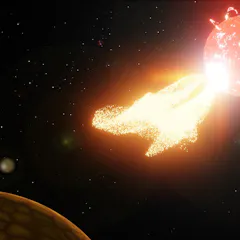
We observed a powerful flare and a huge burst of radio waves from our nearest stellar neighbour, Proxima Centauri, indicating violent space weather around the star.
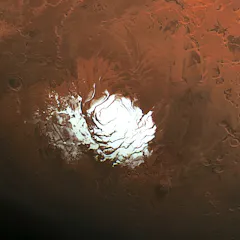
Three newly discovered bodies of liquid water deep beneath the south polar ice cap on Mars have planetary scientists intrigued.
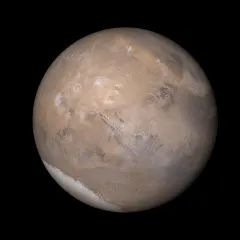
New findings boost chances of finding life on Mars, but there are better candidates in the solar system.
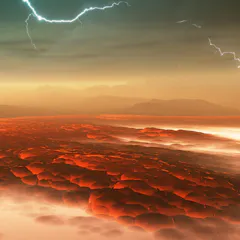
Considering what we know about the key ingredients for life’s formation on Earth, here are three explanations for how this process may have occurred on our sister planet.
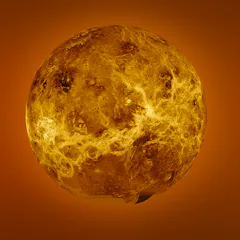
News that Venus may harbor life has swept the globe. So how do we find out for sure? A planetary scientist explains what’s next.
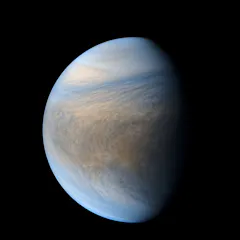
The discovery of phosphine in the acidic clouds of Venus can’t be explained by any known chemical or geological processes.
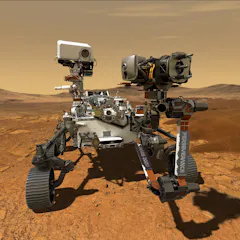
The Perseverance rover onboard Mars
2020 is our best bet for finding life on the red planet.

Pluto began hot inside, study of its surface fractures suggests
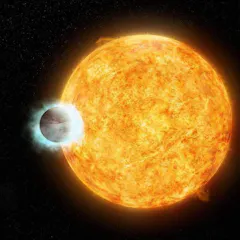
Sometimes it is difficult to take a photograph of an exoplanet because the star illuminating it is too bright. Now there is a new ‘deluminator’ telescope that can block out the extra light.
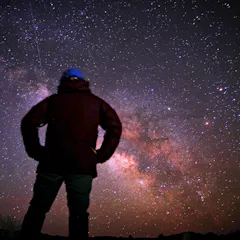
From the subatomic to the cosmic, don’t think for a second that we’re at the end of scientific history.
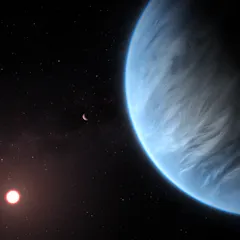
K2-18 b is now the exoplanet most likely to be habitable.
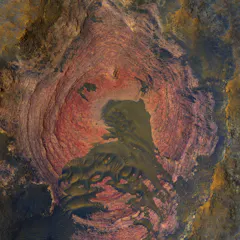
It’s established Mars was once a planet with surface-level water. So with multiple MARS missions starting next year, the key to seeking out martian life may instead lie in the contents of its ‘dust’.
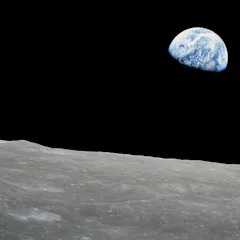
Realising the silence of outer space was what made us appreciate our precarious position down on this pale blue dot – so beginning our obsession with extinction.
Top contributors
-

Professor of Planetary Geosciences, The Open University
-
Professor (Astrophysics), University of Southern Queensland
-
Professor of Physics, Deputy Director (Solar System) at the Mullard Space Science Laboratory, UCL
-
University Distinguished Professor of Astronomy, University of Arizona
-
Professor (Physics), University of Southern Queensland
-
Lecturer, University of Southern Queensland
-
Professor of Planetary and Space Sciences, The Open University
-
Professor of Astronomy and Astrophysics, Penn State
-
Honorary Fellow, Space and Astronomy, CSIRO; Western Sydney University
-
Professor and Director of the Australian Centre for Astrobiology, UNSW
-
Professor in Philosophy of Science, Durham University
-
Senior research fellow, Curtin University
-
Senior Instrument Scientist, Australian Nuclear Science and Technology Organisation
-
James Martin Research Fellow, Future of Humanity Institute & Oxford Martin School, University of Oxford
-
Sir Bernard Lovell chair of Astrophysics, University of Manchester