
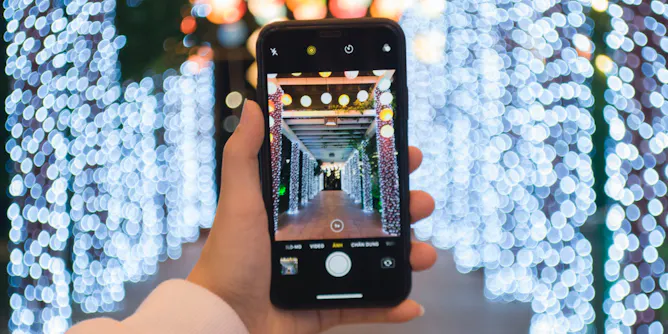
Mood tracking apps are sophisticated tools that track, measure and improve our emotions. But doing so may make our emotional data vulnerable to interested third parties.
Articles on Emotions
Displaying 121 - 140 of 249 articles

A team of researchers developed an app to study whether the pandemic would cause our internal clocks to go haywire.

Students say they have a hard time studying and cognitive science proves they’re not trying to dodge work: there’s a link between negative emotions and difficulties in concentrating.

Understanding others’ emotions is a crucial social skill. Counter to concerns about screen time stunting kids’ development, one study suggests they’re getting better at recognizing emotion on screen.

Emotions and feelings can be thought of as judgments: considered responses to what is happening.

A survey conducted in early April reveals that, even in lockdown, fewer than 3% of people were feeling only negative emotions.

At a time of massive environmental change, we need to expand our language to be able to share the emotional upheavals they engender.

In a rapidly warming world, temperature increases are a challenge to mental well-being. A group of economists quantified the relationship.

Research on stigma and discrimination – and LGBTQ people’s own stories – can help Americans make sense of Pete Buttigieg’s historic candidacy.
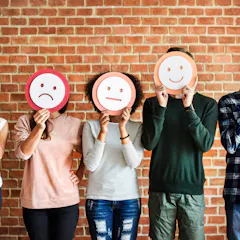
A positive approach to discussing feelings.

Research suggests that people can learn to read cats’ facial expressions.

Iranian leaders seem eager to use the powerful emotions surrounding his death to coalesce power around the regime. History shows that mass mourning is a powerful way to bring people together.
Gym memberships spike as people make their New Year’s resolutions – but very few people will actually use them past February.

The scientific understanding of our internal experiences is changing and it now seems likely that ‘Christmas cheer’ may be an emotion in itself.

Humans spend a lot of time during social occasions masking their real emotions. Why?

Whether you’re a human, a dog or even a horse – how you handle pain will depend on how emotionally stable and guarded you are.

Fighting off infection comes with predictable psychological and behavioral features. Now researchers suggest an emotion coordinates this response to help you get better. They call it ‘lassitude.’

Tryptophan, found in food, is an important ingredient in the neurotransmitter serotonin. But is that enough to support it as a possible mood booster? The research is decidedly mixed.

More attention needs to be paid to loneliness’s complex history.

Whether due to Trump or unhappiness with the mainstream media, Americans say that they are avoiding the news more than before.
Top contributors
-

Associate Professor, School of Psychology, UNSW
-
Associate Professor in Clinical Psychology, Bond University
-
Professor of Psychology, The University of Melbourne
-
Senior Lecturer in Psychiatry, The University of Melbourne
-
Associate Professor, School of Behavioural and Health Sciences, Australian Catholic University
-
Associate Professor of Psychology, University of Delaware
-
Chancellor's Leadership Professor of Psychology, University of California, Davis
-
Former Senior lecturer in Psychology
-
Professor, Business and Management, Queensland University of Technology
-
Wellcome Trust Medical Humanities Research Fellow, Queen Mary University of London
-
Associate Professor of Family & Community Medicine and Pediatrics, retired, University of California, San Francisco
-
Associate Professor in Psychology, Deakin University
-
Lecturer, Bangor University
-
Visiting Research Fellow, Adelaide University
-
Professor of Social Psychology IPU Berlin and Visiting Professor of Social and Political Psychology, Coventry University, Coventry University