

Research shows strong emotions are what drives oversharing online – but there are simple things you can do to keep your social media professional.
Articles on Emotions
Displaying 81 - 100 of 249 articles

Stoicism can easily be misread as pessimistic because of its relentless focus on mortality and fragility. But its core message – contained in songs spanning generations – is profoundly empowering.

Technology has so much potential to help autistic people but developers are missing the mark.

We often talk about ‘emotional labour’ as performed by those who take on the emotional workload within families or relationships. But the term has a specific meaning – and that’s not what it is.

Overcoming conspiracy theories isn’t just about information. A scholar of religion explains that the emotions they inspire are part of their appeal.
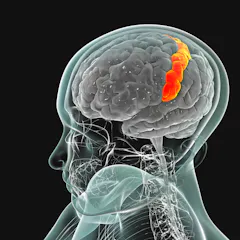
The brain’s somatosensory cortex may help enrich our emotional experiences and improve our mental health. Mindfulness and dance movement therapy may be effective ways to activate it.

Suddenly being awash in tears shows a strong empathy response – a key component of emotional intelligence.
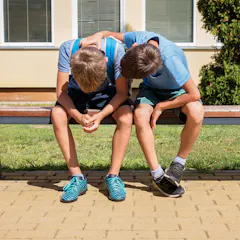
The term is often pejorative: to be hypersensitive is to cry over nothing, to feel things are “too much”, etc. But we now understand that this trait has real evolutionary and social benefits.

A team analyzed more than 21 million tweets about COVID-19 vaccines and found that negative sentiments on social media were tied to lower-than-expected vaccination rates in many nations.
Emotions play a key role in many types of spontaneous thoughts. Even microemotions — which are often fleeting and unconscious — can affect thoughts and influence attention.

Sleep and mental health have a well established relationship.

In 1872, Charles Darwin published a book on expressions and emotions that modern science is only beginning to catch up with.
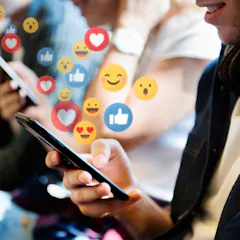
Comparing ourselves to people who are worse off than we are on social media should make us feel better. The opposite is true.
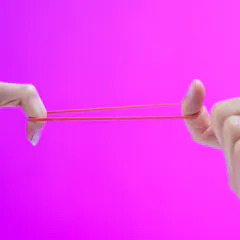
Contrary to society’s celebrations of family togetherness, the ‘ties that bind’ often become frayed or broken.

A researcher who studied family estrangement identifies the main reasons behind it and how people can find a path to reconcile and heal family rifts.

For the first 12 months of the pandemic, a team of researchers tracked the relationship between emotions, time perception and health-related behaviors like wearing a mask.

Storytelling can be a powerful tool to communicate complicated crises like climate change. Telling relatable and local stories can help motivate people to action.

The emotions we attach to political affiliation are shifting during this federal election. The vote may turn out to be a master class in how a party can capture the political mood and use it to its benefit.

The pandemic has made some people rush to get tattoos for different reasons. A tattoo historian explains why tattoos are often seen to be ‘trashy,’ a view likely influenced by colonialism.
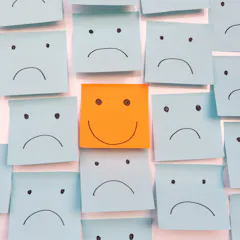
Ignoring negative emotions by trying to be positive all the time — called toxic positivity — can have consequences for mental health. Experiencing negative emotions is inevitable and essential.
Top contributors
-

Associate Professor, School of Psychology, UNSW
-
Associate Professor in Clinical Psychology, Bond University
-
Professor of Psychology, The University of Melbourne
-
Senior Lecturer in Psychiatry, The University of Melbourne
-
Associate Professor, School of Behavioural and Health Sciences, Australian Catholic University
-
Associate Professor of Psychology, University of Delaware
-
Chancellor's Leadership Professor of Psychology, University of California, Davis
-
Former Senior lecturer in Psychology
-
Professor, Business and Management, Queensland University of Technology
-
Wellcome Trust Medical Humanities Research Fellow, Queen Mary University of London
-
Associate Professor of Family & Community Medicine and Pediatrics, retired, University of California, San Francisco
-
Associate Professor in Psychology, Deakin University
-
Lecturer, Bangor University
-
Visiting Research Fellow, Adelaide University
-
Professor of Social Psychology IPU Berlin and Visiting Professor of Social and Political Psychology, Coventry University, Coventry University