

New research based on student journalling reveals how American and Chinese cultural standpoints wildly differ in how they make sense of awe.
Articles on Emotion
Displaying 1 - 20 of 70 articles

Crying during joyful moments makes perfect sense.

We need to feel some stress to achieve our best, but if we feel too much, we can flounder. That’s where resilience comes in.

The meaning of ‘happiness’ was in flux in Shakespeare’s England, and his plays capture many senses of the word.

Vibes – ambiguous as they are – have become part of the cultural zeitgeist. Studying them could help us better understand human relationships and experiences.
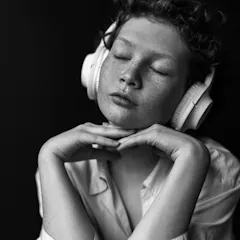
Neuroscientists found that music cannot only influence your emotions in the present − it can also alter how you remember your memories.

Chatbots want you to think you’re talking to a human, but AI-generated emotion is essentially a linguistic sleight of hand.

Alexithymia is when people find it hard to identify and express their feelings.

The more personally we take politics, the more polarised we become.

Seeing the world with a restricted color palate seems to tone down an emotion-based resistance to new foods.

For most people, there’s a strong ‘awe’ factor when witnessing inter-species bonding. What is it about our own psychology that prompts this?

People who dive into misinformation are driven to satisfy an emotional need, according to our new research.
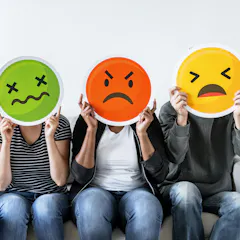
Lots of people will do a lot to avoid feeling negative emotions. But researchers are figuring out how these unpleasant feelings actually have benefits.
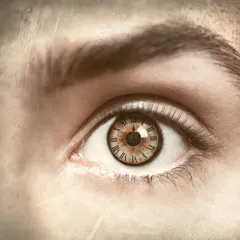
Time’s elasticity is part of how we process it.

Laughter is so fundamental that animals like chimps, rats and dogs share the ability with humans. But in people it serves more serious social functions than just letting others know you’re having fun.

Deep psychological factors play a part in obesity, including childhood trauma.

Fear has important consequences for how people vote, what they spend their money on, who they consider to be part of their communities, and who they treat as outsiders.

Decreased patience and heightened emotions have created a cycle of frustration, with rude customers having abrupt interactions with stressed out service workers.

The idea of healing benefits and emotional catharsis through reading is intuitively appealing. But does it work that way? Jane Turner Goldsmith finds answers in neuroscience, philosophy and more.

In a systematic review of existing studies, researchers found that air pollution such as fine particulate matter can interfere with regions of the brain responsible for emotional regulation.
Top contributors
-

Cornelia H. Dudley Professor of Psychology, Knox College
-
Wellcome Trust Medical Humanities Research Fellow, Queen Mary University of London
-
Professor of Metaphysics , Durham University
-
Professor of English and Cultural History, Liverpool John Moores University
-
Professor of War and History, University of Sussex
-
Assistant Professor of Psychology, California State University, Los Angeles
-
ARC DECRA Fellow, School of Psychology, The University of Queensland
-
Associate Professor in Clinical Psychology and Neuropsychology, Trinity College Dublin
-
Lecturer of Business Law, University of Leeds
-
Ph.D. Student in Psychology and Neuroscience, University of North Carolina at Chapel Hill
-
Professor of Experimental Psychology, University of Iowa
-
Associate Provost & Vice President, American Public University System
-
Associate Professor in Clinical Psychology, The University of Queensland
-
Lecturer in Museum Studies, University of Leicester
-
Assistant Professor of Interior Design, Iowa State University