
Spider silk coated in nano-tubing could become a new material used in everyday electronics. Known as the the toughest material…
Articles on Electronics
Displaying 81 - 92 of 92 articles
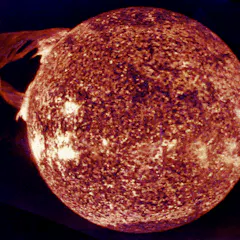
In 1859, from August 28 to September 2, we were given an important lesson about how vulnerable we are to the Sun’s power. The Carrington Event, named for the amateur astronomer who recorded it, Richard…
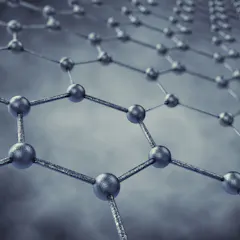
Assuming you are geeky enough to open up any mobile device on the market – a phone, tablet or laptop - the most glaringly obvious component of the device is the battery: it generally consumes up to (if…

Imagine having a wafer-thin touchscreen on your sleeve which, like a scene out of a Philip K. Dick novel, gives you all the functionality of a smartphone without the awkwardness of a cumbersome battery…
Tiny electronic devices implanted into living tissue can dissolve harmlessly when they’re no longer needed. A team from the…

It’s early morning, you’re preparing for the day ahead and thinking about life’s important conundrums. Is there enough muesli left for the week? Do you have enough time to catch the bus? Are you going…

Diamond is well known for its appeal as a gemstone. Perhaps less well known are some of its extreme material properties. As well as being the hardest material in nature, diamond is very good at conducting…

Imagine setting up mirrors in a circle around you, the shiny sides all facing outwards to reflect your surroundings. To the casual observer you would appear to be “invisible”, blending into the environment…
Melanin the pigment that colours our skin and eyes could soon be used for a new generation of biologically friendly electronic…
The first electronic circuit to replace electric current with lightwaves has been built by researchers at the University…

What do iPhones, Twitter, Netflix, cleaner cities, safer cars, state-of-the-art environmental management and modern medical diagnostics have in common? They are all made possible by Moore’s Law. Moore’s…
Engineers have created one of the world’s smallest electronic circuits. The circuit is separated by 150 atoms – that’s 15…
Top contributors
-

Reader in Theoretical and Computational Condensed Matter Physics, University of Edinburgh
-
Associate Professor of Physics and Electronics, Hunan University
-
Professor of Physics, Clemson University
-
PhD Candidate, Queen's University Belfast
-
Assistant Professor in Nanoscience, University of British Columbia
-
Professor, Department of Computer Science, University of Surrey
-
John M. Thompson Chair in Information Technology and Innovation and Professor, Western University
-
Professor in Nanoelectronics, University of York
-
PhD candidate in Atomic Imaging, University of British Columbia
-
Research Scientist in Computer Science and Engineering, Nanyang Technological University
-
Associate Professor of Electrical and Computer Engineering, Binghamton University, State University of New York
-
Associate Professor of Electrical and Computer Engineering, Tufts University
-
Assistant Professor of Electrical and Computer Engineering, The Ohio State University
-
PhD candidate in Materials Engineering, Monash University
-
Professor/Head of Aviation, CQUniversity Australia