
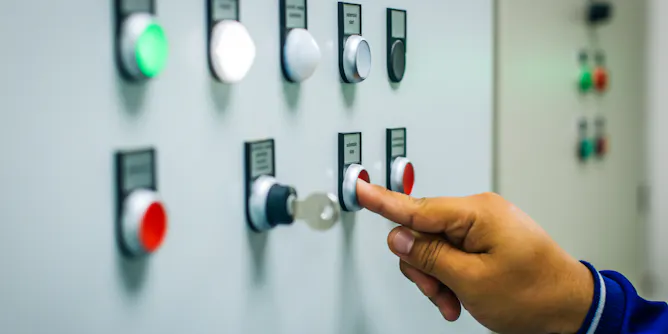
Buttons don’t always make things easier – and using them can be fraught with peril and troubling power dynamics.
Articles on Electronics
Displaying 41 - 60 of 92 articles

Americans are spending almost three and a half hours on their phones and tablets every day, twice the amount just five years ago. A behavioral scientist offers a few tips on how to take control.

Cybersecurity efforts could take a lead from open-source software, creating hardware whose designs are open for all to see and examine.
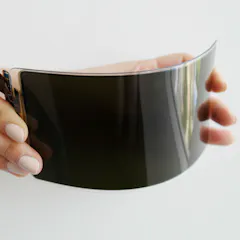
After two decades of work, the technical challenges of a bendable screen may have been overcome.
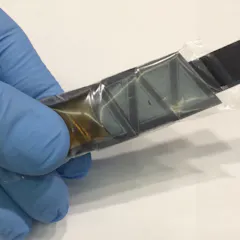
Paper-based devices with foldable, biodegradable batteries provide a new way to reduce electronic waste. But how would these new gadgets work?
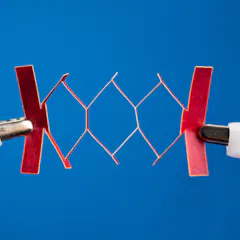
What’s the connection between kids making paper snowflakes and wearable devices that stretch and bend with your body? Engineers who find design inspirations from many sources.

School is out and screens make tempting babysitters. Follow these recommendations to allow your child some screen time without compromising their health and development.
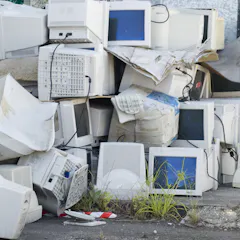
No amount of post-consumer recycling can recoup the waste generated before consumers purchase their devices.

Guidelines for screen use for students need to take more than just time into account. Sleep, eye health, posture and other wellbeing issues need consideration as well.

The wired Earth of the 21st century is at the mercy of the volatile nature of the sun.

The most sustainable phone is the one you already own. But if you’re in the market for a new handset, consider choosing one with replaceable parts to avoid having to replace the whole thing again.
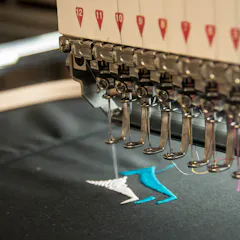
Is an archaic sewing skill a key to connected, sensing, communicating fabrics of the future?

Fill a tank with water, sugar, and old mobile phones. Add bacteria and stir. Result? Rare earth metals. This is biomining, and it’s the way of the future.

Flaws in manufacturing processes can cause chip flaws like Spectre and Meltdown – and blockchain technology may offer a solution.
Welcome to your future.
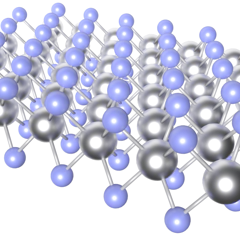
New materials just one atom thick could help make graphene even more useful.
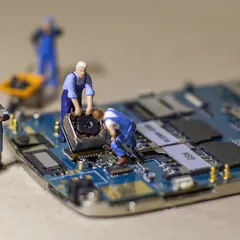
Many companies are working to prevent customers from fixing broken smartphones and tractors. By doing so, they’re missing out on an opportunity to build customer loyalty and boost profits.
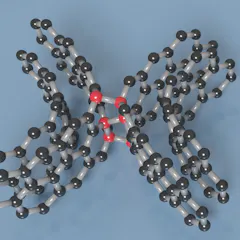
Compressed glassy carbon could be used to make better bulletproof vests or new types of electronics.
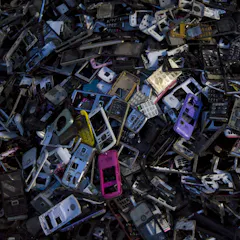
When technology evolves, it affects not only your financial position but also your ability to exercise other choices.
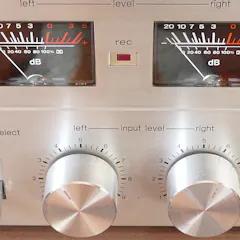
Without Alan Blumlein’s genius, most things would sound altogether different today.
Top contributors
-

Reader in Theoretical and Computational Condensed Matter Physics, University of Edinburgh
-
Associate Professor of Physics and Electronics, Hunan University
-
Professor of Physics, Clemson University
-
PhD Candidate, Queen's University Belfast
-
Assistant Professor in Nanoscience, University of British Columbia
-
Professor, Department of Computer Science, University of Surrey
-
John M. Thompson Chair in Information Technology and Innovation and Professor, Western University
-
Professor in Nanoelectronics, University of York
-
PhD candidate in Atomic Imaging, University of British Columbia
-
Research Scientist in Computer Science and Engineering, Nanyang Technological University
-
Associate Professor of Electrical and Computer Engineering, Binghamton University, State University of New York
-
Associate Professor of Electrical and Computer Engineering, Tufts University
-
Assistant Professor of Electrical and Computer Engineering, The Ohio State University
-
PhD candidate in Materials Engineering, Monash University
-
Professor/Head of Aviation, CQUniversity Australia