

Africa needs to navigate the tension between interdependence, economic security, and economic diversification.
Articles on Semiconductors
Displaying 1 - 20 of 67 articles
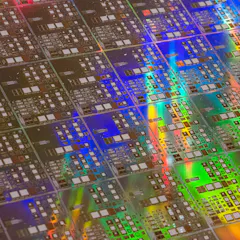
Data centers need powerful chips, while smartphones need chips that are energy efficient. A supply chain scholar explains why chipmakers’ focus on the former comes at the expense of the latter.

The nation’s semiconductor story is ultimately one of strategic foresight.
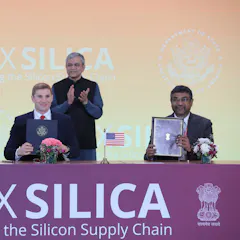
The new agreement gives Australia and India a chance to become much needed AI chip material suppliers – and an alternative to China.

Trump appears to be transforming strategic national security decisions into transactional deals where everything has a price.
Innovation thrives on collaboration and trust acros borders – tariffs undermine this.

The escalating trade war is creating serious risks for the international development of AI.

Two studies show major progress in the field of photonic microchips.

Geopolitical threats from China and the United States abound. That could be a tough pill to swallow for Taiwan − and American consumers.

Bringing chip manufacturing back to America is a national security and economic priority, but a shortage of skilled workers threatens to derail the effort.

Photonic quantum computing is so back.

DeepSeek’s launch raises questions over the effectiveness of US attempts to stifle Chinese advances in AI. Here’s what we can learn from its apparent success.
A material called niobium phosphide has just blown copper out of the water.
Intel and the Chips Act were supposed to hold the key to a new era in integrated chip manufacturing, but they have failed.

The video game is helping China advance toward two strategic goals: bolstering domestic semiconductor production and putting Chinese culture on the global stage.

On Sept. 6, 2024, the US announced fresh export controls on quantum and microchip goods. Taiwan has long worked to slow China’s AI progress, while not damaging its own lucrative market.

The success of Black Myth: Wukong is fuelling China’s chip manufacturing ambitions.

This is the story of a range of new technologies that are getting cheaper and being adopted at such speeds that society can barely keep up.

Quantum computers that work at slightly higher temperatures could be cheaper and more accessible.

Global semiconductor manufacturing is already under geopolitical stress, but climate change ups the ante.
Top contributors
-

Professor of Management and Innovation, International Institute for Management Development (IMD)
-
Vice Dean, Global Engagement | Associate Professor in Political Economy and Entrepreneurship, King's College London
-
Lecturer in Strategy, Cambridge Judge Business School
-
Professor of Economics, Salisbury University
-
Associate Professor, Technology and Innovation, University of Technology Sydney
-
Professor of Innovation and Entrepreneurship, University of Huddersfield
-
A/Prof, UTS Chancellor's Postdoctoral Research and ARC DECRA Fellow, University of Technology Sydney
-
Professor of Economic Geography, Cardiff University
-
Researcher, National Renewable Energy Laboratory
-
Professorial Research Fellow, University of Surrey
-
Professor of Semiconductor Materials, University of Sheffield
-
Ph.D. Candidate in Chemical Engineering, University of California, Riverside
-
Researcher, Human Geography, University of Amsterdam
-
Assistant Professor of Operations Management, University of Manchester
-
Chair in Emerging Technologies, Heriot-Watt University