

Teaching parents to play with their children is taking off in rural Zambia, but volunteers need better funding, training and support to reach every family.
Articles on Early childhood development
Displaying 1 - 20 of 57 articles
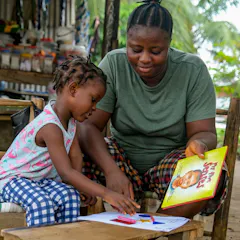
Reading together and taking an interest in homework makes a difference to young children’s learning.
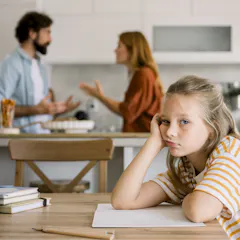
Observing how grown-ups operate provides children with information on how they can shape their worlds to get what they want and avoid what they don’t want.

If we want cities where all children can thrive, we need to create conditions where play is part of daily life, not something that must be scheduled or purchased.

An increase in the number of kindergarten children with special needs since the pandemic means more children will require specialized assistance and accommodation in later grades.
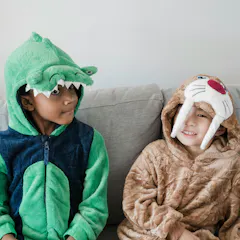
For children, rocks can be spaceships. Pens can be fairies. And this kind of play can help protect mental health in childhood, according to new research.
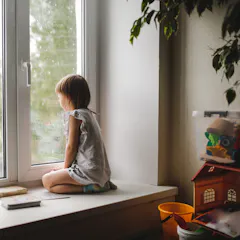
Research on a group of Australian preschoolers found more than 40% met the criteria for an anxiety disorder.
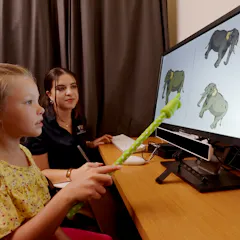
Recent research shows that young children typically manipulate and rotate entire objects in their minds to understand challenges such as puzzles.
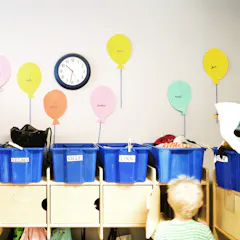
An Australian study suggests early education is not making as much of a difference as it should when it comes to young children’s development and learning.
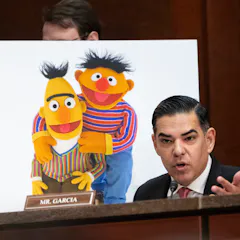
PBS KIDS produces popular age-appropriate programs. It also has a website and multiple apps with games and activities.

She’s six years old, lives in Brisbane and might just be one of the best resilience coaches on television.

In moderation, watching educational TV shows, movies and apps can boost language development among young children. 2 experts explain.

US schools are going all in on phonics, but research shows that approach won’t work for every child. A blended literacy strategy can get more students reading.
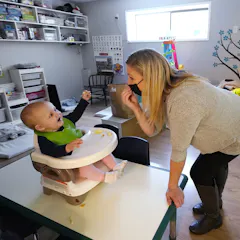
Our research has found that most pandemic-born children have been remarkably resilient to the disruptions caused by COVID.

The link between household food insecurity and child malnutrition is stark: 28.8% of South African children under five suffer from stunting.

The findings shake up previous ideas about language learning – and give us an earlier window to help children who might be at risk of speech or language delays.
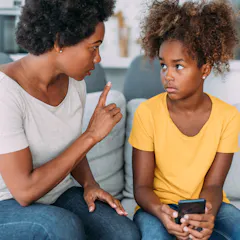
The brain science behind the power struggle between parents and their children.
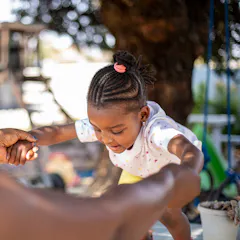
Young children’s development between the ages of 2 and 5 is shaped by a range of influences.
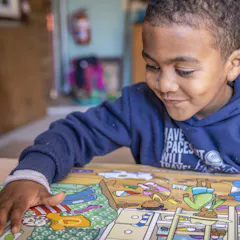
Ten years ago South Africa committed to invest in its young children. This vision has not been realised.

When parents are starting their babies in daycare, a common concern is whether it is good for them to be away from their primary carers for long periods of time.
Top contributors
-

Associate Professor at MRC/Wits Developmental Pathways for Health Research Unit, University of the Witwatersrand
-
Professor, Canada Research Chair in Determinants of Child Development, Owerko Centre at the Alberta Children’s Hospital Research Institute, University of Calgary
-
Deputy Director, The Kids Research Institute Australia, Professor of Autism Research, The University of Western Australia
-
Professor of Public Administration and Policy, American University School of Public Affairs
-
Associate Professor, School of Public Health, Georgia State University
-
Director of Quantitative Research of the CORE-PACE Research Partnership, Stanford University
-
Lecturer, University of Johannesburg
-
Atkinson Chair of Early Child Development and Education and Director of the Atkinson Centre, University of Toronto
-
Professor of the Practice of International Development, Johns Hopkins University
-
Postdoctoral Fellow in Psychology, University of Toronto
-
Professor, Queensland Brain Institute, The University of Queensland
-
Professor, University of Michigan School of Social Work, University of Michigan
-
Professor of Political Communication, Leadership and Public Opinion, Universidad de Buenos Aires
-
Assistant Professor of Social Work, The Ohio State University
-
Professor and Head of School, School of Early Childhood and Inclusive Education, Queensland University of Technology