
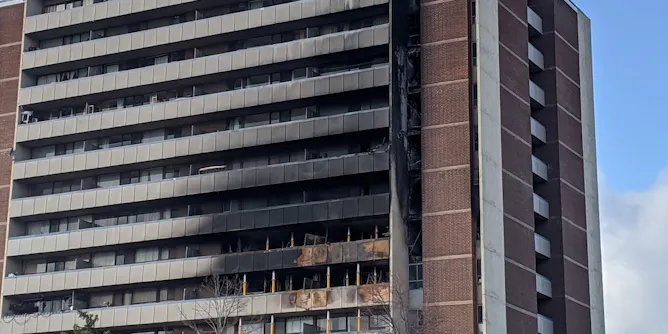
A fire in Toronto’s Black Creek neighbourhood displaced hundreds of people. One person died of smoke inhalation. The after-disaster response reveals some of the challenges faced by urban communities.
Articles on Disaster planning
Displaying 21 - 40 of 52 articles

Communications networks are a crucial part of any disaster planning. Resilient communications systems determine how effective emergency responses can be.
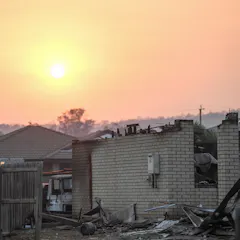
Land-use planning should give more weight to the increasing risks of natural hazards like bushfires as the first step in reducing the impacts.
The convergence of technologies such as 5G, artificial intelligence and virtual reality may offer hope for the way we manage future bushfire disasters.
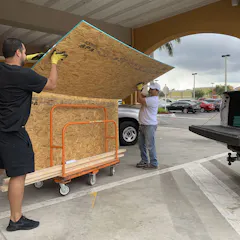
As Hurricane Dorian approaches Florida, we share three articles on predicting hurricanes’ paths and evacuating from harm’s way.

Governments must think about older people’s relationships with pets when they’re planning both aging-in-place strategies and disaster management.
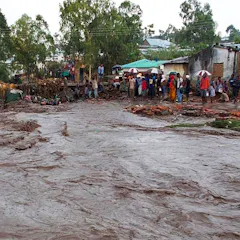
High poverty levels mean people lack access to land and work and they are often driven to settle in zones that are exposed to natural hazards.

To stay safe in a tsunami, remember that the sequence of waves may occur over hours to days, and the biggest wave in the sequence could occur at any time.
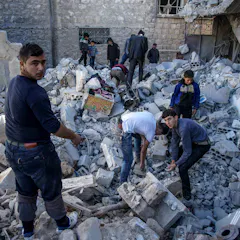
Warning Syrians of approaching airstrikes via social media is helping save lives.
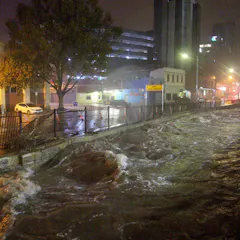
Managing flood risk is not just ‘good planning’; it requires commitment to resilient cities by land developers, politicians and communities. Effective response means learning from mistakes.
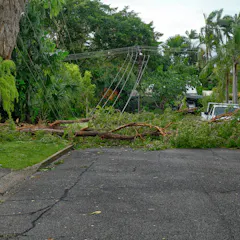
After Cyclone Tracy, you’d expect Darwin of all cities to be ready for the next one. But as the clean-up after Cyclone Marcus continues, it’s clear more must be done to increase the city’s resilience.
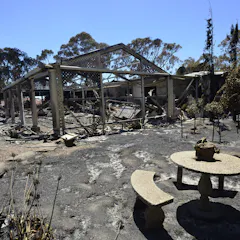
What decisions can we make today to reduce the future risk of hazards like floods and fire? Particularly in a time of climate change, modelling various plausible futures helps us plan for uncertainty.
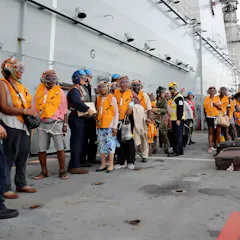
Promoting individual resilience will contribute to reductions in disaster threats for at-risk communities globally.
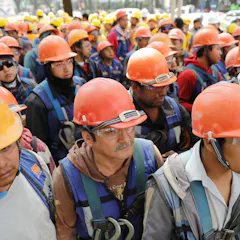
Earthquake drills, advance warning systems and higher building standards all help to save lives.
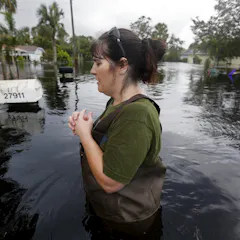
Even in areas predicted to take direct hits from hurricanes and other storms, hospitals must do all they can to stay open. It isn’t an easy task, but preparation and practice help.
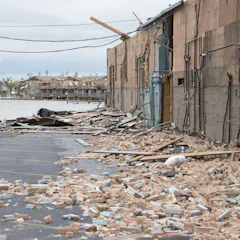
The widespread discussion as to whether the Hurricane Harvey disaster was caused by climate change or not is a dangerous distraction from the real issues.

A new data management system can give emergency responders a fast lane on the internet to help speed rescue efforts after a disaster.

The St Petersburg attack shows how engineering and psychology can help optimise how people are evacuated in a disaster.
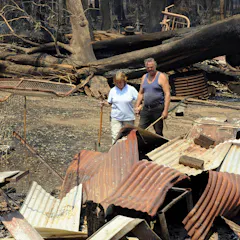
Rebuilding small communities on the same site in the same way seldom works. It’s not about getting back to where you were, but rather grasping the opportunity to create a more resilient place.
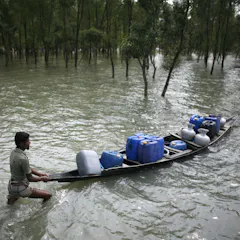
With burgeoning need and an aid system that is failing to cope, what meaning does ‘resilience’ have?
Top contributors
-

Deputy Head of School, School of Architecture and Built Environment, University of Newcastle
-
Professor and Inaugural Judith Neilson Chair in Architecture, UNSW
-
Associate Professor, School of Architecture and Built Environment, University of Newcastle
-
Teaching Assistant Professor, University of Pittsburg and Visiting Associate Professor, The University of Osaka, University of Pittsburgh
-
Clinical Assistant Professor of Education, Health and Behavior Studies, University of North Dakota
-
Research Active Lecturer, Discipline of Psychology, Charles Darwin University, Charles Darwin University
-
Associate Professor of Emergency Medicine, The Ohio State University
-
Associate Professor of Ecology, Lincoln University, New Zealand
-
Principal Lecturer in Geography, Nottingham Trent University
-
Professor Emeritus of City and Regional Planning, University of California, Berkeley
-
Research Team Leader, Bushfire Behaviour and Risks, CSIRO
-
Professor of Disasters and Health, UCL
-
Associate Professor, Humanitarian, Emergency and Disaster Management Studies, Charles Darwin University
-
Associate Professor, University of Sydney
-
Professor of Evolutionary Palaeobiology at the Milner Centre for Evolution, University of Bath