

If students choose to listen to music while studying, they should consider music that is less distracting – and save high-energy playlists for when they don’t need to focus.
Articles on Deep learning
Displaying 1 - 20 of 61 articles

Recent advances in computer vision and other types of artificial intelligence offer an opportunity for facial recognition to apply to bears and other animals.

Learning is understanding, requires challenge and takes time, a science education scholar explains.

Pioneering computer scientist Yoshua Bengio says his new AI model will make the world safer. But will it work?
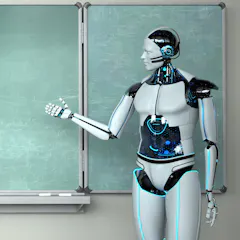
AI’s potential needs to be explored through experimentation. But this works best if managed under controlled environments.
AI systems can appear to be black boxes – often, even experts don’t know how systems reach their conclusions. The nascent field of “explainable AI” aims to address this problem.
The AI industry is expending vast resources on growth, fuelled by unrealistic optimism about technology and the future.
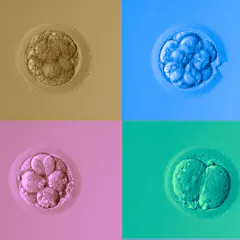
A study of more than 1,000 IVF patients showed a deep learning software system was almost as good as human experts at choosing viable embryos.
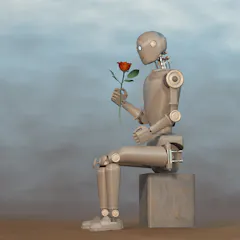
AIs that can see and hear have captured the public imagination. A machine learning expert explains why the sense of smell has lagged behind – and why that could change.
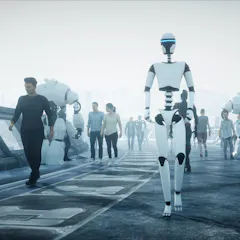
Artificial intelligence is everywhere, and the tech industry is racing along to develop ever more powerful AIs. Three scholars look ahead to the next chapter in this technological revolution.
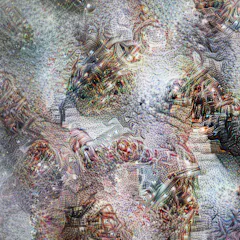
Researchers fed an advanced AI algorithm with satellite photographs to see if it could identify areas of poverty and it interpreted the data through abstract images.

When water warms, it holds less oxygen, and this can harm aquatic life and degrade water quality. A new study finds that climate change is driving oxygen loss in hundreds of US and European rivers.

People can trust each other because they understand how the human mind works, can predict people’s behavior, and assume that most people have a moral sense. None of these things are true of AI.
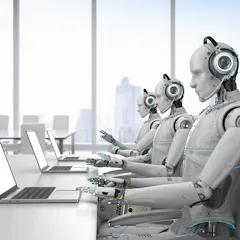
Now that AI systems can generate realistic images and convincing prose, are creative and knowledge workers endangered or poised for productivity gains? A panel of experts says it’s not so clear-cut.
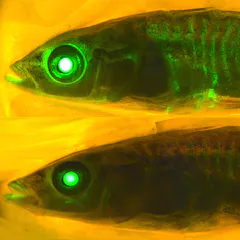
The AI AlphaFold can figure out the three-dimensional protein structure any string of amino acids will become. It has now exceeded its training by figuring out what makes some proteins glow.

‘Vicootes’, ‘wa ch zod rea’ and other strings of gibberish seem to have special meanings to state-of-the-art AI models. What’s going on here?

Using machine learning, we analysed meaning and feeling in different translations of an ancient Hindu holy text.
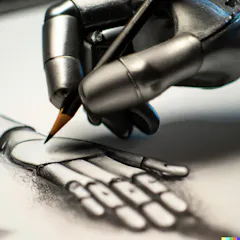
New software that can generate images and text on command may deliver ‘good enough’ creativity in advertising, copywriting, stock imagery and graphic design.
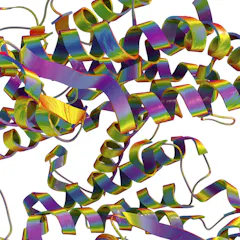
Using a form of artificial intelligence called deep neural networks, researchers can generate new proteins from scratch without having to consult nature.
The ethics of AI are constantly debated. But does anyone ask the AI?
Top contributors
-

Professor, ESCP Business School
-
Associate research scientist Cambridge Judge Business School and lecturer GEM, GEM
-
Professor, Harvard University
-
Professor of AI, Research Group Leader, UNSW
-
Senior Research Fellow in AI Accountability, Queensland University of Technology
-
Research Assistant Professor of Industrial & Systems Engineering, University of Southern California
-
Professor of Neuroscience and Mathematics, The University of Queensland
-
Professor of Community Information, University of Michigan
-
Leverhulme Fellow and Lecturer, Faculty of Law, University of Cambridge
-
Research Fellow in Artificial Intelligence and Digital Games, University of York
-
Professor of AI at QUT, Queensland University of Technology
-
Research Fellow, Robotics & AI, Queensland University of Technology
-
Senior Lecturer in Law, University of Waikato
-
PhD Candidate in Cognitive Neuroscience, The University of Queensland
-
Professor of Machine Learning, University of Sheffield