

AI is reshaping biomedical research and drug discovery and delivery. But challenges still exist.
Articles on Neural networks
Displaying 1 - 20 of 67 articles

Dinosaur footprints are not perfect snapshots of the feet that made them. AI techniques from photon science can help identify their owner.
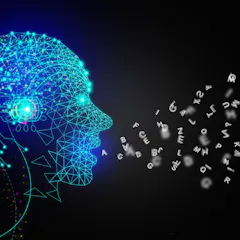
Describing artificial intelligence as having neural networks and understanding language has implications for how we understand both AI and the human brain.

New research uses firefly flashing patterns to identify species and what they’re communicating.
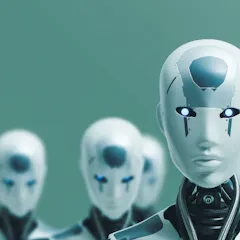
Nearly 20 years after it was launched, machine translation is still a long way from replacing translators.
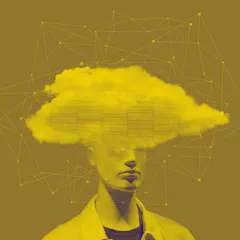
The idea that AI ‘learns’ like humans do is one of many misconceptions about the technology.

The psychological study of the mind was crucial to the creation of AI – and will remain an essential part of the technology’s future.
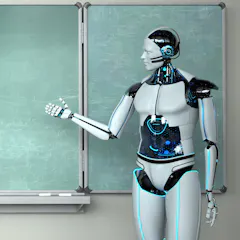
AI’s potential needs to be explored through experimentation. But this works best if managed under controlled environments.
How can including them change our understanding of AI?
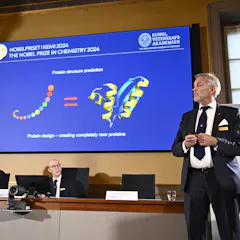
AI will feature in future Nobel prizes as scientists exploit the power of this technology for research.
Two researchers whose work has led to the AI revolution won the 2024 Nobel Prize in physics. A materials physicist explains statistical mechanics, the physics field behind their discoveries.

The Nobel Prize shows that the field of artificial neural networks – and the deep learning AI revolution the technology unleashed – owe as much to physics as biology and computer science.
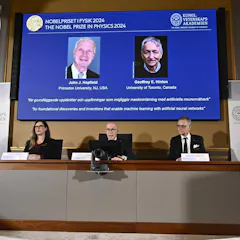
John Hopfield and Geoffrey Hinton, the 2024 Physics Nobel laureates, developed computer systems that can memorise and learn from patterns in data.

AI often has trouble interpreting optical illusions. A new kind of neural network starts to bridge the gap
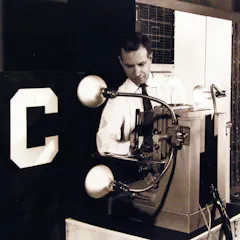
Enthusiasm for the capabilities of artificial intelligence – and claims for the approach of humanlike prowess –has followed a boom-and-bust cycle since the middle of the 20th century.

Technological approaches could help reduce the carbon impact of artificial intelligence systems.
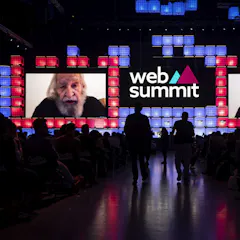
Could Chomsky have foreseen where his contributions would lead us?
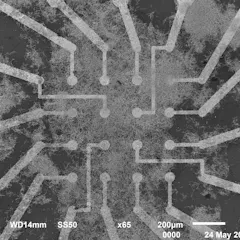
A tangle of silver nanowires may pave the way to low-energy real-time machine learning.
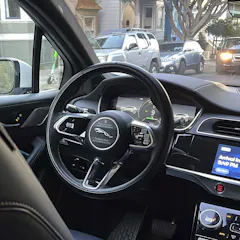
People can trust each other because they understand how the human mind works, can predict people’s behavior, and assume that most people have a moral sense. None of these things are true of AI.
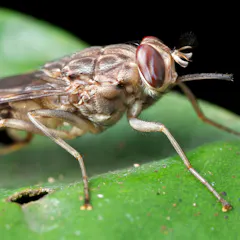
New research on what attracts blood-feasting flies to blue objects could help minimise the impacts of those insects on people and animals.
Top contributors
-

Senior Research Fellow in AI Accountability, Queensland University of Technology
-
Principal Research Fellow at AI and Cyber Futures Institute, Charles Sturt University
-
University Distinguished Professor of Astronomy, University of Arizona
-
Assistant professor, University of Chicago
-
Professor of Mathematics, Electrical and Computer Engineering, Biochemistry and Molecular Biology, Michigan State University
-
Senior Clinical Research Fellow, Department of Psychiatry and Faculty of Philosophy, University of Oxford
-
Postdoctoral Research Fellow, The University of Queensland
-
Assistant Professor of Geography, Michigan State University
-
Research Fellow, Robotics & AI, Queensland University of Technology
-
Researcher, Human-Machine Interaction, The MARCS Institute, Western Sydney University
-
Distinguished professor, Texas A&M University
-
Professor of Physical Chemistry & Director of Centre for Computational Science, UCL
-
Lecturer, Public Policy and Law, Monash University
-
Professor of Artificial Intelligence, University of Hertfordshire
-
Senior Research Fellow, Horizon Digital Economy, UnBias, University of Nottingham