

The games created a new way of experiencing video games by building a 3D world in which events could unfold beyond the player’s line of sight.
Articles on Computers
Displaying 1 - 20 of 173 articles

Self-hosting is a general catch-all term for taking control of your own data. It comes in many flavours.

As data centres have grown in size and number in Australia, they have also become the subject of fierce public debate. So what’s the best way forward?

To the designer Susan Kare, designing icons was about solving ‘the little puzzle of making an image fit a metaphor’. Forty years later, that challenge remains.

Understanding what drives recruitment into these academies is not a defence of fraud. It is a precondition for dismantling it.
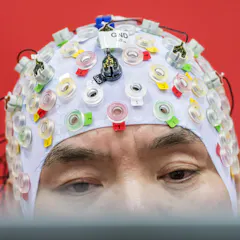
Paralysed people are already using brain-computer interfaces to turn their thoughts into text. But there are risks to this technology.

Behind the long-term climate projections that affect our lives sits one of the most remarkable scientific achievements of the modern era.

Early digital literacy prepares children for future learning and careers.

There’s a lot that AI can’t do, but hype and misinformation are driving prospective students away from Computer Science.

Inside every smartphone and laptop are tiny specks of valuable materials, many of which are still lost even when you take your old electronics to a recycling center.

The revolutionary approach tracks movement directly from video footage without the need for cumbersome suits and expensive laboratories.

AI policy development is not a neutral or technical process but a political one.
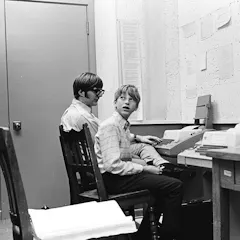
Fifty years after its creation – an eternity in the tech world – Bill Gates and Paul Allen’s company is still here. This is a look back at Microsoft’s success story.

From clay tablets to electronic tablets, technology has played an influential role in shaping human knowledge for centuries.

Less than 25% of all e-waste globally gets recycled. That’s because there are many challenges involved – but there is a way forward, too.

My study found students that used AI in their design work were more creative and learned new skills quickly.

You’ll be hearing a lot about quantum computing in 2025. Here’s where the field is at – and where it’s all going.

Data centres need to expand to support the AI revolution, but that means even more electronic waste.

Too often, prescribing errors occur due to programming errors or poor design and have less to do with the health workers using the system.

From disrupting nuclear facilities to throwing national health services into disarray, cyberattackers often target the most secure government computer systems.
Top contributors
-

Professor & Director, Hub for Apple Platform Innovation (HAPI), School of Computing Technologies, RMIT University
-
PhD; Lawrence Berkeley Laboratory (retired) and Research Fellow, University of California, Davis
-
Laureate Professor of Mathematics, University of Newcastle
-
Professor, ESCP Business School
-
Associate research scientist Cambridge Judge Business School and lecturer GEM, GEM
-
Lecturer in Computer Science, Queen Mary University of London
-
Professor, Harvard University
-
Lecturer in Digital Media and Cultures, The University of Queensland
-
Directeur de la Recherche et des Formations Doctorales, Directeur adjoint, Télécom SudParis – Institut Mines-Télécom
-
Professor Emeritus, Swinburne University of Technology
-
Pro Vice-Chancellor, research portfolio, The University of Melbourne
-
Senior Lecturer in Digital Media, Swansea University
-
Lecturer in Software Engineering, Monash University
-
Professor of AI, Research Group Leader, UNSW
-
Adjunct Professor of Mathematics, Prince George's Community College