
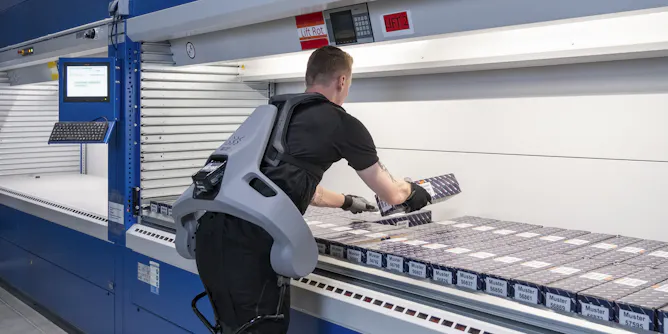
Powered robotic devices designed to enhance the wearer’s physical capabilities are being developed for an increasing range of uses.
Articles on Robotics
Displaying 1 - 20 of 260 articles

Scientists are creating additional robotic arms, legs and thumbs to push the boundaries of what can be achieved by the human body.
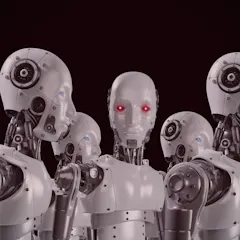
Why do some people perceive a robot as ‘creepy’ while others don’t? It seems our response to these increasingly common non-human companions is highly subjective.
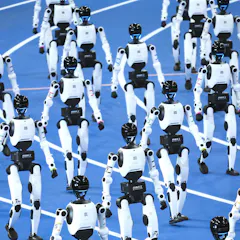
The People’s Liberation Army called for researchers to accelerate progress on building humanoid robots designed for military uses.

Scientists studied active matter systems by racing worms through tubes – to unexpected results.

Each day in the control room of the Curiosity rover is jam-packed with important scientific decisions, as a NASA project scientist describes.
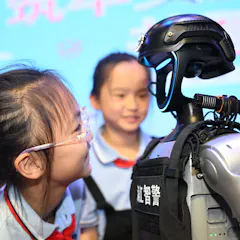
A recent study into China’s innovation boom found patenting activity has been accelerating for years and is built on a whole ecosystem, not a few lone heroes.
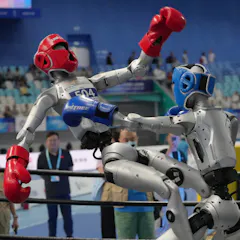
Getting a robot to run 100m faster than Usain Bolt is impressive. But how about a humanoid that can make you a cup of tea in your own kitchen?
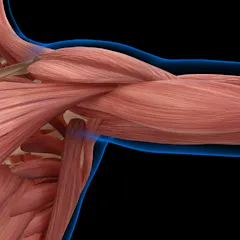
Coordination appears to emerge spontaneously from muscle fibres.
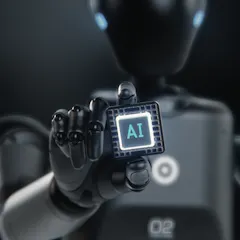
In tests, AI robot systems easily rejected directly malicious commands. But their safety filters collapsed when creative writing was used to instruct them.

Canada is developing sophisticated AI tools for agriculture but lacks the systems to help farmers understand, integrate and trust these technologies.
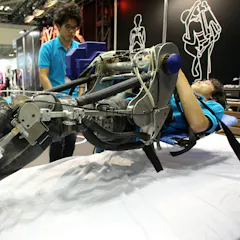
Japan has long been the global leader in the development and deployment of care robots.
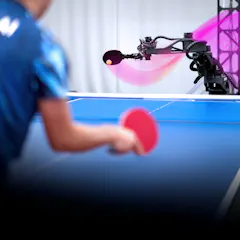
The real opportunity is not to build robot champions, but to better understand human performance.
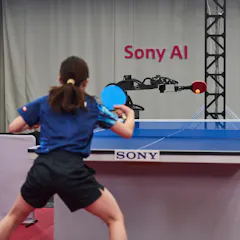
The robot, called Ace, held its own against elite players of the sport.

The recent capture of a Russian position using ground robots is a milestone for the use of machines in warfare.

Robots have a growing role on the battlefield – but for the immediate future, they are more likely to support the fight than lead it.
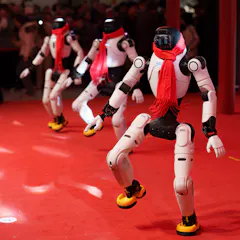
There are some big gaps in Australia’s policy settings if we are going to catch up on new AI-powered robotics.
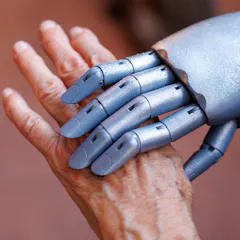
To learn in the way humans do, robots need bodies that feel.
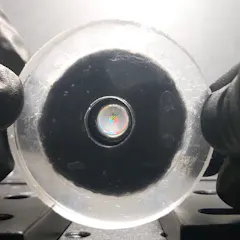
This lens modeled on biological eyes could make it easier to give soft machines and bio-safe tools the ability to see.
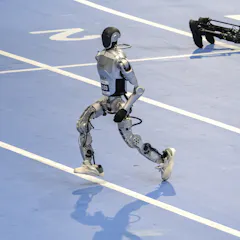
They’re not in our homes yet, but it might be just a matter of time as tech companies bet big on humanoid robots.
Top contributors
-

Professor in Robotics, Queensland University of Technology
-
Professor of AI, Research Group Leader, UNSW
-
PhD in machine ethics, University of Canterbury
-
Professor, Director of the Centre for Robotics, Queensland University of Technology
-
The University of Melbourne
-
Professor Emeritus, Swinburne University of Technology
-
Reader in Autonomous Intelligent Robotics, University of Birmingham
-
Senior Lecturer, Department of Engineering, Nottingham Trent University
-
Senior University Teacher in Robotics, University of Sheffield
-
Researcher in Artificial Intelligence Regulation, Australian National University
-
Honorary Associate Professor, UNSW
-
Professor, School of Systems and Computing, UNSW
-
Lecturer in Robotic Systems, University of Manchester
-
Professor of Management, Co-Director of the MIT Sloan Institute for Work and Employment Research, MIT Sloan School of Management
-
Professor of the Practice of International Development, Harvard Kennedy School