
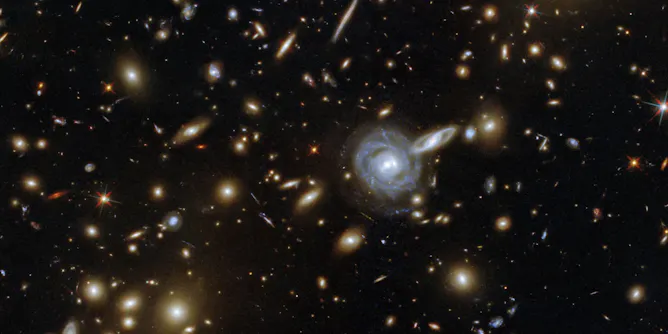
The Hubble tension has been described as a “crisis” for cosmology. Can it be resolved?
Articles on Dark energy
Displaying 21 - 40 of 64 articles
A new series delves into the big questions surrounding the nature of our universe.
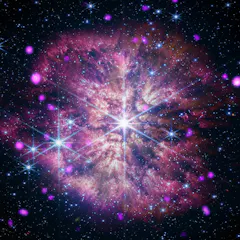
Right now, it looks like cosmology is at a tipping point.
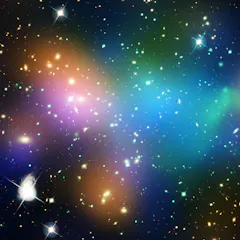
Cosmology does not need dark matter or dark energy in an expanding universe that allows the constants of nature to evolve, and light loses energy as it travels vast distances.
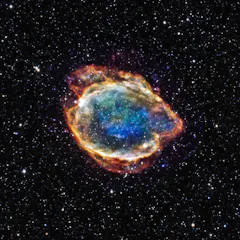
After a decade studying thousands of supernovae, astronomers are still perplexed by the enigma that led Einstein to his ‘greatest mistake’.
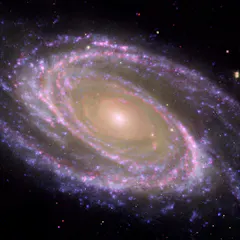
The nature of dark energy remains one of the biggest puzzles in cosmology.
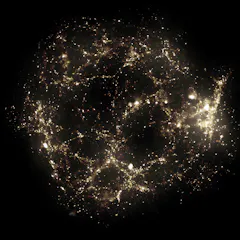
If we lived in a cosmic area with below average density, it would explain recent contradictory measurements of the universe’s expansion.
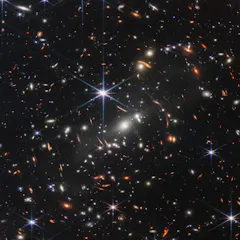
The universe is expanding faster than physicists would expect. To figure out what processes underlie this fast expansion rate, some researchers are first trying to rule out what processes can’t.
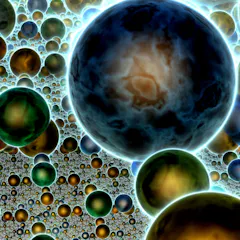
The universe appears to be fine-tuned for life to evolve.
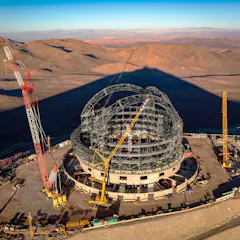
From improving our understanding of dark matter to revealing the location of Earth 2.0, the Extremely Large Telescope promises answers to some of the biggest scientific questions of our time.
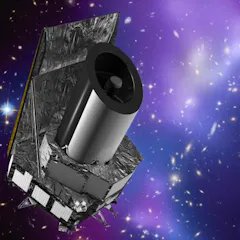
The Euclid mission is preparing to launch on July 1.
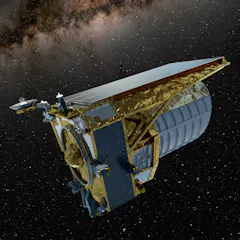
A spacecraft set to launch this year will throw a spotlight on the mysterious ‘dark side’ of the universe.
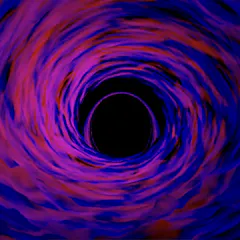
Astronomers have found that mysterious dark energy may originate in black holes.
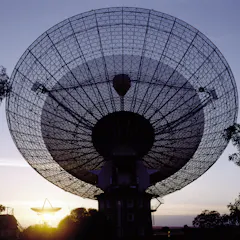
Australian astronomers are part of a prize-winning team that was the first to pinpoint the location of a fast radio burst. But there is much we still don’t know about these mysterious bursts.
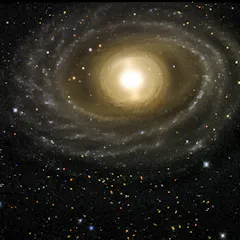
Dark energy is probably a sea of constant energy in empty space itself, according to new research.
More than 70% of the Universe is made of ‘dark energy’, the mysterious stuff even stranger than dark matter
The Conversation17.1 MB (download)
Today on the podcast, we explore what we know about dark energy, believed to be responsible for the acceleration of the expansion of the Universe.
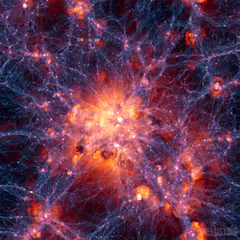
A study has suggested that the universe is curved like a sphere rather than flat, which may unleash a major crisis in cosmology.
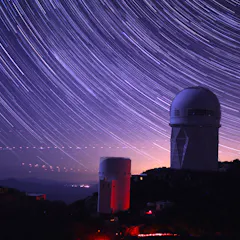
Will we have to rewrite Einstein’s theory of gravity? The DESI experiment could find out.
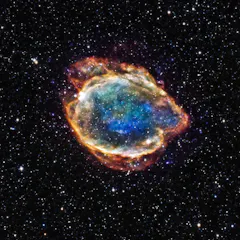
The rate of the universe’s expansion is in dispute. But a new kind of measurement offers hope.
Forget about dark matter and dark energy, new research suggests that the existence of ‘dark fluid’ may solve some of the biggest mysteries in physics.
Top contributors
-

Pro Vice-Chancellor and Executive Dean, University of Surrey
-
Reader in Astrophysics, UCL
-
Professor of Astrophysics, University of Sydney
-
Lecturer and ARC DECRA Fellow, Queensland University of Technology
-
Dean of Science, University of California, Santa Cruz
-
Astronomer, CSIRO
-
Senior Lecturer, School of Mathematics and Physics, University of Surrey
-
Professor, The University of Queensland
-
Professor of Physics, Heriot-Watt University
-
Adjunct professor, Physics, L’Université d’Ottawa/University of Ottawa
-
Professor and Director of the Centre of Excellence for Data Science, AI and Modelling, University of Hull
-
Professor of Astrophysics, University of Cambridge
-
Professor of astrophysics (dark matter and cosmology), Durham University
-
Dalhousie University
-
Professor, University of KwaZulu-Natal