
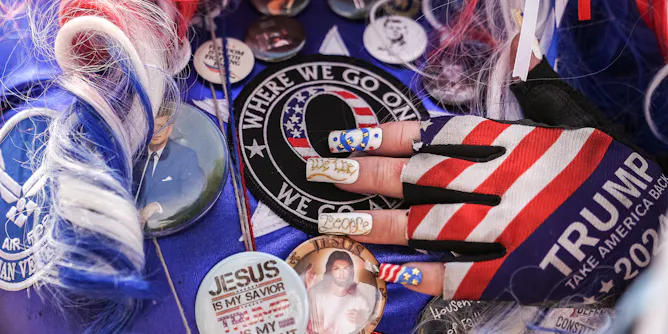
Ideas from QAnon’s conspiracy theory have appeared on government social media sites during Trump’s second term and continue to divide America amid social and economic crises.
Articles on QAnon
Displaying 1 - 20 of 94 articles

Jon Ronson’s Them was published just months before the world changed on September 11 2001. Its portrait of conspiracy theorists and extremists was eerily prescient.

Sociologist Art Jipson talks to The Conversation Weekly podcast about how clamouring for the release of the Epstein files grew on fringe spaces of the internet.
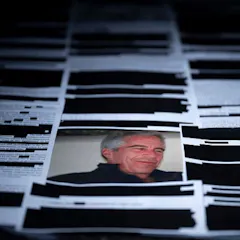
People have created their own online platforms to probe the millions of Epstein file documents, fostering new conspiracies that link to older ones like QAnon.
Is this justice or retribution?
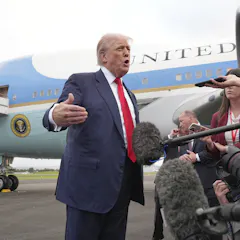
Trump is under huge pressure - even from within his MAGA base - to release the files. But any idea this might bring down the “Teflon” president may be misplaced.
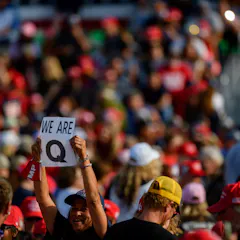
The foundational belief of many of the QAnon followers is that Donald Trump is the heroic figure fighting the elite pedophile ring.
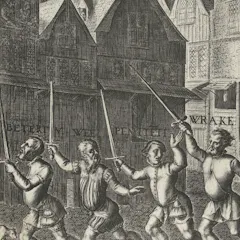
Today’s Christian nationalists have shaped their theology in ways that harken to apocalyptic prophets of the1530s.

The ‘Courage Tour,’ a religio-political rally, is going around battleground states. It is focused on defeating Democrats, but also on defeating ‘demonic forces.’

Conspiracy theories aren’t based so much on objective facts, but rather through often loosely connected bits of information. That makes them potent sources of misinformation.
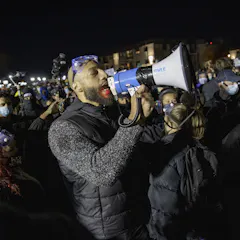
New Age beliefs, alternative wellness practices and political conspiracies all fall under the umbrella of stigmatized knowledge, which can be attractive to anyone, no matter their political leanings.
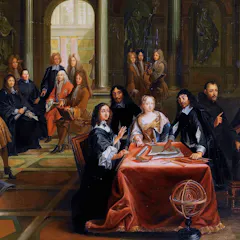
Ideas used by conspiracy theorists hark back to those of 17th-century philosophers such as René Descartes.

Rural white people have long held disproportionate power in US politics. But polls suggest their commitments to the American political system are eroding.
New research shows that even after Facebook made changes to stem the tide of dangerous pandemic misinformation, some accounts continued to thrive.
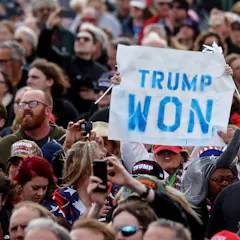
Nearly a third of Americans say they believe that Donald Trump was the real winner of the last election, and the ratio is twice as high among Republican voters.
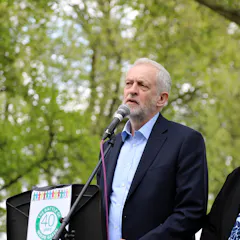
The liberal establishment can also be responsible for disseminating conspiracy theories.
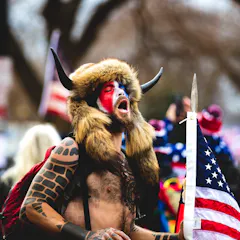
It is now not uncommon to find people supporting leaders like Donald Trump while insisting the state refrains from intervening in their lives.
Satanic rituals and Hollywood elites: the myths behind satanism conspiracy theories.

Fear has important consequences for how people vote, what they spend their money on, who they consider to be part of their communities, and who they treat as outsiders.

Mark Zuckerberg says he wants the world to be more “open and connected”, but his decision to block archiving the company’s social media content argues otherwise.
Top contributors
-

PhD candidate Individualized Program, 2020-2021 Public Scholar, Concordia University
-
Research Lead, Center on Terrorism, Extremism, and Counterterrorism, Middlebury College
-
Associate Professor of Sociology, University of Dayton
-
Department of Media & Culture, Faculty of Humanities, University of Amsterdam
-
Chair and Professor of Religious Studies, Radford University
-
Associate Professor of Rhetoric, Politics and Culture, University of Wisconsin-Madison
-
Visiting scholar, postdoctoral fellow in American Studies, Queen's University Belfast
-
Professor of History, Toronto Metropolitan University
-
Assistant Professor of Anthropology, Vanderbilt University
-
Professor of Media, Film, and Communications, Lakehead University
-
Professor of Social Work and Criminology, Chatham University
-
Spécialiste de la politique américaine, Sciences Po
-
Professor of Intelligence and National Security & Dean of Faculty, University of Hull
-
Professor of AI and Behavioral Data Science, University of Technology Sydney
-
Professor of Religion, Carleton University