
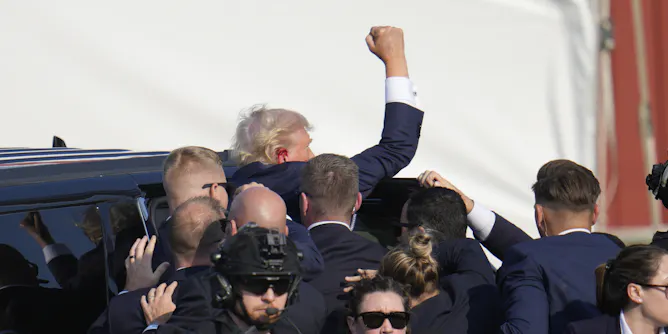
Politicians and other influential actors are amplifying conspiratorial content – potentially contributing to increased distrust in the US political system.
Articles on Conspiracy theories
Displaying 61 - 80 of 336 articles
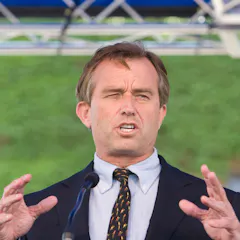
RFK Jr wants to get into the television debates, but so far, it’s not looking likely.
New Age beliefs, alternative wellness practices and political conspiracies all fall under the umbrella of stigmatized knowledge, which can be attractive to anyone, no matter their political leanings.

As vegan meat companies lose revenue, one company is trying a new packaging approach to bring in new consumers. But this step is unlikely to help end the ‘Meat Culture War.’

Most social media PR blurb is designed to convince the public these tech companies are a benign force for good. What the public really needs is a public service internet.
Conspiracy theories abound. What should you believe − and how can you tell?

A professor shows science students how humanities classes are the real stem that other disciplines sprout from. They learn that critical thinking and skepticism don’t stop when they leave the lab.
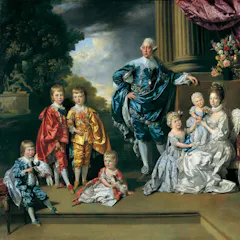
The story of the ‘royal malady’ highlights the growth of the press and how it has shaped how the British public perceives the royal family.

Rural white people have long held disproportionate power in US politics. But polls suggest their commitments to the American political system are eroding.
New research shows that even after Facebook made changes to stem the tide of dangerous pandemic misinformation, some accounts continued to thrive.

The pros and pitfalls of this type of thinking

A scholar of history of education and American politics explains what is behind his course on conspiracy theories and how students learn to debunk fake ideas.
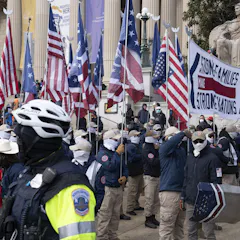
False ideas about the extinction of the white race, spread around the late 19th and early 20th centuries, gave rise to xenophobic and anti-immigration conspiracy theories.

Russian disinformation expert Ilya Yablokov tells The Conversation Weekly podcast about the president’s shifting relationship with conspiracy theories.
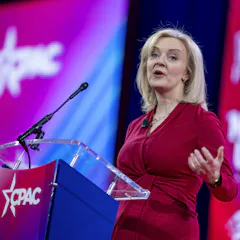
When Liz Truss blames shadowy elitists for her failings as prime minister, she is leaning into a tried-and-tested formula.
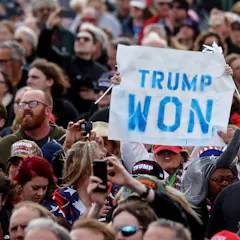
Nearly a third of Americans say they believe that Donald Trump was the real winner of the last election, and the ratio is twice as high among Republican voters.

People who dive into misinformation are driven to satisfy an emotional need, according to our new research.
One of the more satisfying aspects of conspiracy theorising is, sometimes, they might just be right.

A new study has found no evidence that people’s beliefs in conspiracy theories increase over time. They can even change their minds – just not that often.

This Super Bowl sees the convergence of two emotional fandoms: Swifties and NFL fans.
Top contributors
-

Associate Professor in Social Psychology, School of Psychology, University of Nottingham
-
Professor in Applied Cognitive Psychology, Manchester Metropolitan University
-
Senior Lecturer and Researcher in Cognitive and Parapsychology, Manchester Metropolitan University
-
Host of The Anthill Podcast, The Conversation
-
Professor of Social Psychology, University of Kent
-
Chair of Cognitive Psychology, University of Bristol
-
Professor of American Studies, University of Manchester
-
Senior Lecturer in Social Psychology, La Trobe University
-
PhD candidate Individualized Program, 2020-2021 Public Scholar, Concordia University
-
Senior Research Fellow, Melbourne School of Psychological Sciences, The University of Melbourne
-
Department of Media & Culture, Faculty of Humanities, University of Amsterdam
-
Senior Lecturer in Philosophy and Education; Curriculum Director, UQ Critical Thinking Project, The University of Queensland
-
Senior Lecturer in Psychology, The Open University
-
Associate Professor in Psychology, Te Kunenga ki Pūrehuroa – Massey University
-
Associate Professor of Sociology, University of Dayton