
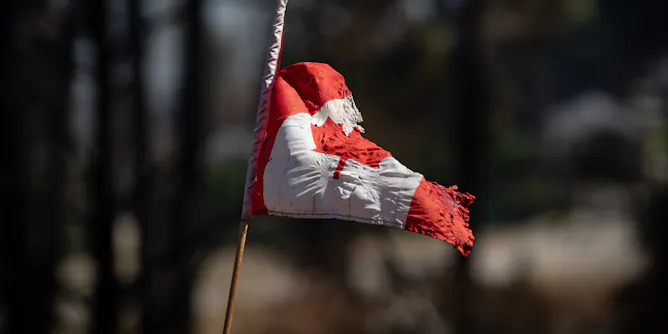
Climate misinformation is undermining emergency response during crises. Canadian governments need to develop co-ordinated efforts to tackle it.
Articles on Conspiracy theories
Displaying 21 - 40 of 336 articles
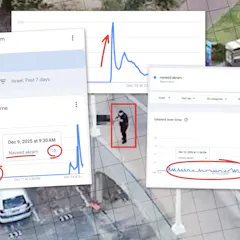
Google Trends results for attackers’ names from before an attack are increasingly (and incorrectly) being used as evidence of conspiracies.

Conspiracy thinking, supernatural beliefs and pseudoscience can seem impervious to evidence. An anthropologist suggests the opposite: Extraordinary beliefs may be supported by an individual’s experience.

If you interact with chatbots about conspiracy theories, research shows you can can easily fall down the rabbit hole.

A communications researcher lays out the dynamics of conspiracy theory belief and why they gain traction in times of anxiety and uncertainty.

The latest corruption scandal is a huge blow for Ukraine’s president, Volodymyr Zelensky.
Is this justice or retribution?

President Barack Obama’s mockery of Donald Trump in 2011 may have fueled the former real estate mogul’s run for president and his desire to leave his mark on the White House.

One prominent theory says conspiracy beliefs are triggered by elevated distress. But a new study finds limited evidence to support this claim.

From a quirky Australian wheat farmer to more violent outcomes, the sovereign citizen movement often stems from a feeling of angst and uncertainty.
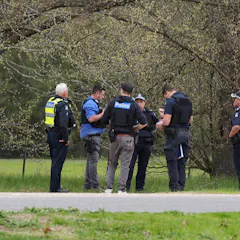
The alleged shooter in the Porepunkah police killings was reportedly a sovereign citizen - a group with often deep antagonism towards authority figures.

Far from being isolated outsiders, conspiracy theorists enjoy thriving communities that recruit and organise activism.
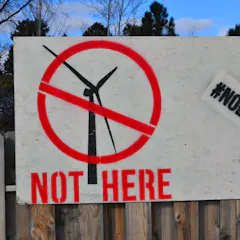
Opposition is often rooted in a worldview in crisis.

The COVID pandemic likely began when the virus jumped from animals to humans, and didn’t start in a lab. But false narratives continue to circulate.

New research reveals people aged under 35 are more likely to believe conspiracy theories due to political alienation and low self-esteem.
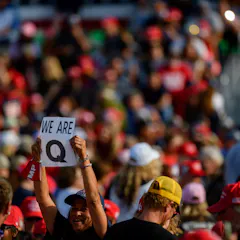
The foundational belief of many of the QAnon followers is that Donald Trump is the heroic figure fighting the elite pedophile ring.

False claims that leaders in Europe want to force people to eat insects are meant to provoke fear.

Brazilian disinformation experts Ergon Cugler and Igor Sacramento talk to The Conversation Weekly podcast.

It’s important to recognise how deeply supernatural beliefs influence people, rather than dismissing or ignoring them.

Here are some things you can do if your romantic partner has gone down a conspiratorial rabbit hole.
Top contributors
-

Associate Professor in Social Psychology, School of Psychology, University of Nottingham
-
Professor in Applied Cognitive Psychology, Manchester Metropolitan University
-
Senior Lecturer and Researcher in Cognitive and Parapsychology, Manchester Metropolitan University
-
Host of The Anthill Podcast, The Conversation
-
Professor of Social Psychology, University of Kent
-
Chair of Cognitive Psychology, University of Bristol
-
Professor of American Studies, University of Manchester
-
Senior Lecturer in Social Psychology, La Trobe University
-
PhD candidate Individualized Program, 2020-2021 Public Scholar, Concordia University
-
Senior Research Fellow, Melbourne School of Psychological Sciences, The University of Melbourne
-
Department of Media & Culture, Faculty of Humanities, University of Amsterdam
-
Senior Lecturer in Philosophy and Education; Curriculum Director, UQ Critical Thinking Project, The University of Queensland
-
Senior Lecturer in Psychology, The Open University
-
Associate Professor in Psychology, Te Kunenga ki Pūrehuroa – Massey University
-
Associate Professor of Sociology, University of Dayton