

What happens in the deep ocean might seem far removed from your everyday life. A new study shows otherwise.
Articles on Climate models
Displaying 1 - 20 of 75 articles
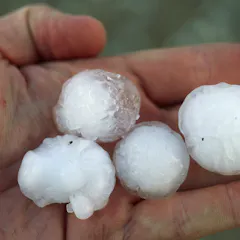
Costs from severe storms are increasing – and this global shift in hailstorm spells bad news for crops, too.
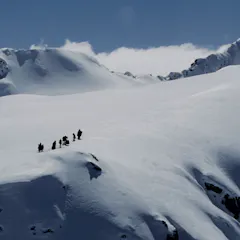
It’s a seemingly whimsical exercise, but it serves serious purposes.
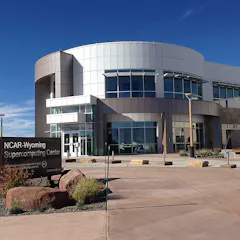
Behind the long-term climate projections that affect our lives sits one of the most remarkable scientific achievements of the modern era.
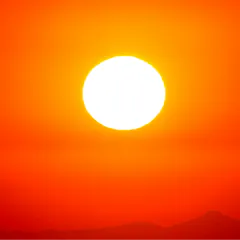
By the end of this century, parts of Africa could face heatwaves for 250-300 days a year, which will make it difficult for people to survive.

When the Gadi supercomputer opened in 2020, it was ranked 24th in the world. It’s now dropped to 179th.

The project collects troves of data from the best climate models around the world – and the newest update to it is now underway.

From rising global temperatures to the fast-warming Arctic, early climate models predicted the changes half a century ago.
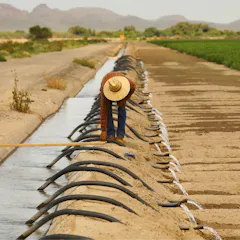
The drought has been linked to the Pacific Decadal Oscillation, a natural climate pattern. A new study finds global warming is now influencing that natural phenomenon.
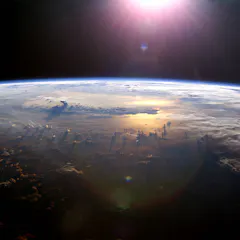
Real world measurements of how much extra heat the Earth is trapping are well beyond most climate models. That’s a real problem.
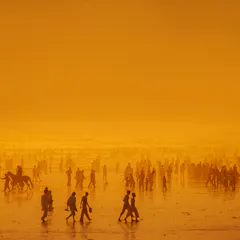
The world seems to have avoided truly catastrophic climate scenarios, and global emissions may be about to peak. But we’re by no means out of danger
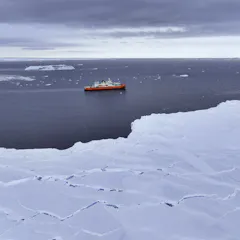
The Antarctic Slope Current shields Antarctica from warm waters. But new research shows meltwater is speeding up the current, which could make it more unstable.
Weather and climate models are both governed by the same physical processes. But that’s where most of the similarities end.

The Antarctic ice sheet is nearly twice the area of Australia and holds enough freshwater to raise global sea levels by 58 metres.
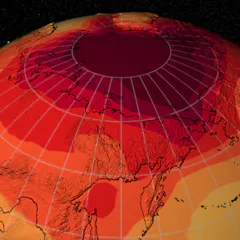
Techniques like machine learning will give these simulations greater predictive power.

Machine learning systems may make weather forecasts faster and cheaper – but climate projections still remain beyond their grasp.

The predicted range of future warming remains stubbornly wide. But trying to land on a precise number diverts effort and attention from the climate impacts we’re already seeing.
Signs of this potential La Niña are emerging fairly late. But new research may help make predictions earlier.
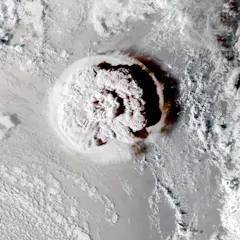
Our new research predicts how Hunga Tonga’s vast underwater eruption in 2022 will change winters worldwide for years to come – as far away as Australia, North America and even Scandinavia.

Mosquito populations can respond quickly to changing climate, which means the location of areas at risk of malaria might change.
Top contributors
-

Professor of Atmospheric Sciences, Climate Change Research Centre, UNSW
-
ARC Future Fellow and Associate Professor in Climate Science, ARC Centre of Excellence for 21st Century Weather, The University of Melbourne
-
Senior Lecturer in Atmospheric Science, Climate Change Research Centre, UNSW
-
Senior Research Associate in Meteorology, University of Bristol
-
Professor and Director of ACCESS-NRI, Australian National University
-
Principal Research Scientist, CSIRO
-
Senior Lecturer, The University of Melbourne
-
Director, ARC Centre of Excellence for the Weather of the 21st Century, Monash University
-
Chief Investigator, ARC Centre of Excellence for Climate Extremes; Chief Investigator, ARC Securing Antarctica's Environmental Future; Professor, Monash University
-
Adjunct Associate Professor in Climate Change, The University of Queensland
-
Professor of Mathematics at Center for Atmosphere Ocean Science, New York University
-
SA Research Chair in Climate Change, University of Cape Town
-
Research Scientist in Climate Variability, University of Reading
-
Adjunct professor, UNSW
-
Senior Researcher in Hydro-Climatology, University of Cape Town