

Mountains of ice far away in the northern hemisphere surely couldn’t change rainfall in Australia – or could they?
Articles on Climate modelling
Displaying 1 - 20 of 82 articles

New modelling suggests hotter summers could place new demands on NZ’s electricity system, increase heat-related deaths and hit vulnerable people hardest.
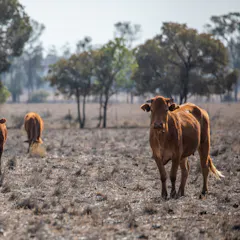
Past El Niño events have coincided with some of the driest, hottest weather on record.

CSIRO has been the custodian of Australia’s climate modelling through decades of shrinking budgets. Sacking scientists will change this.
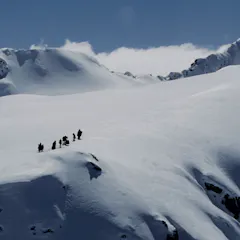
It’s a seemingly whimsical exercise, but it serves serious purposes.

Behind the long-term climate projections that affect our lives sits one of the most remarkable scientific achievements of the modern era.
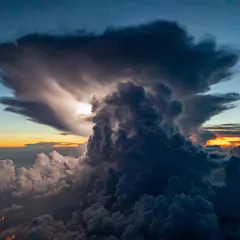
Climate scientist Nadir Jeevanjee speaks on The Conversation Weekly podcast about how the pioneers of climate modelling got many of their predictions right.

Even allowing warming to exceed 1.5°C for a few decades could trigger irreversible damage.
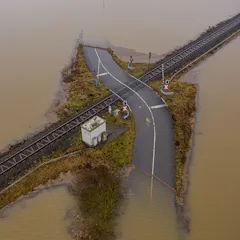
Record heat, storms and floods reveal new extremes made possible by climate change.

Determining the global average temperature on any given day is complex. It involves thousands of observations, high-tech equipment and sophisticated computer models.
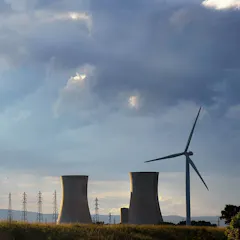
Climate modelling wields huge influence on governments and investors’ decisions. Yet, researchers point out a lack of precision.

These are some of the most complex and important pieces of software ever written.

A lack of human activity in the Southern Ocean is just one reason why the air is so clean. Clouds and rain play a vital role in scrubbing the atmosphere, removing natural airborne particles too.

Natural variability in Australian rainfall can produce “mega-droughts” lasting 20 years or more. Add in human-caused climate change, and future droughts may be far worse than imagined.

Climate scientists have simulated Arrakis as a desert and with its long-lost oceans.

To date, the effects of climate change on global rainfall has been uncertain. New research overcomes this uncertainty – with alarming results.
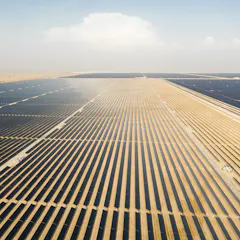
Solar farms that span whole countries could change the climate – new study.
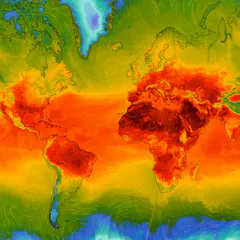
We can’t prevent continued global warming without reaching net zero carbon dioxide emissions. New climate simulations show what might happen when we get there.

Global climate models don’t let us zoom in on the fine details. A new set of high-resolution climate models for Australia is solving this problem.

Back when there were Arctic alligators and turtles, ‘polar stratospheric clouds’ kept their world warm. Research suggests these clouds contribute to the ‘missing warming’ in climate models.
Top contributors
-

ARC Future Fellow and Associate Professor in Climate Science, ARC Centre of Excellence for 21st Century Weather, The University of Melbourne
-
Senior Research Associate in Meteorology, University of Bristol
-
Deputy Director, Engagement and Impact, The ARC Centre of Excellence for the Weather of the 21st Century, Australian National University
-
Research Associate in Paleoclimate Modelling, University of Bristol
-
Associate Professor, Oceans Ice and Climate, University of Tasmania
-
Senior Research Fellow, Melbourne School of Psychological Sciences, The University of Melbourne
-
Research Lead Future Electrical Machines Manufacturing Hub, University of Sheffield
-
Professor of Climate Change Impacts, Newcastle University
-
Professorial Research Fellow, Victoria University
-
ARC DECRA Fellow, UNSW
-
Emeritus Reader in Policy Modelling, Cambridge Judge Business School
-
Associate professor, The University of Melbourne
-
Chief Scientist, Australian Antarctic Division and Professor of Climate Science, Australian National University
-
Lecturer, School of Agriculture, Food and Ecosystem Sciences, The University of Melbourne
-
Researcher, Oceans and Atmosphere, CSIRO