
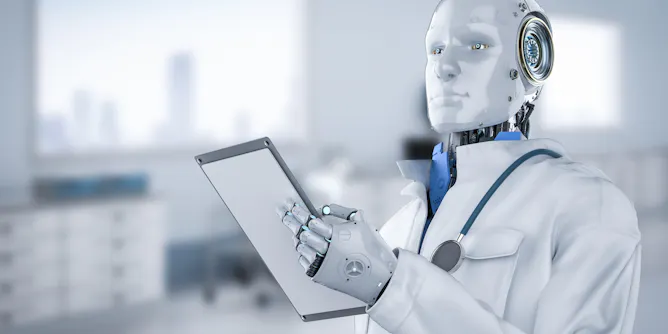
After all, it’s not a real person.
Articles on Chatbots
Displaying 121 - 140 of 197 articles
Common misperceptions about AI chatbots are that they know something about the world, can make decisions, are a replacement for search engines and operate independent of humans.

Before AI becomes widespread in health care, we need to ask what matters to consumers.

Students often use generative AI tools for engaged learning. They have a critical and nuanced understanding of these tools.
Training AI systems with more focused data sets can target them to a specific use.

What should you do if you’re tempted to use ChatGPT for medical advice? For starters, don’t use it.
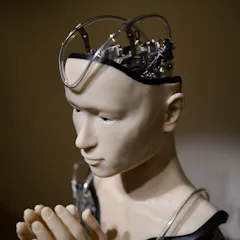
A scholar of digital religion explains why the use of AI isn’t necessarily displacing religious leadership: It is the clergy who are helping with the programming, critical for its deployment.

The merging of technology and faith is sparking a transformative shift in redefining spirituality and religious practices.

Snapchat’s AI-powered chatbot malfunctioned this week, raising questions of “sentience” among users. As AI becomes increasingly human-like, society must become AI-literate.

A chatbot that lets users express their feelings by drawing may help communication and treatment for people with chronic pain.

Politicians and their campaigns use a lot of methods, including manipulation and deception, to persuade you to vote for them and give them money. AI promises to make those attempts more effective.
It’s difficult to see how artificial intelligence systems work, and to see whose interests they work for. Regulation could make AI more trustworthy. Until then, user beware.

Not quite, writes an expert on Christian worship. Chatbots do not have human experience of love – and, above all, they lack a soul.

Artificial intelligence could be used to generate content intended to manipulate people. Addressing this problem means understanding how communication works to influence people.

Generative AI, those astonishingly powerful language- and image-generating tools taking the world by storm, come at a price: a big carbon footprint. But not all AIs are equally dirty.

Digital poverty could put some students at a disadvantage.
The user interfaces of AI chatbots, like ChatGPT, are designed to mimic natural human conversation. But in doing so, AI chatbots present as more trustworthy than they really are.

A recent open letter calling for a temporary artificial intelligence development hiatus is more concerned with hypothetical risks about the future than the issues that are right in front of us.

AI chatbots are on the rise in China – but their abilities and purpose may be quite different from the products of US tech giants.

When OpenAI claims to be “developing technologies that empower everyone,” who is included in the term “everyone?” And in what context will this “power” be wielded?
Top contributors
-

Senior Research Scientist at the Australian E-Health Research Centre, CSIRO
-
Senior Lecturer in Business Information Systems, University of Sydney
-
Associate Professor of Linguistics and Director of Language Lab, The University of Western Australia
-
Director, Centre for Professional and Applied Ethics, University of Manitoba
-
Principal Research Scientist, Australian eHealth Research Centre, CSIRO
-
Professor in Business Information Systems, University of Sydney
-
Assistant Professor in Health Ethics, Simon Fraser University
-
Associate Professor in Marketing, Keele University
-
Adjunct Fellow, Centre for Policy Futures, The University of Queensland
-
Professor of Creative Pedagogies, Edinburgh Napier University
-
Associate professor, Australian Catholic University
-
Associate Dean, Interaction, Technology and Information, RMIT University
-
Professor in Information and Communication Technology Policy, Concordia University
-
Professor Emerita of Religious Studies, College of the Holy Cross
-
Research Fellow, Kinsey Institute, Indiana University