

Has our culture’s begrudging acceptance of ghostwriting paved the way for everyone – not just the rich and famous – to offload the hard work of writing?
Articles on Chatbots
Displaying 41 - 60 of 197 articles

Chatbots tend to produce solid writing, but their prose largely reflects a single, uniform voice.

Olive was meant to make shopping easier. Instead it’s mouthing off about its ‘mother’ and mistaking the price of basic items.

In cases like the Tumbler Ridge shooter’s flagged ChatGPT account, Canada lacks a legal framework for assigning responsibility when an AI company possesses information that could prevent violence.

The speed and structure of AI relationship advice often consolidates one narrative and trains us for unrealistic expectations, shaping how we interpret conflict and intimacy.
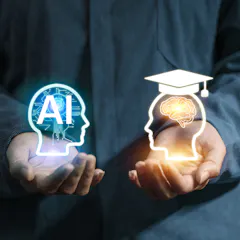
Colleges and universities are taking on different approaches to how their students are using AI – but with a shared recognition that they cannot prevent it altogether.

When you outsource romance, there’s a hidden emotional cost.

History shows voluntary safeguards fade as profits rise, risking a more persuasive new era of online advertising.

AI is replacing tasks we have grown reluctant to do ourselves – thinking, writing, creating, analysing.

Starting later this year, Woolworths shoppers will able to use AI to plan meals and even add items to their carts. It’s convenient – but with potential hidden costs.

Although artificial intelligence does not cause psychosis, the conversational, responsive and seemingly empathic design of chatbots can intensify psychotic symptoms in vulnerable people.

When we ask for news, we should expect generative AI tools to stick to the facts. But new research shows they don’t.

If you interact with chatbots about conspiracy theories, research shows you can can easily fall down the rabbit hole.
We’ve always relied on friends and family to confirm our sense of reality. Now we’re increasingly expecting AIs to do it instead.
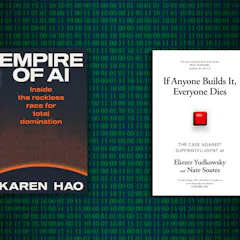
Two new books reveal the gap between the promises of AI companies and the reality. One exposes the industry’s questionable ethics. The other argues we’re racing to extinction.

When it comes to buying sex toys, diarrhea medication and acne cream, consumers like the impersonal touch.

Sometimes, no one sees a major global shock coming. Risk analysts call these ‘black swan’ events. Other times, we see them coming – we just don’t prepare.
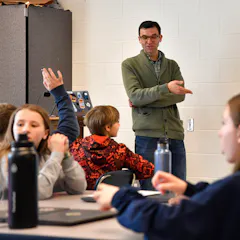
What people think of their teachers is tremendously important for learning, and should inform how we analyze the potential use of AI chatbots in education.

The internet long ago extended cruelty beyond the school gate and into bedrooms and group chats. The powers of AI extend this reach.

OpenAI says its new erotic mode will be restricted to adults But with millions of teenagers already chatting to AI, how enforceable is that promise really?
Top contributors
-

Senior Research Scientist at the Australian E-Health Research Centre, CSIRO
-
Principal Research Scientist, Australian eHealth Research Centre, CSIRO
-
Associate Professor of Linguistics and Director of Language Lab, The University of Western Australia
-
Director, Centre for Professional and Applied Ethics, University of Manitoba
-
Professor in Business Information Systems, University of Sydney
-
Senior Lecturer in Business Information Systems, University of Sydney
-
Associate Professor in Marketing, Keele University
-
Associate professor, Australian Catholic University
-
Associate Dean, Interaction, Technology and Information, RMIT University
-
Professor of Creative Pedagogies, Edinburgh Napier University
-
Professor in Information and Communication Technology Policy, Concordia University
-
Adjunct professor, Carleton University
-
Professor Emerita of Religious Studies, College of the Holy Cross
-
Assistant Professor in Health Ethics, Simon Fraser University
-
Research Fellow, Kinsey Institute, Indiana University