
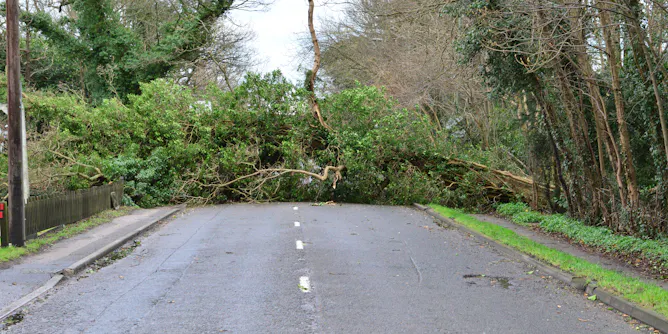
Europe loses as many trees to storms each year as Poland produces in timber. Until now, the models for predicting which trees are at risk have not been good enough.
Articles on Carbon sequestration
Displaying 61 - 80 of 84 articles

In an extract from his new book, Tim Flannery explains how giant kelp farms could suck carbon dioxide from the air and store it in the ocean’s depths, while encouraging species like fish and oysters.
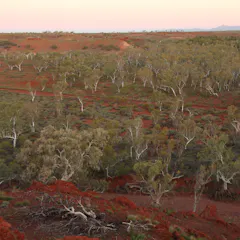
A new survey has identified millions of hectares of forest in dryland areas, a finding that boosts the total global forest cover by 9% and has significant consequences for carbon budgets.
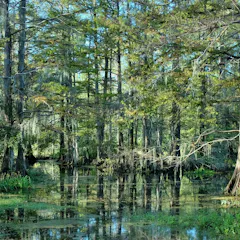
A new report calls U.S. forests an undervalued asset for slowing climate change. It warns that they are being degraded by logging for wood, paper and fuel, particularly in the Southeast.

An Icelandic trial shows carbon dioxide can be pumped underground and stored as rock.
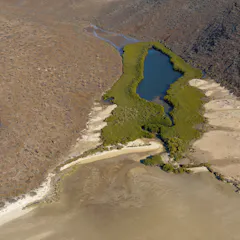
Study shows mangrove forests along desert coasts have potential to lock up large amounts of carbon and buffer against rising seas.
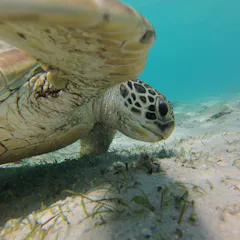
Sharks and other ocean predators help protect the ocean’s carbon stores by keeping other wildlife in check.
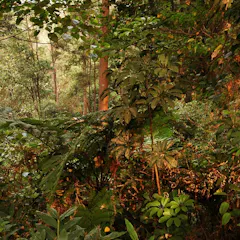
It’s no exaggeration to say the tropics drive our planet’s carbon cycle – the constant transfer of carbon back and forth, on a global scale, between living things and the environment. Understanding the…
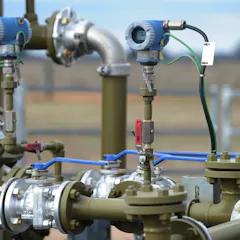
In a recent article on The Conversation, Queensland coal seam gas (CSG) researchers argued that the industry is progressing faster than the science, leading to concerns over fugitive emissions and impacts…
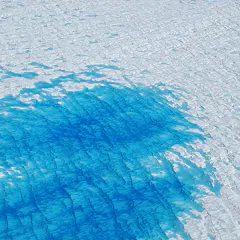
The concept of a “tipping point” – a threshold beyond which a system shifts to a new state – is becoming a familiar one in discussions of the climate. Examples of tipping points are everywhere: a glass…

The Saharan dust that clogged air and dirtied cars recently may seem like a nuisance, but in fact contains some essential nutrients – if, that is, you’re phytoplankton. The dust and sand blown from Africa…
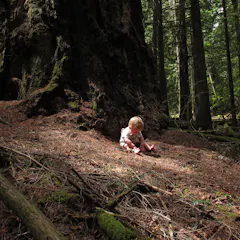
Large, older trees have been found to grow faster and absorb carbon dioxide more rapidly than younger, smaller trees, despite the previous view that trees’ growth slowed as they developed. Research published…
Seagrass, mangroves and salt-marsh ecosystems can adapt to and mitigate climate change. These ecosystems are some of the…
Wells drilled by energy companies to extract natural gas from shale formations could be used to sequester large quantities…
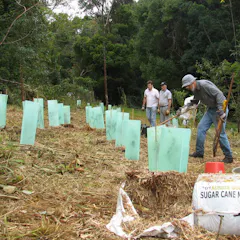
For several years, and particularly since the advent of the Coalition’s Direct Action policy for reducing emissions, the potential of agricultural soils in Australia to soak up carbon has been widely debated…
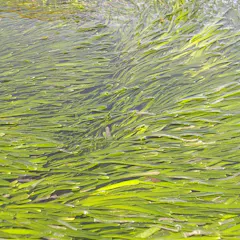
Australia is surrounded by a thin green line of seagrass meadows potentially worth A$5.4 billion on international carbon markets, and which could contribute to Australia and other nations meeting carbon…
Biologists in the US have discovered the number and physical condition of woodland salamanders can be linked to a forest’s…
**A more sustainable Australia* As the 2013 election campaign continues, we’ve asked academics to look at some of the long-term issues affecting Australia – the issues that will shape our future.* Our…
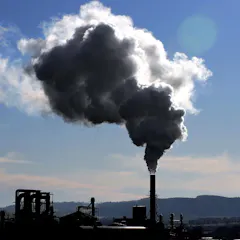
The Energy Technologies Institute recently reported that without carbon capture and storage (CCS), the cost of reaching the UK’s climate change targets will double from around £30 billion per year in 2050…
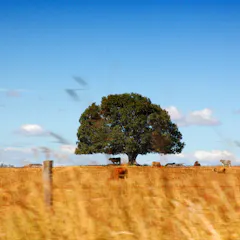
Both the current Government and Opposition are relying on agriculture and forestry to bear much of the burden of Australia’s emission reduction. But are they building their hopes on sand? The way we manage…
Top contributors
-

Professor of Environmental Science, Auckland University of Technology
-
Chief Research Scientist, CSIRO Environment; Executive Director, Global Carbon Project, CSIRO
-
Associate Professor, Monash University
-
Professor, University of New England
-
Senior Research Fellow, School of Geography, Earth and Atmospheric Sciences, The University of Melbourne
-
Adjunct Senior Research Fellow, University of New England
-
Senior Research Fellow in Marine Ecology, University of Otago
-
Professor & Director, Primary Industries Climate Challenges Centre, The University of Melbourne
-
Professor, Department of Soil and Crop Sciences, Colorado State University
-
Professor of Sustainable Agriculture, University of Tasmania
-
Adjunct Professor, University of New England
-
Professor of Global Change, Queensland University of Technology
-
Honorary Senior Fellow, The University of Melbourne
-
Professor Emeritus of International Environmental Policy, Tufts University
-
Scientific advisor, Hawkesbury Institute of the Environment, Western Sydney University