
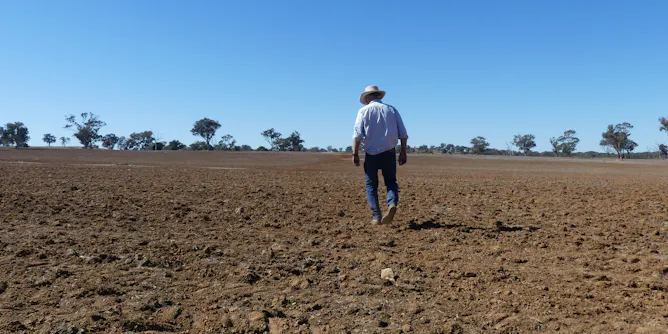
The good news is degraded soil can regain some of its lost heat protection. We can help ‘re-insulate’ the ground with practical farming methods.
Articles on Soil carbon
Displaying 1 - 20 of 61 articles
It could be a sign of what’s to come.

Adding biochar to degraded soils boosts how much water soils can hold and help farmers survive droughts.
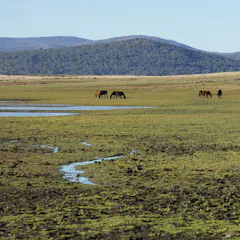
When it comes to storing carbon, alpine peatlands are powerhouses. But feral horse grazing and trampling tips the carbon balance in the other direction. We need to protect and restore our peatlands.

New research shows carbon in soil minerals is much more important than anybody realised.

What does fire management do to soils? We compared prescribed burning to cultural burning and looked at how soil properties changed after fire. Cultural burning was better.

Australia’s approach to estimating bushfire emissions is credible and sophisticated. But it must be refined as technology improves and the climate changes.

President Biden has called for protecting large, old trees from logging, but many of them could be cut while the regulatory process grinds forward.

How will Earth’s vast boreal forests look in a warmer world? Combining satellite-based research with fieldwork shows that the planet’s largest wilderness may be changing in unexpected ways.
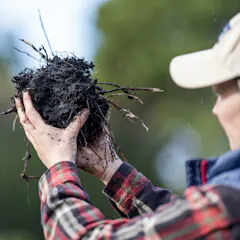
A group of agricultural and soil scientists has serious concerns about the way credits are awarded for soil carbon sequestration in Australia.
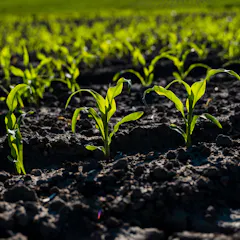
From policies to support carbon farming, to setting up local ‘soil museums’, governments need to do much more to protect the soil we rely on for growing food and a healthier life on Earth.

A realistic look at forest management on the Nitassinan of Pessamit, based on data from the Québec government’s forest inventories.
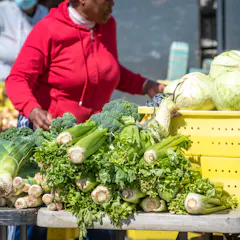
Even if you don’t live near farm country, you’ve got a stake in the upcoming farm bill – including what kind of farms your tax dollars support.
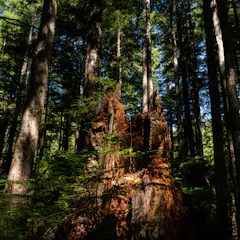
Protecting old and mature trees is the simplest and least expensive way to pull carbon out of the atmosphere – but proposed logging projects threaten mature stands across the US.
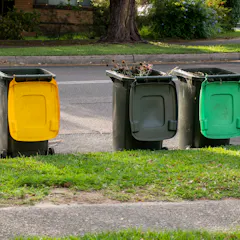
Most food waste still goes into red bins of mixed waste bound for landfill. It’s using up precious landfill space and harming the environment when it could produce valuable compost and biogas instead.
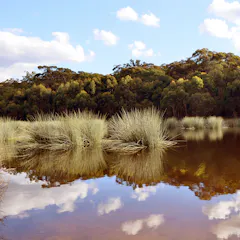
80% of carbon on land in stored in soil. Our new research investigated how erosion transports this carbon to the bottom of lakes, where it’ll never be released into the atmosphere.
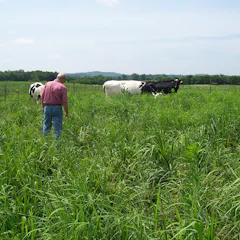
Growing native grasses as cattle forage is an example of working lands conservation – balancing human use of the land with conservation goals.
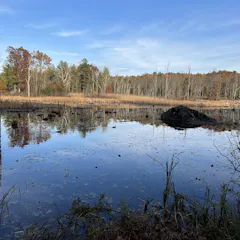
Beavers in our landscapes have great potential to provide small-scale adaptations to climate change – if humans can figure out how to live with them.
CC BY-NC-ND17.7 MB (download)
The global community must understand the importance of soil in order to protect it.

As environmental engineers, invasive caterpillars can have remarkable effects on water quality and soil conditions. But from a climate perspective they’re pretty much a nuisance.
Top contributors
-

Professor Emeritus of International Environmental Policy, Tufts University
-
Professor Emeritus of Global Change Biology and Terrestrial Systems Science, Oregon State University
-
Adjunct Professor, University of New England
-
Professor, University of New England
-
Professor of Biogeochemistry, University of Wollongong
-
Professor, Department of Soil and Crop Sciences, Colorado State University
-
Honorary Senior Fellow, The University of Melbourne
-
Professor of Earth and Space Sciences, University of Washington
-
Professor & Director, Primary Industries Climate Challenges Centre, The University of Melbourne
-
Professor of Sustainable Agriculture, University of Tasmania
-
Associate Professor, Monash University
-
Adjunct Senior Research Fellow, University of New England
-
Professor of Global Change, Queensland University of Technology
-
Executive Director, Swette Center for Sustainable Food Systems, Arizona State University
-
Lecturer in Environmental Geoscience, The University of Melbourne