

A transcript of episode 13 of The Conversation Weekly podcast, including new research on neuroplasticity in the brain.
Articles on Brain
Displaying 321 - 340 of 731 articles

When dealing with a difficult event, such as the current pandemic, the electrical current that governs our brains is altered, affecting behaviour and mood.

Rather than distinctly male or female, the human brain is much more like the heart, kidneys and lungs – basically the same no matter the sex of the body it’s in.
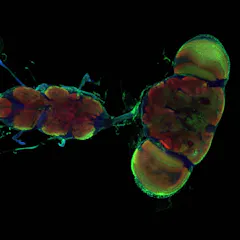
Adaptable neurons are tied to learning and memory but also to neurological disorders. By studying fruit flies, researchers found a mechanism that controls neuroplasticity.
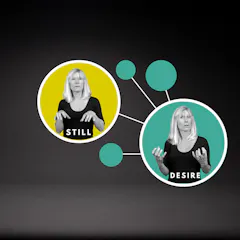
In American Sign Language, some words rhyme, some look like what they mean and some are used more often than others. A new database of these features paves a pathway for ASL research.

Blame your ears, your eyes and your brain. But mainly your ears!

Where we would be without our brains? But think about it. How do they work?

Neanderthal-human hybrid brains grown in the lab give fascinating insights into evolution.

Napping in the afternoon can benefits both motor skills and your ability to recall facts.

Our brains have two ways of thinking and making decisions: fast and slow.

New research demonstrates that it is more difficult to learn something new if the information had been rewarded in the past. In fact, the higher the reward, the worse the future learning.

It’s a sensation of light that isn’t caused by real light. And don’t worry, it’s totally normal.

Anti-inflammatory drugs may be able to reverse cognitive decline in the future.
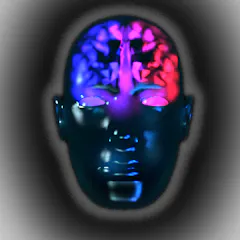
While there are small differences between male and female brains, most of us have a mix of both.

The brain activity of a parent and child can become synchronised during play and problem solving.

The tiny air pollutants known as PM2.5, emitted by vehicles, factories and power plants, aren’t just a hazard for lungs. A study finds more brain shrinkage in older women exposed to pollution.
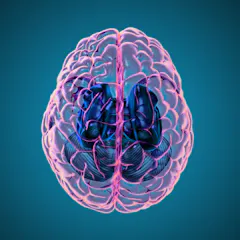
The brain is surprisingly changeable.

Neurotrophic factors play an important role in protecting neurons – which is why researchers are investigating them as a treatment for Parkinson’s.

Whether in the form of a discreet titter or a full-on roar, laughter comes with many benefits for physical and mental health.

Exercise plays an important part in preserving memory throughout our lifetime.
Top contributors
-

Professor of Clinical Neuropsychology, University of Cambridge
-
Postdoctoral Research Associate, Cognitive Neuroscience, University of Cambridge
-
Senior Research Fellow, The Perron Institute for Neurological and Translational Science, and Faculty of Health Sciences, Curtin University
-
Professor of Science and Technology for Brain-Inspired Intelligence/ Computer Science, Fudan University
-
Professor of Music Psychology, Durham University
-
Postdoctoral Researcher in Cognitive Neurosciences, The University of Queensland
-
Lead, Cognition and Consciousness Imaging Group, Division of Anaesthesia, University of Cambridge
-
Penn State
-
Senior Lecturer (Adjunct), Nutritional neuroscientist, Adelaide University
-
Professor of Anatomy, Lancaster University
-
Professor of Chemistry and Senior Scientist of the Krembil Research Institute, University Health Network, University of Toronto
-
Researcher, The University of Melbourne
-
Postdoctoral Researcher in Neuroscience, University of Sussex
-
Professor of Behavioral Neuroscience, University of Richmond
-
Professeur agrégé de neurosciences computationnelles et neurophysiologie, L’Université d’Ottawa/University of Ottawa