
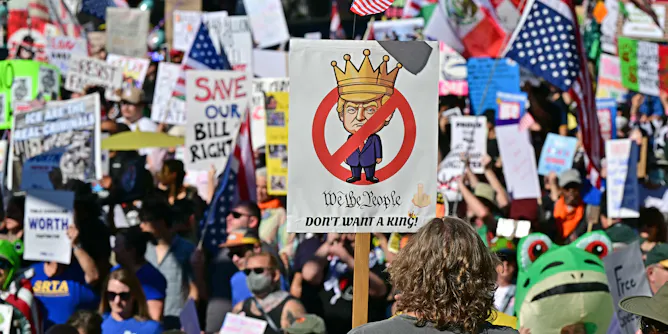
History suggests that boycotts are uniquely suited to expand public participation enough to spur political change.
Articles on Boycotts
Displaying 1 - 20 of 34 articles

Concern over ICE’s role in the 2026 Men’s World Cup loom over the tournament given the events unfolding in Minneapolis and across the U.S., heightening calls to boycott the tournament.

Spain is the fifth country to say it will not participate in Eurovision 2026 if Israel remains a part of the competition.

Cancellation of screenings of the documentaries ‘Russians at War’ (TIFF) and ‘Rule of Stone’ (RIDM) means that provocative and timely films are silenced.

Eurovision 2025 is a reminder of how music can force us to to confront the uncomfortable.
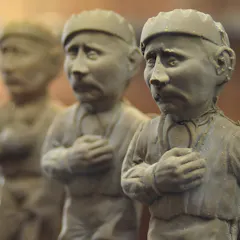
From chocolate statues of Putin to reclaiming Russian slurs, consumerism can offer unity and agency for Ukrainians.

The so-called ‘Liberation Day’ announcements played out like a reality TV cliffhanger. What might the next ‘episode’ have in store for the rest of the world?

Canadian citizens can use the consumer marketplace as a way of influencing the outcome of the trade war.
The fragile global economy could fuel the boycotts of companies that have aligned themselves with the policies of Donald Trump.
Black brands and consumers alike are struggling to prove the value of Black dollars.

Consumer psychology can help explain why boycotts sometimes fail, as well as help predict when they are likely to succeed.
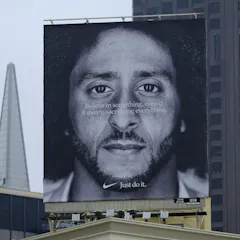
Brands are increasingly taking stances on contentious social issues and facing mass outrage on social media. New research shows that this outrage can benefit brands.
We should demand greater social responsibility from businesses, but pressuring them to undertake responsibilities that only governments can address is the wrong way to get there.

Russian citizens in the west are being targeted in much the same way Germans, Italians, and Japanese were during the second world war.

The Sydney Festival boycott was a vibrant example of engaged citizens taking foreign policy into their own hands.
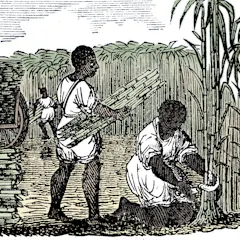
Before the Civil War, US activists sought to combat slavery through sugar boycotts. Instead, consumption grew.
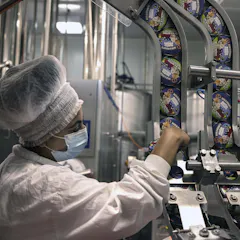
Ben & Jerry’s decision to no longer sell ice cream in the occupied territories comes as Israel continues to lose the support of a group of Americans who once were stalwart allies.
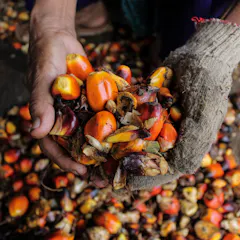
Palm oil is responsible for widespread deforestation and labor abuses, but it’s also cheap and incredibly useful. That’s why many advocates call for reforming the industry, not replacing it.
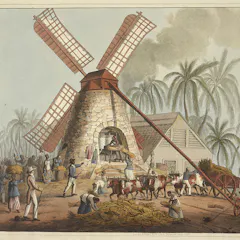
A scholar of slavery in the British Empire describes the first boycott against sugar made with slave labor in the West Indies.
Laws on boycotts already exist, but their aim was never to target consumer groups.
Top contributors
-

Associate Professor, Music Industry, RMIT University
-
Fellow at the Center for Advanced Study in the Behavioral Sciences at Stanford and Professor of Management and Sociology, University of Michigan
-
Reader in Music, Politics and Society, Newcastle University
-
Professor of Political Science, Vanderbilt University
-
Senior Research Fellow in Development Policy and Practice, The Open University
-
Professor of Marketing, York University, Canada
-
Distinguished Professor, Arthur J. Gosnell Professor of Economics, & Head, Department of Sustainability, Rochester Institute of Technology
-
Course Leader, BA (Hons) Fashion Journalism, London College of Fashion, University of the Arts London
-
Associate Professor of Finance, UNSW
-
Associate Professor of Agri-Food Trade and Policy, University of Guelph
-
Principal Lecturer in Journalism, University of Brighton
-
Professor of Film Studies, Bangor University
-
Professor of Marketing, Keele University
-
Professor of Human Rights Law, Monash University
-
Senior Lecturer in Classical Studies, The Open University