
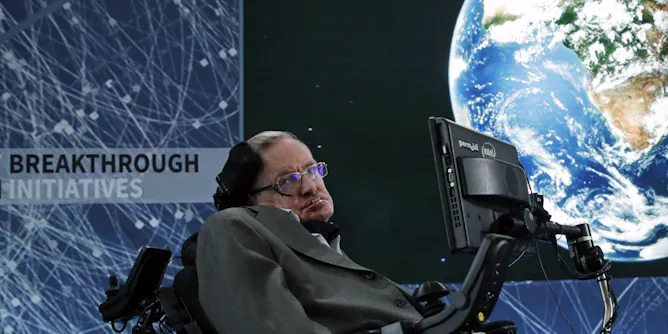
Hawking proved that the Big Bang was physically possible.
Articles on Black holes
Displaying 101 - 120 of 159 articles
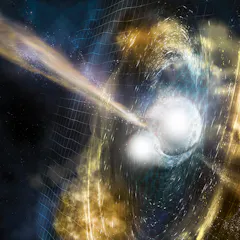
Astronomers have finally confirmed the source of the latest detected gravitational waves was the collission of a pair of neutron stars, what they’d been searching for all along.
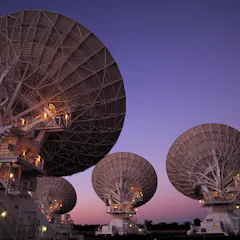
All it took was a single email alert to send the world’s astronomers searching for the source of the latest gravitational wave detected.
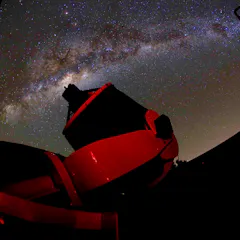
Efforts to see the afterglow from a neutron star merger were nearly thwarted by bad weather and a cyber attack on an Australian telescope.
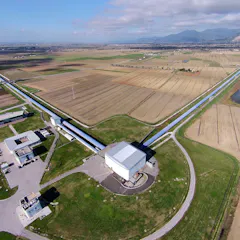
New results from Italy and the US help us better estimate the position of the merging black holes that produced the gravitational waves.
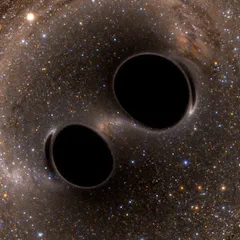
New research shows that as few as ten further detections of gravitational waves will help scientists know for sure how pairs of black holes form.
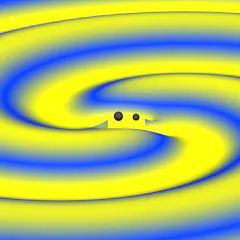
Scientists have made a third detection of gravitational waves, again caused by the merger of two black holes. But they think there’s something different about the black holes in this case.
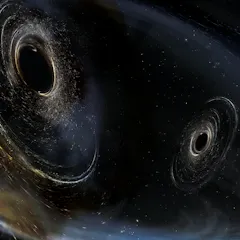
These ripples in the very fabric of the universe were hypothesized by Einstein a century ago. Now scientists have detected them for the third time in a year and a half – ushering in a new era in astrophysics.
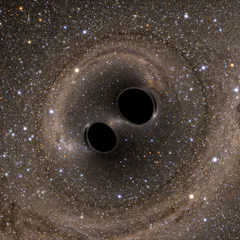
Einstein called entanglement “spooky action at a distance”. But now it’s been used to design an incredibly sensitive detection method for gravitational waves.
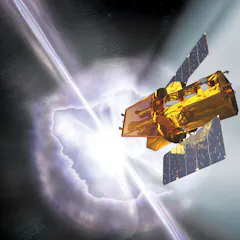
A burst of gamma rays in a distant part of the universe reveals the birth of another black hole.
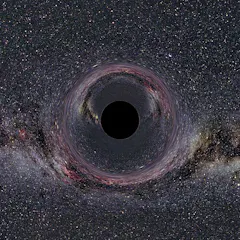
The first ever picture of the Milky Way’s black hole is expected to be a bright crescent shape rather than a disk.
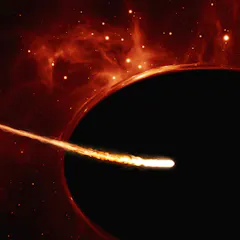
The discovery of a new black hole adds to our understanding of these celestial objects that fascinate in both fact and fiction.
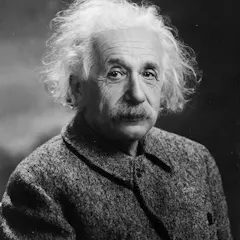
Einstein’s theories of relativity underpin our understanding of the universe, yet they’re not taught in high school. How can we change that?
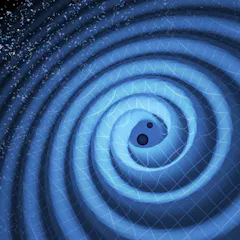
The observation of gravitational waves from a second black hole merger implies there are many more black holes in the universe than scientists had previously anticipated.
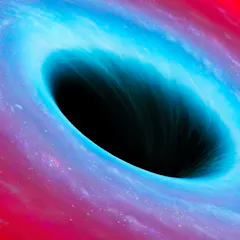
State of the art detectors have found another signal from a pair of collapsing black holes – the consequences could be momentous.
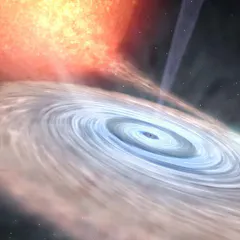
It was a rare and brief event, but powerful telescopes helped scientists get a glimpse of a black hole letting out a wind at 3,000km per second.

Stargazing seems such a quiet, calm activity. But whether our eyes can see or not, those stars out there are in constant flux. Time-domain astronomy studies how cosmic objects change with time.
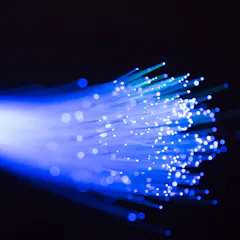
The design of a new chip to detect the twisted nature of light waves could pave the way for next generation of optical communication technologies.
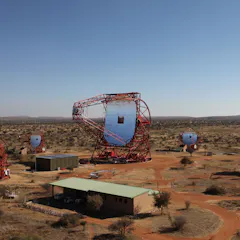
A new study suggests that mysterious high energy cosmic rays might originate from the supermassive black hole at the centre of our galaxy.
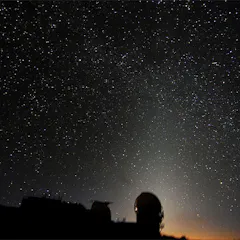
The hunt to find the source of the gravitational waves detected by LIGO on the sky is only just starting.
Top contributors
-

Emeritus Professor, ARC Centre of Excellence for Gravitational Wave Discovery, OzGrav, The University of Western Australia
-
Professor of Astrophysics, University of Sydney
-
University Distinguished Professor of Astronomy, University of Arizona
-
Professor, Curtin Institute of Radio Astronomy, Curtin University
-
Senior Lecturer in Physics, Western Sydney University
-
Professor, Radio Astronomy, University of Sydney
-
Professor of Theoretical Astrophysics, Monash University
-
Professor of Astronomy, Swinburne University of Technology
-
Professor and Director of the Centre of Excellence for Data Science, AI and Modelling, University of Hull
-
Senior Lecturer and ARC Future Fellow, Monash University
-
Senior Curator (Astronomy), Museums Victoria Research Institute; The University of Melbourne
-
ARC Laureate Fellow, Swinburne University of Technology
-
Professor, Swinburne University of Technology, Swinburne University of Technology
-
Professor of Astrophysics, University of Southampton
-
Professor of Astronomy, UMass Lowell