
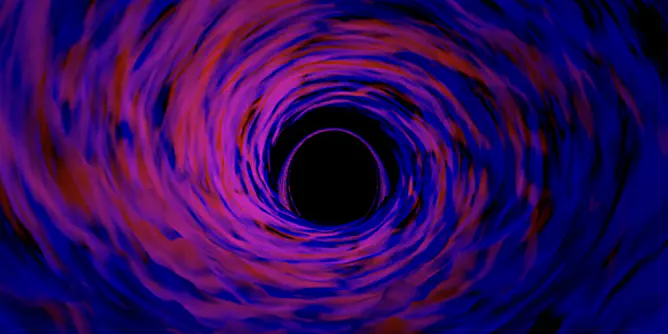
Astronomers have found that mysterious dark energy may originate in black holes.
Articles on Black holes
Displaying 41 - 60 of 159 articles
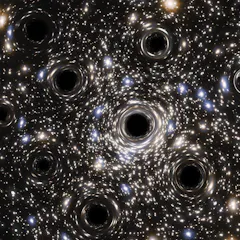
Black holes can have a mass equivalent to that of millions of suns. Other, smaller, black holes can combine the mass of Mount Everest into the size of an atom.
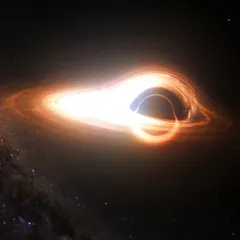
While we can’t see inside a black hole, we can spot the intensely bright glowing disc that surrounds one. Now, we might better understand why these discs appear to ‘twinkle’.
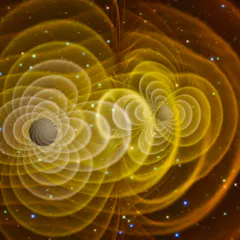
To understand this question, we need to travel back in time.
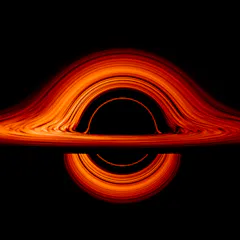
Black holes could take us to the future, and maybe even the past. The hard part would be surviving the trip.
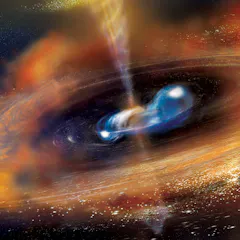
Gamma-ray bursts occur when a massive star explodes or when two neutron stars merge. A newly discovered burst has puzzled astronomers, as it lasted much longer than astronomers would have expected.
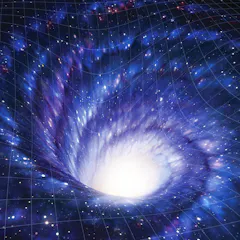
An astrophysicist explains what wormholes are and how these theoretical space-time tunnels have popped up in the solutions to a set of decadesold equations.
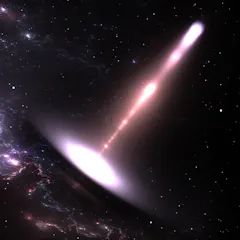
Over 1 million light-years end to end, the pressurised jet shoots away from a central black hole in a nearby galaxy.
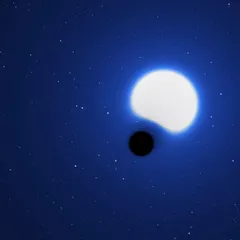
Astronomers have discovered the first dormant black hole outside of the Milky Way. These black holes are not absorbing matter from a nearby star, making them incredibly hard to find.
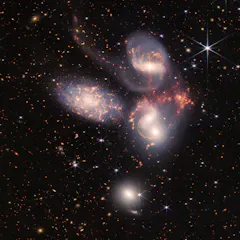
NASA released five new images from the James Webb Space Telescope, revealing incredible details of ancient galaxies, stars and the presence of water in the atmosphere of a distant planet.

Sagittarius A* lies in the southern sky, passing directly above South Africa.
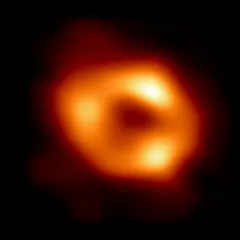
Sagittarius A* is a massive black hole at the center of the Milky Way. Now that astronomers have imaged it, they can begin to learn more about black holes within other galaxies across the universe.
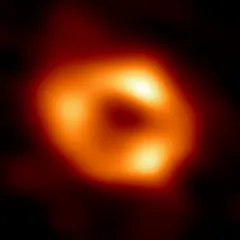
We finally know that Sagittarius A* really exists.
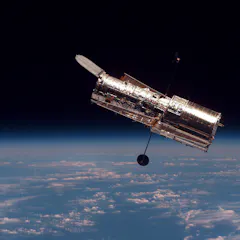
The astronomy and astrophysics decadal survey for the 2020s lays out plans to search for life on distant planets, understand the formation of galaxies and solve deep mysteries of physics.
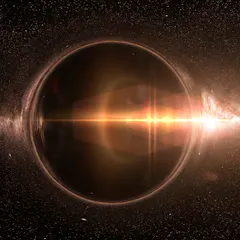
Some black holes are isolated in space and therefore near impossible to detect.
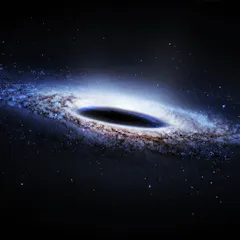
You can imagine a white hole as being a black hole in reverse — but is such a thing really possible?
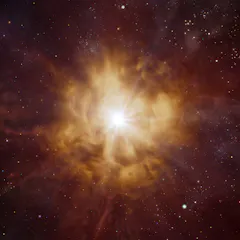
It’s long been a mystery how black holes form, now astronomers are on the verge of cracking it.
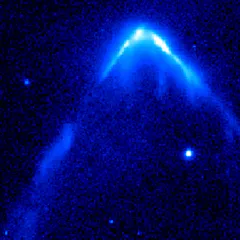
Hypervelocity stars were discovered only 15 years ago and are the closest things in existence to real shooting stars. They travel at millions of miles per hour, so fast that they can escape from galaxies.

Despite the name, some black holes effectively “shine” as they suck up nearby material with such force that it begins to glow. New research reveals a new method for detecting these active black holes.
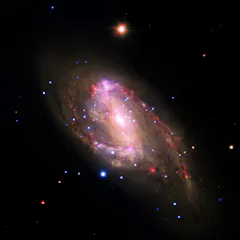
Advanced technologies and the information they collect have revealed how black holes form and behave.
Top contributors
-

Emeritus Professor, ARC Centre of Excellence for Gravitational Wave Discovery, OzGrav, The University of Western Australia
-
Professor of Astrophysics, University of Sydney
-
University Distinguished Professor of Astronomy, University of Arizona
-
Professor, Curtin Institute of Radio Astronomy, Curtin University
-
Senior Lecturer in Physics, Western Sydney University
-
Professor, Radio Astronomy, University of Sydney
-
Professor of Theoretical Astrophysics, Monash University
-
Professor of Astronomy, Swinburne University of Technology
-
Professor and Director of the Centre of Excellence for Data Science, AI and Modelling, University of Hull
-
Senior Lecturer and ARC Future Fellow, Monash University
-
Senior Curator (Astronomy), Museums Victoria Research Institute; The University of Melbourne
-
ARC Laureate Fellow, Swinburne University of Technology
-
Professor, Swinburne University of Technology, Swinburne University of Technology
-
Professor of Astrophysics, University of Southampton
-
Professor of Astronomy, UMass Lowell