
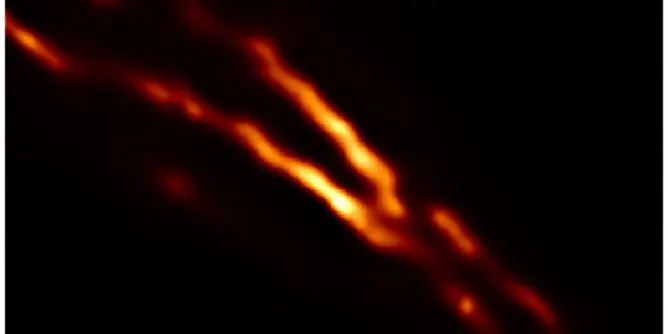
Astronomers have taken a close-up look at the jets of plasma streaking away from a supermassive black hole - one of the strangest and most energetic features of galaxies.
Articles on Black holes
Displaying 61 - 80 of 159 articles
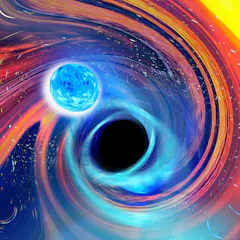
Gravitational waves reveal the demise of super-dense neutron stars spiralling into their black hole companions - the first time such strange and exotic star systems have ever been observed.
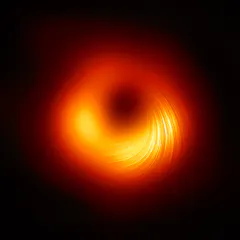
New research can help explain how black holes can produce powerful jets.

The black hole is part of a binary star system within our Milky Way galaxy. It orbits a colossal supergiant companion star.

A small add-on to existing gravitational wave detectors could reveal what happens to matter as it becomes a black hole, a process like the big bang in reverse.
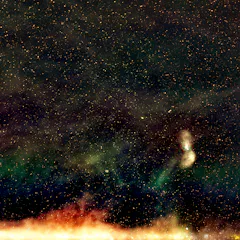
Some of the baby radio galaxies found may not be ‘babies’ at all. Rather, they may be ‘angsty teens’, rapidly growing into adults much faster than researchers had anticipated.
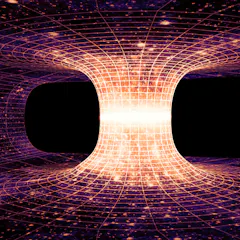
Calculations show that wormholes should create a spectacular display of gamma rays that we could try to observe.
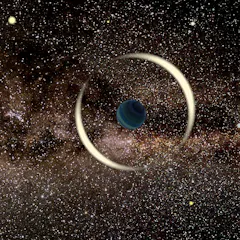
Not all planets orbit stars. Rogues float through the galaxy in darkness and are almost impossible to see.
The scariest beast in the universe has an insatiable appetite and shreds its victims.
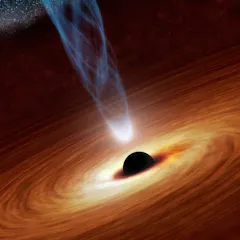
Roger Penrose helped resurrect Einstein’s general theory of relativity, and Reinhard Genzel and Andrea Ghez showed there was a black hole in the middle of our galaxy.
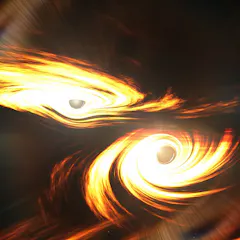
New discovery settles a wager between astrophysicists: black holes can merge repeatedly.
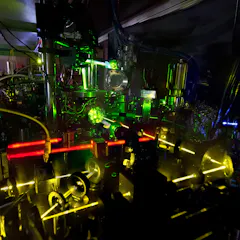
Researchers have made some of the most accurate clocks imaginable in recent years, but the trick is harnessing those clocks to electronics. Using lasers to tune microwaves bridges the gap.
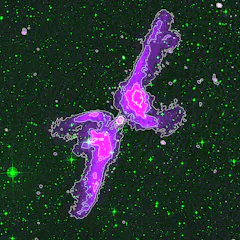
Like a cosmic butterfly in the sky, radio galaxy PKS 2014-55 was observed by CSIRO researchers with the Australian SKA Pathfinder telescope.
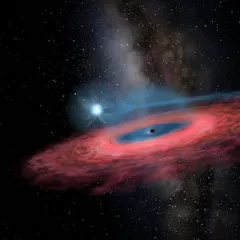
Astronomers using a new technique to hunt black holes found one 70 times as heavy as the Sun
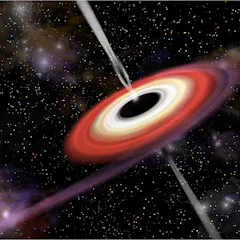
If you got too close to a black hole, it would suck you in and you’d never be able to escape, even if you were travelling at the speed of light.
This point of no return is called the event horizon.
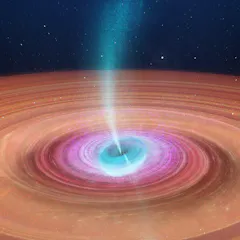
A spinning black hole is pumping vast amounts of energy back into the surrounding universe, but something is causing the jets that transport that energy to wobble very rapidly.
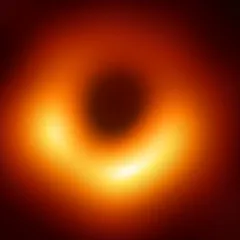
Astronomers say they have “seen what we thought was unseeable” in releasing the first image of a supermassive black hole. So how did we get to this historic observation?
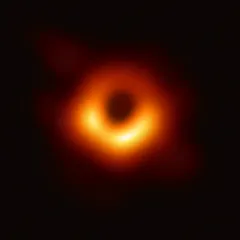
Scientists turned Earth into one giant telescope to capture the uncapturable.
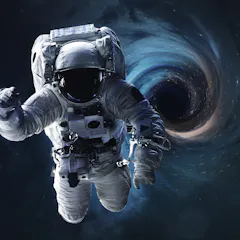
Feel like visiting another star system or dimension? You can do this by traveling through a spacetime portal of a black hole. But you better choose carefully. All black holes are not created equal.

The crucial phase of our discovery of black holes took place in a suitably dark period of human history – World War II.
Top contributors
-

Emeritus Professor, ARC Centre of Excellence for Gravitational Wave Discovery, OzGrav, The University of Western Australia
-
Professor of Astrophysics, University of Sydney
-
University Distinguished Professor of Astronomy, University of Arizona
-
Professor, Curtin Institute of Radio Astronomy, Curtin University
-
Senior Lecturer in Physics, Western Sydney University
-
Professor, Radio Astronomy, University of Sydney
-
Professor of Theoretical Astrophysics, Monash University
-
Professor of Astronomy, Swinburne University of Technology
-
Professor and Director of the Centre of Excellence for Data Science, AI and Modelling, University of Hull
-
Senior Lecturer and ARC Future Fellow, Monash University
-
Senior Curator (Astronomy), Museums Victoria Research Institute; The University of Melbourne
-
ARC Laureate Fellow, Swinburne University of Technology
-
Professor, Swinburne University of Technology, Swinburne University of Technology
-
Professor of Astrophysics, University of Southampton
-
Professor of Astronomy, UMass Lowell