

The U.S. military collected biometric data on Afghan civilians. The information may have fallen into the hands of the Taliban, highlighting why collecting the data is too risky in the first place.
Articles on Biometrics
Displaying 21 - 40 of 61 articles
Amazon is offering an incentive to pay with our palm prints. Why is it so difficult to make decisions about biometric privacy?

The new EU regulation is about to change the way we do artificial intelligence. The United Nations needs to follow suit.

COVID-19 vaccine passports are being presented as a relatively simple technological solution to our current travel woes. But meaningful public debate about their merits and problems is essential.

The CCTV ecosystem is evolving – but it’s still a sparse patchwork with limited efficacy in reducing or prosecuting crime.

With face masks now compulsory or recommended in various parts of the country, how are facial recognition systems functioning?
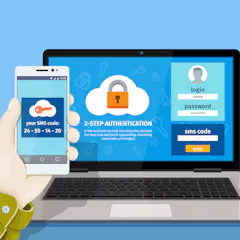
Two-factor authentication is certainly an added layer of security as we traverse the online world. But it comes in various forms, and they’re not all equally protective.
Biometric data is being used to target those deemed unwanted aliens.

The US is also ‘looking at’ banning the Chinese social media app.

The more we use facial recognition, the more we see its limits and its risks.

Predicting life expectancy remains in the realm of science fiction, but it may soon be possible. Are we prepared for such information? And who else would benefit from this knowledge?
While the data from a fingerprint is very hard to retrieve, cybercriminals can get around biometric technology in various ways. And having a weak passcode is like giving them a hall pass.

You can’t change your fingerprint if it’s stolen like you’d change your password.
Biometric data is forever. Any employer seeking to collect it has big obligations to meet. And employees have the right to object.

States like California have been at the forefront of privacy innovation in recent decades. A possible federal law could bring their experimentation to a halt, harming consumers.
Current techniques to protect biometric details, such as face recognition or fingerprints, from hacking are effective, but advances in AI are rendering these protections obsolete.
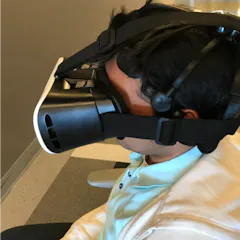
Biometrics are more secure than passwords – but when they’re compromised fingerprints and retina scans are hard to reset. Brain responses to specific stimuli are as secure and, crucially, resettable.

Same person or different person? Most people are extremely good at recognising faces of people they know well, but not so much strangers. See how well you perform on the tests in this story.
Research is increasingly proving fingerprints can be used for much more than identifying people.
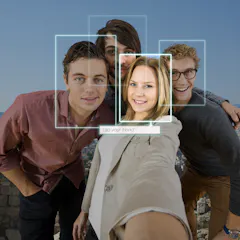
In a major blow to Facebook, a judge has ruled that a class action can proceed. If similar actions are brought around the world, Facebook could face billions of dollars in damages.
Top contributors
-

Associate Professor, School of Law, University of Canberra
-
Professor of Cyber Security Practice, Edith Cowan University
-
Professor of Computer, Web and Cognitive Sciences, Rensselaer Polytechnic Institute
-
Associate Professor, Melbourne Law School, The University of Melbourne
-
Senior Lecturer in Computer Science, RMIT University Vietnam
-
Associate Professor of Computer Science and Engineering, University at Buffalo
-
Associate Professor of Osteoarchaeology, Uppsala University
-
Associate Professor of English and Comparative Literature; Director, Digital Culture and Media Initiative, Penn State
-
University of Stirling
-
Post Doctoral Researcher in network security, Edith Cowan University
-
Professor in Forensic Science, Northumbria University, Newcastle
-
Scientia Fellow, UNSW
-
Lecturer in Computer Science, University of Hull
-
Professor of Agricultural Economics and Director Human Behavior Laboratory, Texas A&M University
-
Associate professor in Political Science, Université Paris Ouest Nanterre, Institute for Social sciences of Politics (ISP), Université Paris Nanterre