
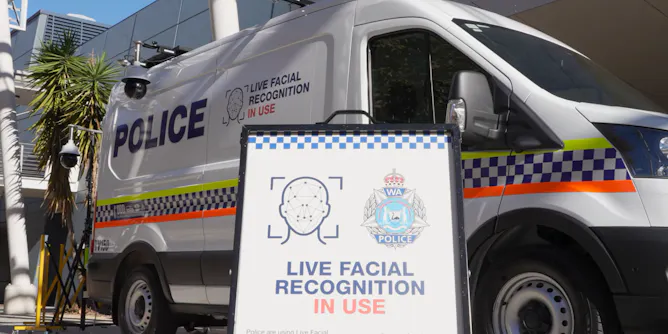
Who gets to authorise such deployments? And who checks the safeguards?
Articles on Biometric data
Displaying all articles

When consumers provide consent for recording their facial data, they must fully know what they’re consenting to.
You can wear a mask, pull up a hood, avoid looking at a camera – but you cannot easily change how you walk.
New US requirements for visa-free travel could involve sharing large amounts of biometric and law enforcement data, prompting concerns about privacy.
Families, chiefs or document brokers remain crucial to help people get a legal identity.
Digital identification is supposed to provide identity to all people. But sometimes it blocks access to essential services.

Despite the ruling against Bunnings, Australian businesses can continue to collect your biometric information without your explicit consent by simply putting up signs.
Automated facial recognition is becoming widespread in Australia. The technology has already been used by retail outlets, sport stadiums and casinos around the country. And in November, the Australian…

Our facial information is sensitive – yet companies and individuals can collect, sell and manipulate it without our consent. Australian law must change to protect us all.
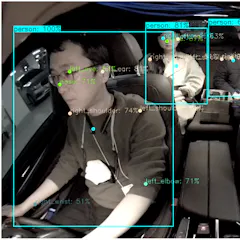
Your car’s safety technology takes you into account. But a lot of that technology helps car companies collect data about you. Researchers are working on closing the gap between safety and privacy.

Capturing biometric data helps UN agencies and other groups avoid the risk of fraud and increase efficiency. But the practice is complicated and has created security risks for vulnerable groups.
Biometric data can be used in schools to track everything from attendance to exam behaviour and what students buy from the canteen.

Federal and state governments are turning to a facial recognition company to ensure that people accessing services are who they say they are. The move promises to cut down on fraud, but at what cost?
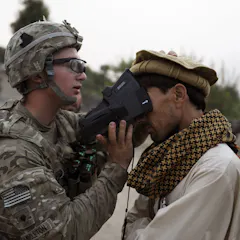
The potential failure of the US military to protect information that can identify Afghan citizens raises questions about whether and how biometric data should be collected in war zones.
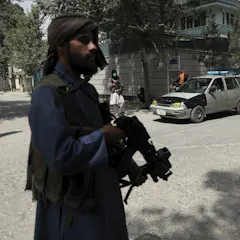
The U.S. military collected biometric data on Afghan civilians. The information may have fallen into the hands of the Taliban, highlighting why collecting the data is too risky in the first place.
Top contributors
-

Sessional Academic, Faculty of Law, Monash University
-
Lecturer, University of Sydney
-
Professor and ARC Future Fellow, Education & Social Work, Education Futures Studio, University of Sydney
-
Professor of Computer, Web and Cognitive Sciences, Rensselaer Polytechnic Institute
-
Associate Professor of Information Systems & Analytics, Miami University
-
Taylor Reveley Research Professor and Professor of Law, Director, Digital Democracy Lab, William & Mary
-
Professor of Media, School of Media, Film, and Journalism, Monash University
-
Associate Professor of Computing and Information Sciences, Florida International University
-
Researcher, University of Sydney
-
Professor of Digital Communications and Culture, The University of Sydney, University of Sydney
-
Digital Research Fellow, Institute of Development Studies
-
Lecturer, School of Management and Marketing, Curtin University
-
Senior Researcher, Leuphana University
-
Professor of Commercial Law, University of Auckland, Waipapa Taumata Rau
-
Professor in Cyber Security, Loughborough Cyber Institute, Loughborough University