
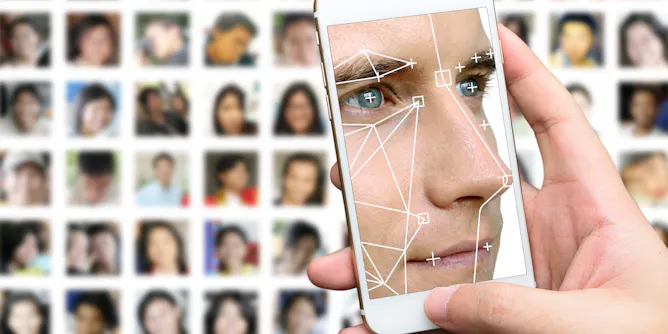
The government’s plans to store our biometric data are currently going through parliament. The data could reveal more than we’d like to those who seek to access the information.
Articles on Biometrics
Displaying 41 - 60 of 61 articles
Facial recognition software isn’t ready for face-in-a-crowd applications. Specialist police officers are far superior at spotting criminals.

Could your resolution resilience use a little science to back it up? A new study suggests practice can help your self-control – but don’t push it too far.
The COAG agreement to share our biometric data - including some photo ID - is an erosion of our privacy and will give people a false sense of comfort.

If Facebook already knows how you feel from reading what you post, soon it will know from reading the expressions on your face.
Going as far back as the Bible, and as widely known as the phrase ‘Open, Sesame,’ passwords are a textual link to our past. But they may not be around much longer.
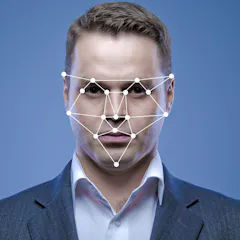
Computers are getting better at identifying people’s faces, and while that can be helpful as well as worrisome. To properly understand the legal and privacy ramifications, we need to know how facial recognition technology works.
Researchers are looking for ways to improve our ability to recognise and match faces.
In a political environment where voters are increasingly attuned to instances of polling malpractice, African states are grudgingly adopting technology as a barrier to election fraud.
It may sound like science fiction, but research shows that all you really need to develop brain biometrics is a set of earphones.

One Nation’s proposed national identity card is unviable and likely unconstitutional, so should not be entertained.
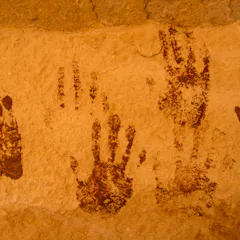
New ways of using forensic science in anthropology have been developed to advance our understanding of the past.
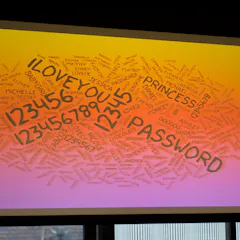
Tech giant Microsoft wants to rid the world of “dumb” passwords to improve online security. But maybe it’s the password itself we should dump.

Advanced electoral technology could actually work against democracy in the wrong hands.
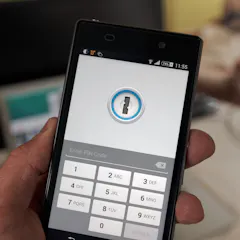
PIN codes, passwords, swipe patterns and biometrics can help secure your smartphone, but they’re far from foolproof.
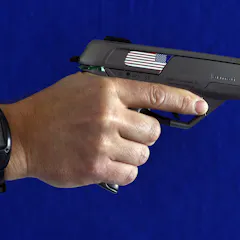
President Obama’s call for better electronic gun-safety systems put a spotlight on the technologies currently in the R&D pipeline that aim to make sure only authorized users can fire a gun.
Biometrics in schools may compromise pupils’ life-long security for the sake of short term ease of administration.
Public anxiety and legal protections currently pose a major challenge to anyone wanting to introduce eye-scanning security technologies.
The days of the username and password combo may be numbered as biometric security grows more sophisticated.
How can we ensure that someone is who they say they are? How can be sure that the person in our system, both digitally speaking or physically in front of us, is who whom they claim to be? You may think…
Top contributors
-

Associate Professor, School of Law, University of Canberra
-
Professor of Cyber Security Practice, Edith Cowan University
-
Professor of Computer, Web and Cognitive Sciences, Rensselaer Polytechnic Institute
-
Associate Professor, Melbourne Law School, The University of Melbourne
-
Senior Lecturer in Computer Science, RMIT University Vietnam
-
Associate Professor of Computer Science and Engineering, University at Buffalo
-
Associate Professor of Osteoarchaeology, Uppsala University
-
Associate Professor of English and Comparative Literature; Director, Digital Culture and Media Initiative, Penn State
-
University of Stirling
-
Post Doctoral Researcher in network security, Edith Cowan University
-
Professor in Forensic Science, Northumbria University, Newcastle
-
Scientia Fellow, UNSW
-
Lecturer in Computer Science, University of Hull
-
Professor of Agricultural Economics and Director Human Behavior Laboratory, Texas A&M University
-
Associate professor in Political Science, Université Paris Ouest Nanterre, Institute for Social sciences of Politics (ISP), Université Paris Nanterre