
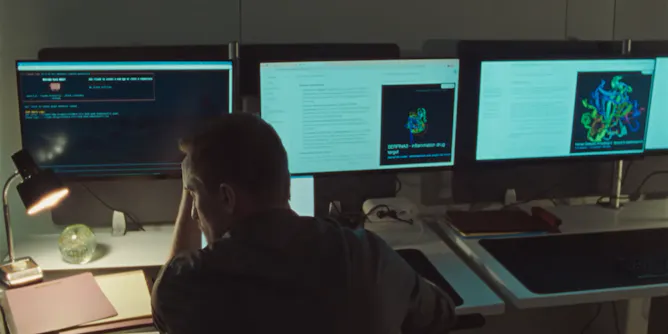
After coding, mathematics and chatbots, AI companies are setting their sights on the messy world of biology.
Articles on Bioinformatics
Displaying all articles

Long overlooked because of their size, giant viruses are now redefining the frontiers of microbiology.
Scientists have described antimicrobial resistance as an overlooked pandemic. Improving surveillance can help prevent deadly outbreaks.
Using digital blueprints of the metabolism of microbes, scientists can simulate expensive and time-intensive experiments set in space, power plants and farm fields.
By analyzing the resistance genes and proteins of E. coli, researchers can optimize treatments to address both current and future antimicrobial resistance.

New techniques monitor the health of lakes in real time by analyzing their microbiome to anticipate and respond to environmental threats such as cyanobacteria.

Ancient microbes likely produced natural products their descendants today do not. Tapping into this lost chemical diversity could offer a potential source of new drugs.
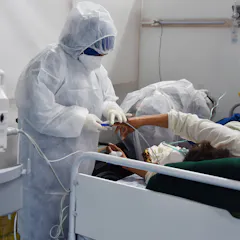
The enigmatic envelope protein seems to hold the key to understanding why some human coronaviruses cause more severe disease than others.
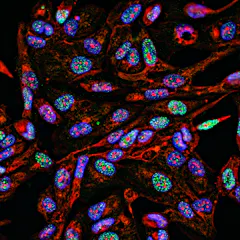
There is a need to move from conventional cancer treatments to more targeted and personalised therapies.

Bioinformatics can be applied to a range of problems, such as understanding the genome sequence of organisms or coming up with new drugs.

Science and business don’t often go together, but that’s changing as more scientists realise that their best ideas can be commercialised.
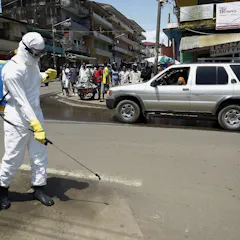
The number of reported Ebola cases is doubling roughly every five weeks in Sierra Leone, and in as little as two to three weeks in Liberia. The number of reported cases globally is projected to reach 10,000…
An ecologist’s work to explain the impact of climate change to as wide an audience as possible has been awarded one of this year’s Eureka Prizes. The annual Australian Museum Eureka Prizes, announced Wednesday…
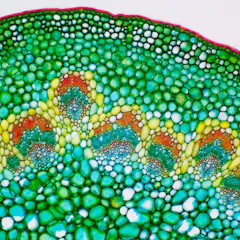
Rapid developments in tools to study complex interactions are transforming biology and biomedical research. A series of powerful analytical methods coined “omics” is driving us away from reductionist approaches…
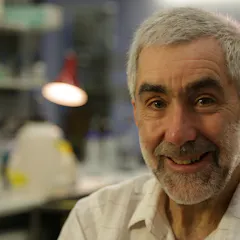
Australian mathematician and statistician Terry Speed has been awarded the 2013 Prime Minister’s Prize for Science for giving biologists the statistical tools needed to fight cancer, and for a lifetime…
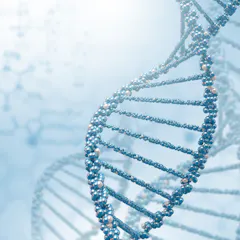
Bioinformatics underpins and enables research across the life sciences. This ranges from high-volume reductionist science (genomics, proteomics and the other “omics”, regulation of gene activity, epigenetics…

Intelligence is our most complex characteristic. Some would even say it defines us, setting us apart from other primates. And now, a new study – published this week by Hennady P. Shulha and colleagues…
Top contributors
-

Associate Professor, School of Mathematical Sciences, Monash University
-
Associate professor, University of Sydney
-
Professor and Head of Genomics and Computational Biology, The University of Queensland
-
Professor of Bioinformatics, WEHI (Walter and Eliza Hall Institute of Medical Research)
-
Associate Professor of Computational Biology, The University of Melbourne
-
Postdoctoral Fellow in Bioinformatics, University of the Western Cape
-
Professor and Director of Research Unit in Bioinformatics (RUBi), Rhodes University
-
PhD Candidate at the MB&I Unit, University of Cape Town
-
Associate Professor of Anthropology, Harvard University
-
Postdoctoral research fellow (Viral pathogenesis of long COVID), Stellenbosch University
-
Postdoctoral Researcher in Archaeogenetics, Max Planck Institute for Evolutionary Anthropology
-
Postdoctoral Research Fellow, Institute of Infectious Diseases and Molecular Medicine, University of Cape Town
-
Lecturer in Bioinformatics, University of the Western Cape
-
Postdoctoral research fellow, Institute of Infectious Disease and Molecular Medicine, University of Cape Town
-
South African Research Chair in Cancer Biotechnology (Tier 1)