

Many US cities are investing in bike infrastructure and shade trees. Properly located, these additions can make streets cooler, cleaner and safer for all users – even those who drive.
Articles on Bicycle lanes
Displaying 61 - 80 of 95 articles
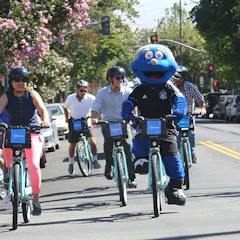
Urban planners often hope bike-share schemes might reduce reliance on cars and help with congestion. But very few of those who use share bikes have switched from driving.

Collisions at intersections between motor vehicles, cyclists and pedestrians cause many deaths and injuries. Design that considers how each group approaches intersections improves everyone’s safety.
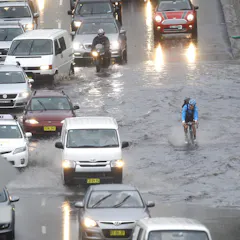
The relationship between weather and our travel choices is complicated. We can’t change the weather, but, with many other factors in play, good policy and design can reduce its impacts.
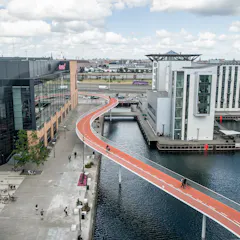
New analysis reveals just how little is spent on cycling and walking projects around Australia. No state’s spending on cycling is more than 1.5% of its road funding.
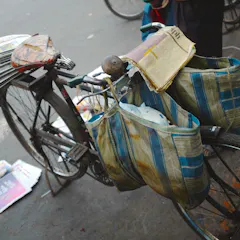
Cycling is a low-cost and non-polluting way to make deliveries in congested cities. Slow cyclists should be recognised as good for the economy and environment, not treated like second-class citizens.
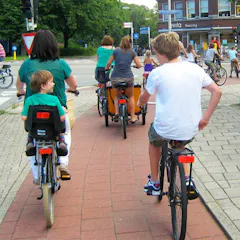
The evidence suggests a small investment in cycling infrastructure, combined with less punitive policing, would enable more Australians to escape daily traffic congestion.
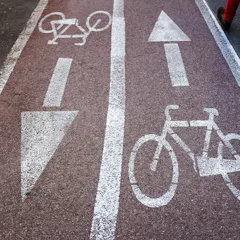
Successful policy interventions, especially those in the social realm influenced by the vagaries of human behaviour, don’t seem to travel well.

Pedal to the office and your risk of an early death drop by over 40%.
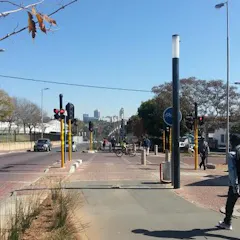
Bike lanes in South Africa were meant to encourage commuter cycling and ease congestion but in Johannesburg the initiative garnered more outrage than support.
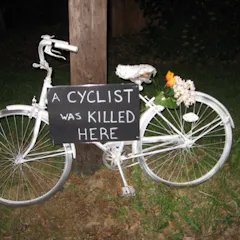
Two weeks ago today, Arzu Baglar died while cycling in Melbourne’s inner west. She was hit by a truck turning the corner of Somerville road and Whitehall street in Yarraville. Arzu was just 36, and a married…
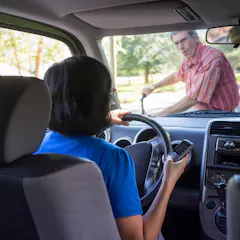
Because Australian roads were built and designed with motorists in mind, it is easy for Australian motorists to feel cyclists are using ‘their’ roads and disrespecting the natural order.
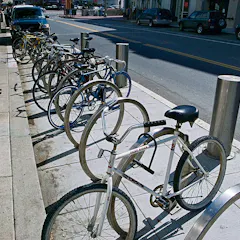
Pro-bike policies can boost local business. In one Melbourne case study, the average hourly retail spending from six bikes was $97.20 compared to $27 from one car occupying an equivalent space.
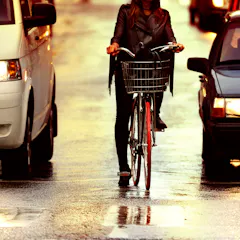
New South Wales’ new tougher bike laws reveal an ongoing war of the roads.
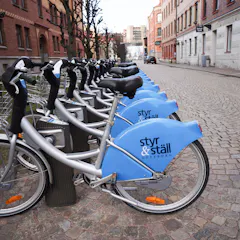
Bike sharing has huge potential benefits - even for people who don’t use them.
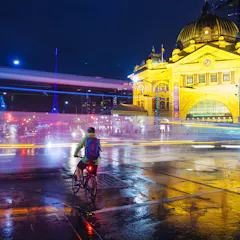
Cycling has flatlined in Australia since 2011, with many people citing safety concerns as the main reason not to ride. Wider recognition of cyclists’ right to be on the roads would help to boost the numbers.
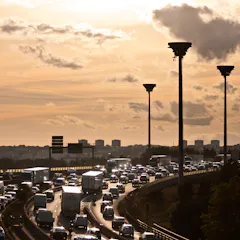
The evidence is in: cars are a risk to public health, and we need to find alternatives.
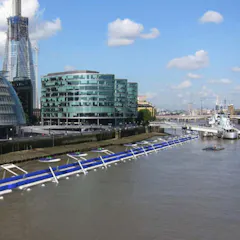
Plans for a new £600m “floating” cycle route along the edge of the River Thames in London have been announced. It is expected to stretch for around seven miles from Battersea, west of the city centre…
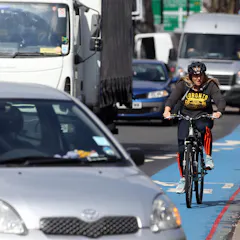
Government should budget to spend £10 per cyclist by 2020 in order to make bicycle travel safer, according to a committee of MPs. The report of the Transport Committee also called for a “change in culture…

Governments around the world are pushing to get their citizens to cycle more. Without necessary infrastructure, however, that is not good news for pedestrians or cyclists. While on an evening stroll, no…
Top contributors
-

Associate Professor in Urban Planning, The University of Queensland
-
Professor of Human Geography, The University of Queensland
-
Professor of Transport Engineering, University of the West of England
-
Senior Lecturer in Urban Planning, University of Auckland, Waipapa Taumata Rau
-
Professor of Human Geography, University of Canterbury
-
Chris Rissel is a Friend of The Conversation.
Senior Research Fellow, College of Medicine and Public Health, Flinders University
-
Research Lead, UQ Micromobility Research Cluster, The University of Queensland
-
Professor, Faculty of Health Sciences, Simon Fraser University
-
Professor Communications and Media, University of Canberra
-
Professor of Transport, University of Westminster
-
Reader in Smart Transport, University of Huddersfield
-
Lecturer (Assistant Professor), The University of Western Australia
-
Lecturer in Urban Agriculture, Boston University
-
Associate Professor and Head of Sustainable Mobility and Safety Research, Monash University
-
Professor of Urban and Environmental Policy and Planning, Tufts University