
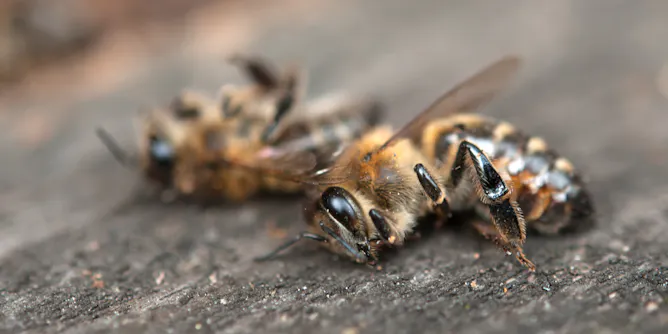
Bee colonies are threatened by a mite. However, a different mite has been evaluated for its potential to address this threat.
Articles on Bees
Displaying 181 - 200 of 296 articles
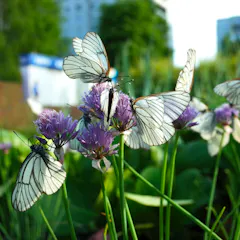
Evidence-based advice from experts on how to make your garden a friendly environment for pollinators.
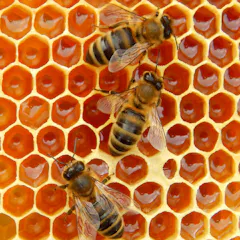
Remote sensors allowed us to observe the in-hive activities of honeybees, which could be key to keeping bee colonies worldwide healthy.

All too often the media buzz is centred around the managed honeybee, at the expense of other wild bee species.
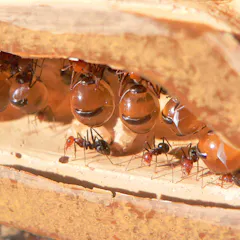
Honey might be synonymous with bees, but they’re not the only insects that come up with the goods.
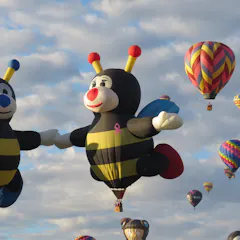
Australia’s largest honey producer has been accused of selling fake honey. But what is fake honey – and why has it only been found now?
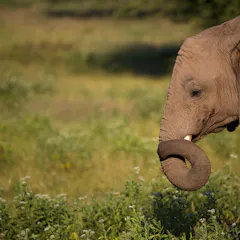
There is indeed merit to using beehives to keep elephants from eating and destroying crops.

Pollination by commercially raised bees is important to a variety of crops but none more than California almonds. In turn, beekeepers depend on them.
Bees and wasps can recognise people’s faces – despite having less than one million brain cells, compared to 86,000 million brain cells that make up a human brain.
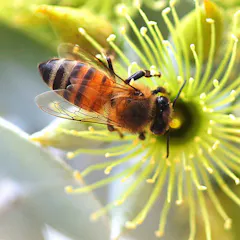
Australia’s distinctive native plants give our honey a distinctive stamp. Welcome to melissopalynology: the study of pollen.
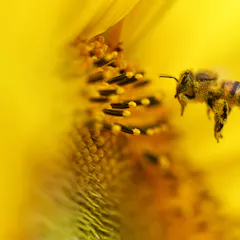
The work honey bees do is critical for our ecosystems, but it comes at a high personal cost.
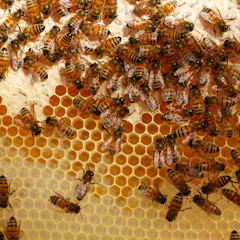
The Romans may not have had a symbol for zero, but bees understand what it means beyond just the simple assumption “there’s nothing there”.
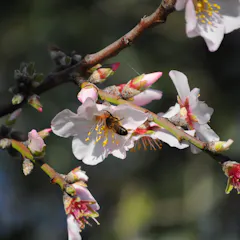
Many fruits, nuts and other crops rely on bees to pollinate their flowers at just the right time of year. Many farmers rent bees to get the job done at pollination time.
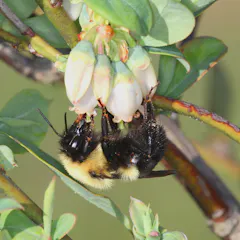
Honeybees receive a lot of attention, but the first North American bee to be listed as an endangered species is a wild bumble bee. Wild bees are vital pollinators, and some are declining rapidly.
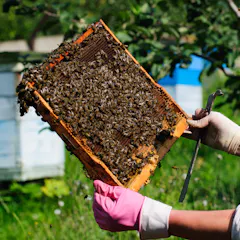
Meta-analysis studies have made it possible to sort through apparently contradictory research by looking at the bigger picture.

Rather than trying to out-compete each other, flowers may work together to attract bees en masse. It’s the sort of approach that is effective in the world of advertising too.
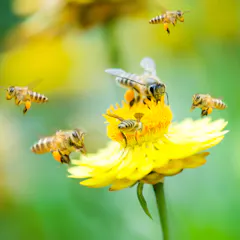
Honeybees are responsible for only a third of crop pollination in Britain.
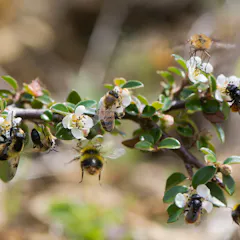
Hoverflies are helping spread disease among the already declining bee population.
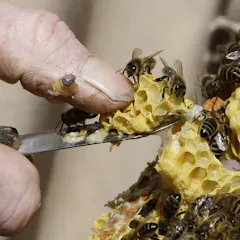
Australian bees have so far avoided the ‘colony collapse’ devastating hives around the world, but there’s growing pressure for a ban on certain insecticides blamed for bee deaths.

Pollinating bees are among the ‘natural assets’ that have a greater – though less visible – impact than plastic waste on the environment.
Top contributors
-

Associate Professor, Department of Physiology, Monash University
-
Research Fellow, School of Biological Sciences, Monash University
-
Lecturer in Ecology, University of New England
-
Researcher and analyst, Monash University
-
Senior Research Associate in Entomology, Lancaster University
-
Adjunct Research Fellow, Curtin University
-
Lecturer in Biological Sciences, University of Wollongong
-
Associate Professor in Entomology, University of Sydney
-
Lecturer, School of Life and Environmental Sciences, University of Sydney
-
Professor, School of Natural Sciences, Macquarie University
-
Centre Manager & Industry Liaison Officer ARC ITTC Centre for Fruit Fly Biosecurity Innovation, Macquarie University
-
Senior Ecologist, University of Sydney
-
Professor of Quantum Physics and Australian Research Council Future Fellow, RMIT University
-
Emeritus Professor of Apiculture, University of Sussex
-
Professor of Biology (Evolution, Behaviour and Environment), University of Sussex