
A new facet of the honeybee “waggle dance” - in which bees dance to inform their counterparts where to find a food source…
Articles on Bees
Displaying 261 - 280 of 296 articles
From the Himalayas to the subtropics - it appears flower colour has evolved to attract bee pollinators. Biologists from Monash…
Research in the Himalayas has investigated how flowers evolved distinctive bee-friendly colours to attract pollinators. This…
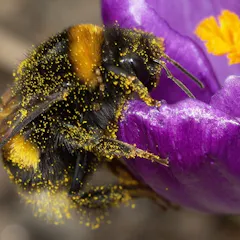
The controversial ban on neonicotinoid insecticides comes into effect across the EU this weekend. Neonicotinoids, or neonics, are powerful neurotoxins, killing insects with minute doses and impairing their…
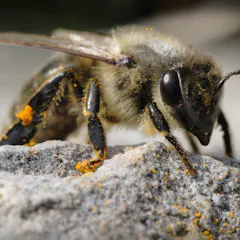
Everyone knows what it’s like to be uncertain – at least, humans do. But are non-human animals ever uncertain? When we feel uncertainty, instead of risking the consequences of a bad or wrong decision…
Queen bees have been found to display honesty signals about their reproductive status and quality. The new research by the…
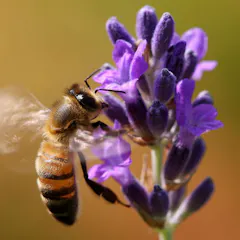
Landing is arguably the most nerve-racking element of any flight. To execute a safe landing, a pilot needs to know the plane’s speed and its distance from the landing surface. The pilot’s challenge is…
Bees went though a mass extinction, along with the dinosaurs and species of flowering plants, 65 million years ago. It’s…
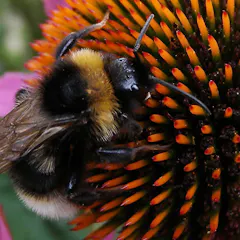
The EU banned the use of neonicotinoid pesticides for two years in April, after a sustained campaign by beekeepers, green groups and environmental organisations across Europe. These groups are convinced…
By analysing the flight of bees, the University of Queensland’s Brain Institute has learned how bees gain maximum fuel efficiency…
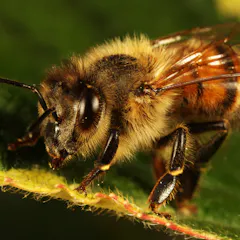
In a honey bee colony, the queen bee rules while her daughter workers do nothing but work. So what happens when the queen dies? Are there worker riots, with the colony dissolving into a chaotic mess? Surprisingly…
Without good advice, governments are in extreme danger of creating erroneous or damaging public policy. So it’s a serious matter when a government science adviser is accused of ignoring scientific evidence…
News that the European Union (EU) has restricted the use of neonicotinoid insecticides was welcomed by scientists, farmers, beekeepers and politicians around the world. But the limitations of the restriction…
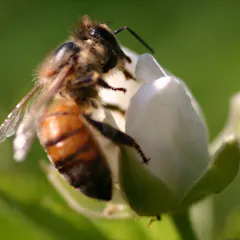
The European Union has just banned three pesticides thought to affect the learning behaviour of bees. The two-year ban, which takes effect in December, is in response to a dramatic drop in bee numbers…
Honey bees are thought to be the primary pollinators, but wild insects may be better. Two new studies, one published in Science…
Honeybees may have an advantage over other pollinators – caffeine improves performance. The findings, from Newcastle University…
The pollination networks between bees and flowers are not as robust as they were 100 years ago. Based on a comparative study…
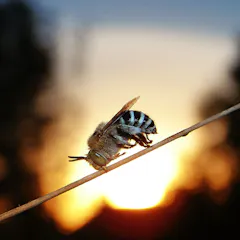
Honeybees are in trouble - a stressful lifestyle and an unhealthy diet are being compounded by mite attacks - but we needn’t panic about pollination. Australia has many native bee (and other pollinator…
Adult honey bees can identify bee larvae that are infected by the parasitic mite, Varroa destructor, by detecting specific…
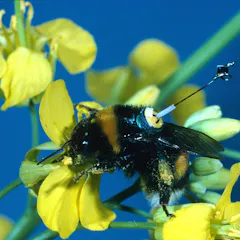
How do insects, given their poor visual resolution and small brains, cope with the huge challenge of finding food at more than one location and returning home immediately afterwards, day after day? Mathieu…
Top contributors
-

Associate Professor, Department of Physiology, Monash University
-
Research Fellow, School of Biological Sciences, Monash University
-
Lecturer in Ecology, University of New England
-
Researcher and analyst, Monash University
-
Senior Research Associate in Entomology, Lancaster University
-
Adjunct Research Fellow, Curtin University
-
Lecturer in Biological Sciences, University of Wollongong
-
Associate Professor in Entomology, University of Sydney
-
Lecturer, School of Life and Environmental Sciences, University of Sydney
-
Professor, School of Natural Sciences, Macquarie University
-
Centre Manager & Industry Liaison Officer ARC ITTC Centre for Fruit Fly Biosecurity Innovation, Macquarie University
-
Senior Ecologist, University of Sydney
-
Professor of Quantum Physics and Australian Research Council Future Fellow, RMIT University
-
Emeritus Professor of Apiculture, University of Sussex
-
Professor of Biology (Evolution, Behaviour and Environment), University of Sussex