
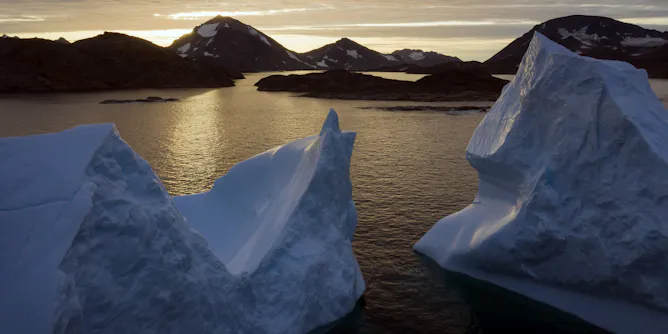
Greenland’s melting ice sheets threaten to significantly hamper humanity’s efforts to mitigate climate change.
Articles on Antarctica
Displaying 161 - 180 of 411 articles
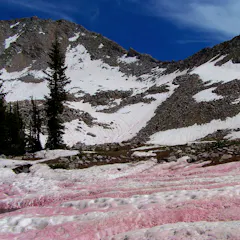
How do organisms survive extreme conditions – and how can their adaptations help us develop better technology?

Emperor penguins survive in a ‘Goldilocks zone’ between too much sea ice and too little. A new study shows the risk they face from climate change.
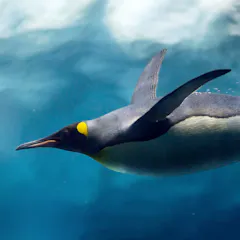
They can’t fly through the air but they can fly underwater.
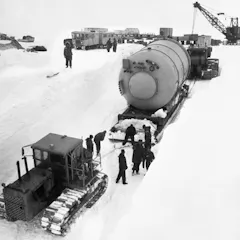
Nearly 60 years after a radiation-leaking reactor was removed from a US Army base on the Greenland ice sheet, the military is exploring portable nuclear reactors again.

These giant predators are helping solve the mystery of Earth’s cooling shift some 50 million years ago.
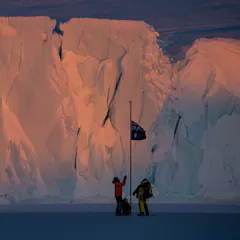
Complex questions over environmental protection and resource extraction require the signatories to give the future of the treaty much more serious attention.
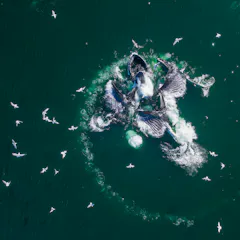
Bubble-net feeding is when whales blow bubbles from their nose to encircle their food, trapping their prey into a tight ball. A citizen scientist was the first to capture this behaviour in Australia.
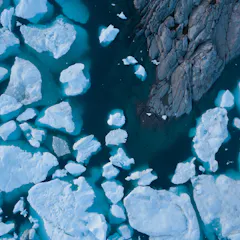
The Arctic region is warming much faster than the rest of the planet. The rapid loss of ice affects the polar jet stream, which influences weather patterns across the northern hemisphere.
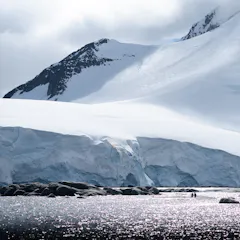
If emissions continue at their current pace, Antarctica will cross a threshold into runaway sea rise when today’s kids are raising families. Pulling CO2 out of the air later won’t stop the ice loss.
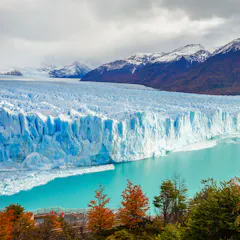
Glaciers aren’t sterile wastelands – they’re chock-full of microscopic life.
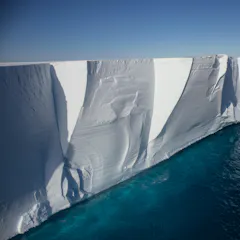
In a new study, we found that a third of Antarctica’s ice shelves could collapse at 4°C of global warming.
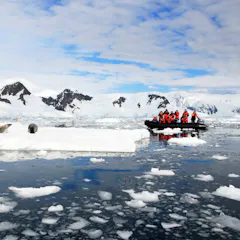
Over six months, 73,991 tourists visited the continent. The potential to spread coronavirus to penguins, whales and other wildlife is enormous.
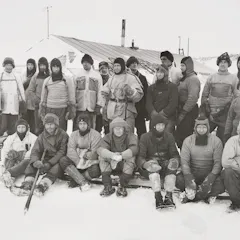
Antarctic research has historically been a bastion of men from Europe and North America. Only now is the field opening up to women and people of colour. And there’s a way to go yet.
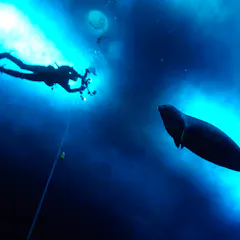
Microphones on the seafloor recorded life under the Antarctic ice for two years – inadvertently catching seal trills and chirps that are above the range of human hearing. Could they be for navigation?

Whales are rediscovering their old haunts in the Arctic and Southern oceans after centuries of hunting.

‘Antarctic cities’ residents care deeply about the continent, with environmental concerns outweighing economic priorities. Asked about its future, they feel a mix of hope, pessimism and sadness.
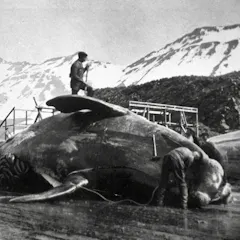
For 200 years, a small number of countries have exploited the marine wildlife of Antarctica, often with devastating impact on their populations.
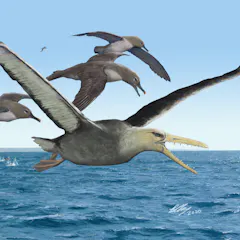
Paleontologists have discovered fossil remains belonging to an enormous ‘toothed’ bird that lived for a period of about 60 million years after dinosaurs.
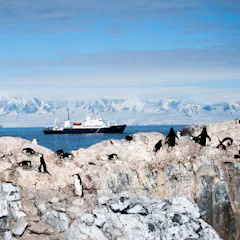
More than 280 women in STEMM call for a marine protected area to be established in the waters of the Western Antarctic Peninsula.
Top contributors
-

Adjunct Professor, Institute for Marine and Antarctic Studies, University of Tasmania
-
Professor of Antarctic Studies, School of Humanities, University of Tasmania
-
Pro Vice-Chancellor of Research, University of Technology Sydney
-
Director of the ARC Centre of Excellence for Our Future Oceans and Scientia Professor in Oceanography, UNSW
-
Professor of Astrophysics, UNSW
-
Chief Scientist, Australian Antarctic Division and Professor of Climate Science, Australian National University
-
Professor in Ocean Physics, University of Auckland, Waipapa Taumata Rau; Earth Sciences New Zealand
-
Adjunct Senior Lecturer, University of Tasmania
-
Assistant Professor of History, Texas Tech University
-
Senior lecturer, Institute for Marine and Antarctic Studies, University of Tasmania
-
Australian Laureate Fellow, Distinguished Professor, Deputy Director of ARC Securing Antarctica's Environmental Future (SAEF), University of Wollongong
-
Honorary Senior Fellow in Ecology, University of Wollongong
-
Professor of Polar Geodesy and ARC Laureate Fellow, University of Tasmania
-
Antarctic Law Researcher, Institute for Marine and Antarctic Studies and the Antarctic Climate and Ecosystems CRC, University of Tasmania
-
CSIRO Fellow, CSIRO