
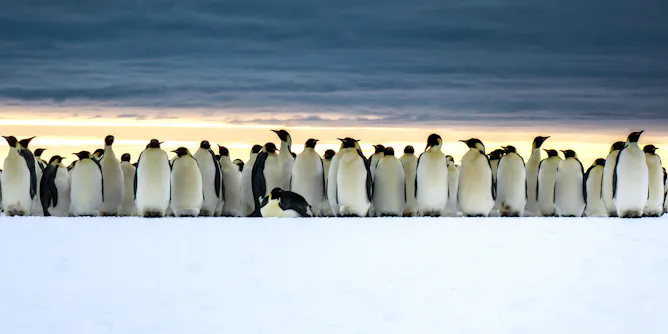
New satellite methods can track penguin colonies in winter – and can judge their health based on the colour of their guano.
Articles on Penguins
Displaying 1 - 20 of 57 articles
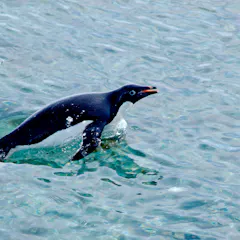
When penguin colonies are surrounded by sea ice, the penguins tend to eat more fish, rather than krill. And colonies that eat more fish are more successful at sustaining their numbers.
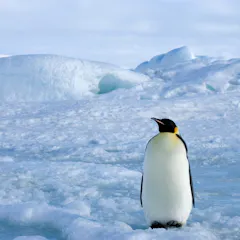
A breakthrough has helped researchers track down penguins living in the dark.
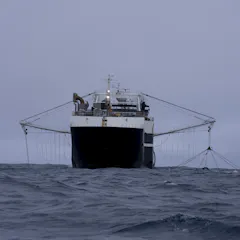
With location regulations no longer in force, fishing boats are harvesting thousands of tons of krill from very few areas, increasing competition with penguins, seals, whales and other marine life.
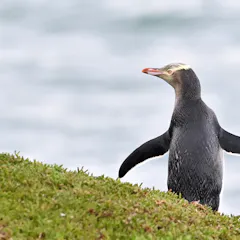
Researchers found the endangered yellow-eyed penguin is made up of three distinct subspecies, with the mainland lineage at greatest risk.
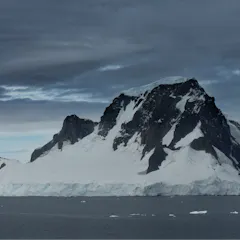
In the Antarctic Peninsula, precipitation is increasingly falling as rain rather than snow, with consequences for glaciers, penguins and even scientists.
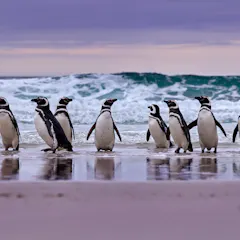
New research shows Magellanic penguins use ocean currents to navigate efficiently and forage on the way.
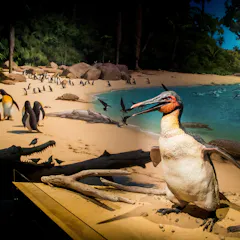
Newly revealed fossils of four new ancient penguin species highlight how their early evolution optimised wings and feet for powerful underwater propulsion.

New research explores the wide-ranging consequences of record low summer sea ice in Antarctica. From more ocean warming to extra icebergs, it’s bad news we must hear.

New ancient DNA research on Adélie penguin poo in Antarctica shows how several species respond to environmental change over time, including southern elephant seals.
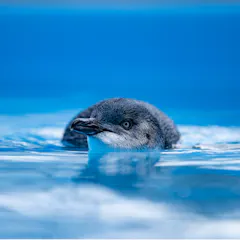
New research shows sea turtles, penguins and whales swim at optimal depths to minimise the energetic cost of travel.
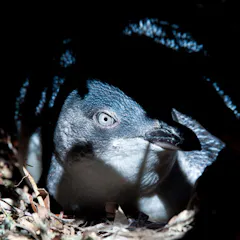
On an island off South Australia, a colony of little penguins is fighting to survive. Footage gathered by scientists reveals what the birds get up to when humans aren’t watching.

The machine learning model can work in the absence of video data, identifying prey capture events from new acceleration and depth data.
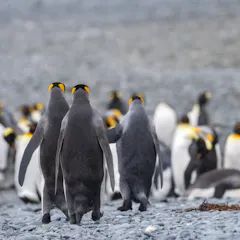
Macquarie Island isn’t just a windswept rock halfway to Antarctica. It’s a globally unique home to dozens of bird and marine mammal species, hence the government’s plans to give it greater protection.
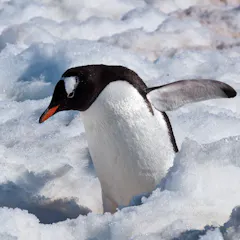
Nature takes a unique approach to solving its icy surface problems. We found the solution to de-icing challenges in the feathers of adorable wobble-gaited penguins.
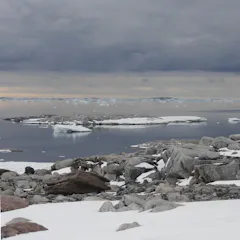
The species at risk include flowering plants, moss and lichens, tough invertebrates and breeding seabirds.

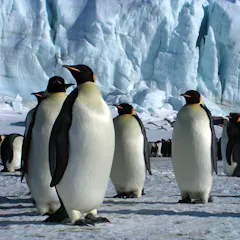
Emperor penguins survive in a ‘Goldilocks zone’ between too much sea ice and too little. Climate change is having an impact.

You can tell how close penguins are to each other by how similar their voices are.

We compiled the first list of Antarctic species and where they were first found. This knowledge means we can now protect all of the icy continent’s species.
This seemingly one-off heatwave may be a harbinger for the future under climate change.
Top contributors
-

Senior Lecturer in Southern Ocean Vertebrate Ecology, Institute for Marine and Antarctic Studies, University of Tasmania
-
Associate Scientist, Woods Hole Oceanographic Institution
-
Vertebrate palaeontologist, Flinders University
-
Professor, Nelson Mandela University
-
Research fellow, Research Associate, The University of Western Australia
-
Research Fellow, Bristol Zoological Society and University of Exeter; Extraordinary Professor: Department of Biodiversity and Conservation Biology, University of the Western Cape, University of Exeter
-
Honorary Research Associate and Research Manager at SANCCOB, University of Cape Town
-
Adjunct professor, Nelson Mandela University
-
Senior Lecturer in Genetics, University of the Sunshine Coast
-
Visiting Researcher, Centre for Ecology and Conservation, University of Exeter
-
Honorary Lecturer, La Trobe University
-
Marine Biologist, British Antarctic Survey
-
Associate Professor in criminology, UNSW
-
International Chair in Ecotourism Research, Griffith University
-
Associate Professor of Geology & Environmental Studies, Green Mountain College